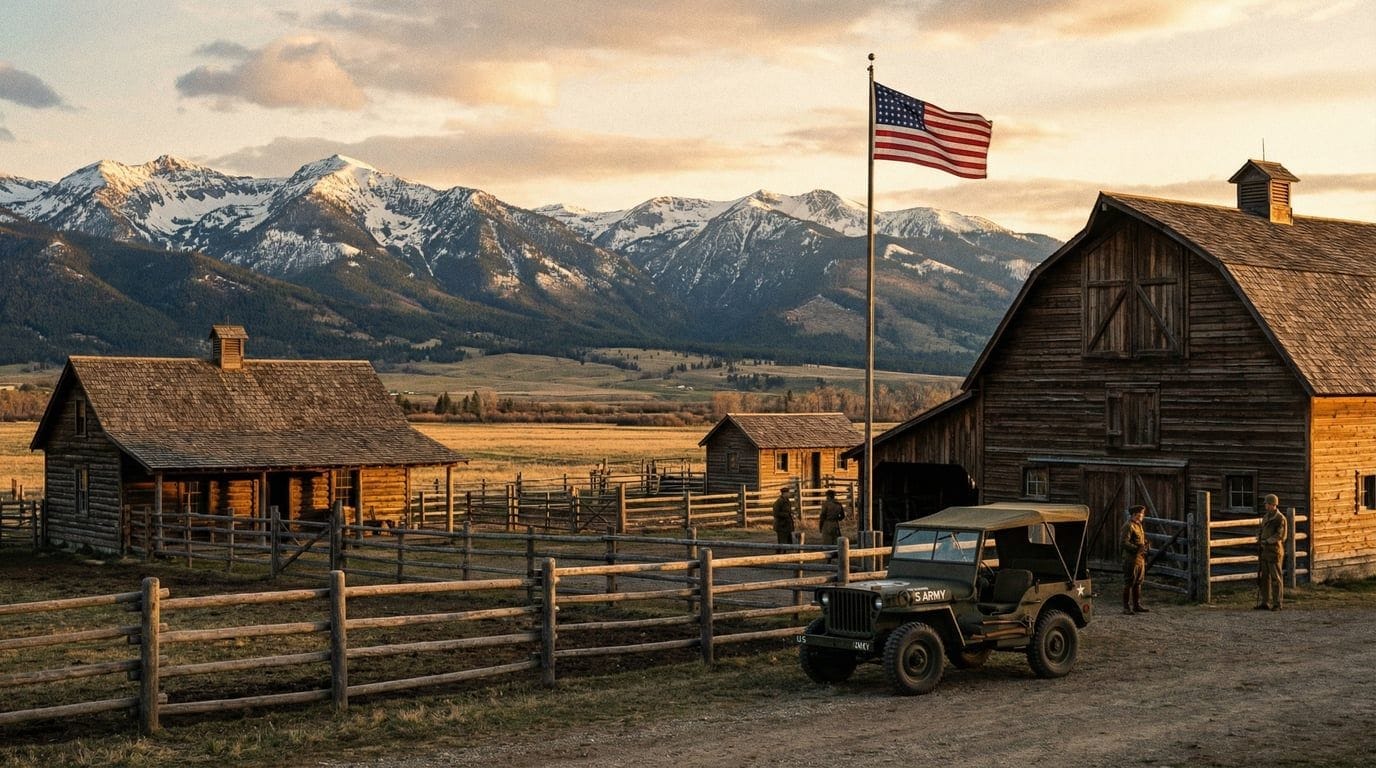
The Yellowstone universe has captivated millions with its raw portrayal of family, land, and legacy. From the treacherous wagon trails of 1883 to the prohibition-era struggles of 1923, Taylor Sheridan has meticulously constructed a multi-generational epic that traces the Dutton family’s unwavering commitment to their Montana ranch. Now, as the dust settles on 1923’s emotional finale, all eyes turn to the next chapter: 1944, a prequel that promises to explore the Dutton family during one of history’s most transformative periods—World War II.
This isn’t just another spinoff. 1944 represents the crucial missing link in the Yellowstone timeline, bridging the gap between the early 20th-century hardships depicted in 1923 and the modern-day power struggles of Kevin Costner’s John Dutton III. Set against the backdrop of global warfare, economic uncertainty, and profound social change, this upcoming series will examine how the Duttons navigated an era when the world itself was being reshaped by forces far beyond the Montana plains.
The Strategic Importance of 1944 in the Yellowstone Timeline
Understanding why 1944 matters requires examining the broader Yellowstone narrative architecture. The franchise has always been about more than cowboys and cattle—it’s a meditation on American identity, manifest destiny, and the price of preserving legacy in the face of relentless change. Each prequel has explored a different facet of this theme: 1883 focused on survival and the brutal cost of claiming land, while 1923 examined resilience during economic collapse and the erosion of the Old West’s values.
1944 occupies a uniquely pivotal position in this continuum. By 1944, the Dutton Ranch has existed for over six decades, transitioning from a fledgling homestead to an established Montana institution. Yet this stability faces unprecedented threats. World War II didn’t just reshape global politics—it fundamentally altered American society, economy, and culture. Young men left farms and ranches to fight overseas, women entered the workforce in unprecedented numbers, and rural communities faced labor shortages, rationing, and the constant anxiety of wartime uncertainty.
For the Duttons, this era represents a test unlike any their ancestors faced. James Dutton fought against nature and hostile forces to claim the land. Jacob and Cara Dutton battled economic depression and ruthless competitors to keep it. Now, the next generation must confront a different challenge: maintaining their way of life when the entire world is at war, and when the very concept of the American West is being redefined by modernity and global conflict.
John Dutton II: The Bridge Between Generations
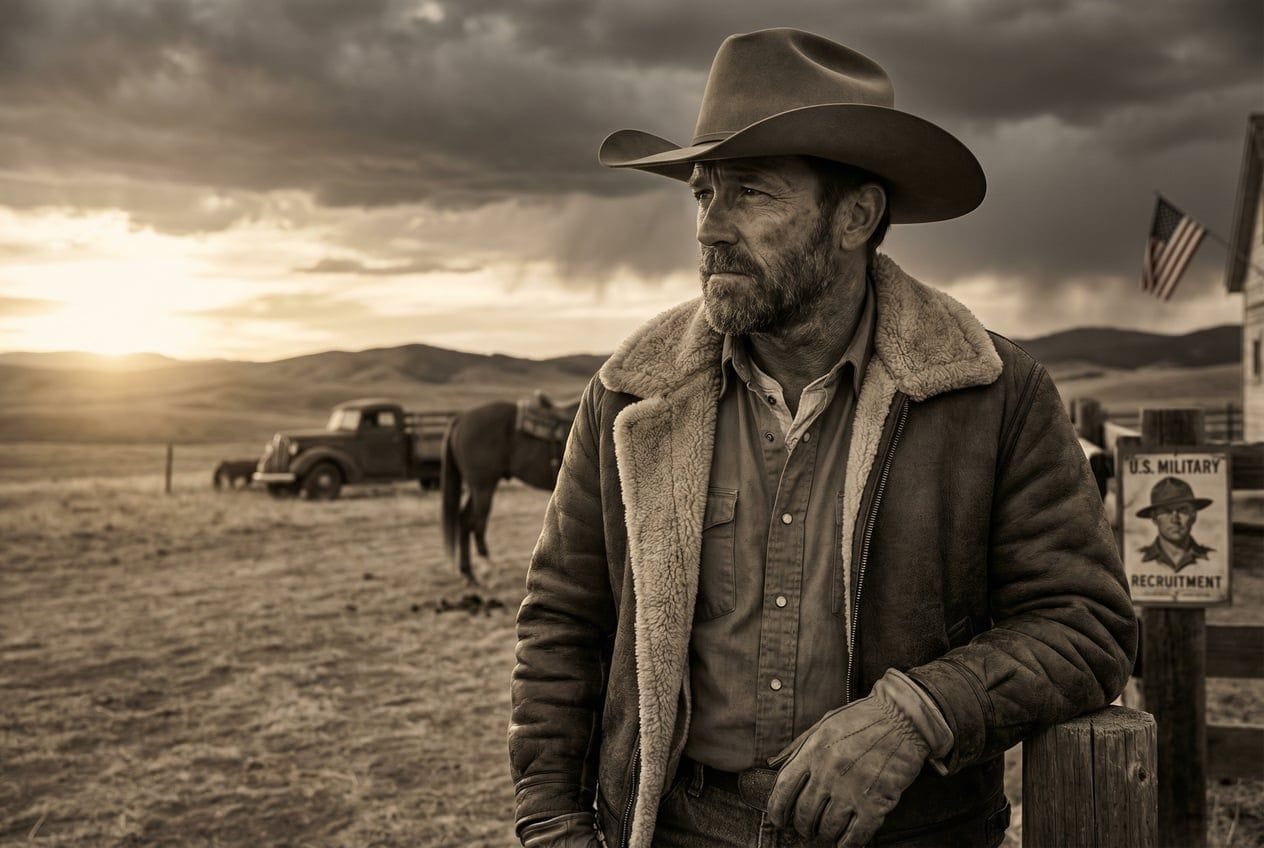
At the heart of 1944 lies John Dutton II, arguably the most mysterious figure in the entire Yellowstone saga. Until 1923’s second season revelation, his parentage remained one of the franchise’s longest-running mysteries. We now know that John Dutton II is the son of Spencer Dutton and Alexandra, meaning he carries both ranching royalty in his blood and ties to British aristocracy—a duality that will undoubtedly shape his character and the series’ narrative.
By 1944, John Dutton II would be approximately twenty years old—old enough to shoulder significant responsibility, yet young enough to be shaped by the war’s transformative impact. This places him at a fascinating crossroads. He’s not the battle-hardened warrior his father Spencer was, nor is he the seasoned patriarch his son John Dutton III will become. Instead, he represents a generation caught between worlds: too young to have fought in World War I, but coming of age during World War II’s upheaval.
The series will likely explore John Dutton II’s evolution from a young rancher into the man who will eventually pass the Yellowstone legacy to Kevin Costner’s character. In the original Yellowstone series, John Dutton III references his father’s wartime experiences, mentioning that “my father fought those bastards” when discussing German wine. This single line of dialogue opens fascinating narrative possibilities for 1944. Will John Dutton II serve overseas, experiencing combat firsthand? Or will he remain on the ranch, dealing with the guilt and complexity of staying home while others fight?
Either path offers rich dramatic potential. If he serves, the series can explore how warfare shapes his understanding of sacrifice, leadership, and the value of the land he’s fighting to preserve. If he stays, it can examine the different kind of courage required to maintain the ranch during wartime—dealing with labor shortages, government regulations, rationing, and the judgment of those who question why a young, able-bodied man isn’t in uniform.
Spencer Dutton’s Return: The Veteran Becomes the Patriarch
One of the most anticipated aspects of 1944 is the potential return of Spencer Dutton, the fan-favorite character brilliantly portrayed by Brandon Sklenar in 1923. Spencer’s journey from traumatized World War I veteran to reluctant hero captivated audiences, and his tragic love story with Alexandra left viewers emotionally devastated. Now, twenty years later, Spencer would be in his mid-to-late forties—no longer the young warrior, but a seasoned rancher who has inherited the Yellowstone legacy from his uncle Jacob and aunt Cara.
Brandon Sklenar has expressed enthusiastic interest in reprising the role, telling interviewers, “It would be great” and joking about being aged up with “extra crows feet and frosted tips.” His willingness to return is crucial, as Spencer represents continuity in the Yellowstone narrative. After the deaths of John Dutton I and Jack Dutton during the events of 1923, Spencer became the logical heir to the ranch. By 1944, he would have been running the operation for approximately two decades, transforming from the reluctant inheritor into an experienced patriarch.
Spencer’s presence in 1944 would provide powerful thematic resonance. As a World War I veteran, he understands the psychological toll of combat in ways that younger characters cannot. If his son John Dutton II faces the prospect of military service, Spencer would be uniquely positioned to counsel him—not with patriotic platitudes, but with the hard-earned wisdom of someone who has seen war’s true face. This father-son dynamic, set against the backdrop of another global conflict, could become one of the series’ emotional anchors.
Moreover, Spencer’s character arc in 1923 was defined by his struggle to reconcile his violent past with his desire for peace and family. By 1944, has he found that peace? Or does the outbreak of another world war reopen old wounds, forcing him to confront the reality that the violence he thought he’d left behind continues to shape the world his son will inherit? These questions offer rich dramatic territory for Sheridan to explore.
The World War II Backdrop: More Than Just Historical Context
What distinguishes 1944 from previous Yellowstone prequels is its historical setting. While 1883 and 1923 dealt with regional American history—westward expansion, prohibition, the Great Depression—World War II was a genuinely global event that touched every aspect of American life, including remote Montana ranches. Taylor Sheridan has consistently demonstrated his ability to weave real historical events into the Yellowstone narrative, and 1944 offers perhaps the richest historical tapestry yet.
The year 1944 specifically was pivotal in the war’s trajectory. D-Day occurred in June, marking the beginning of the end for Nazi Germany. The Battle of the Bulge, fought in winter 1944-1945, represented Germany’s last major offensive. Meanwhile, in the Pacific, American forces were island-hopping toward Japan, suffering tremendous casualties in battles like Saipan and Leyte Gulf. For Americans on the home front, 1944 was a year of cautious optimism mixed with continued sacrifice—victory seemed possible, but the cost remained devastatingly high.
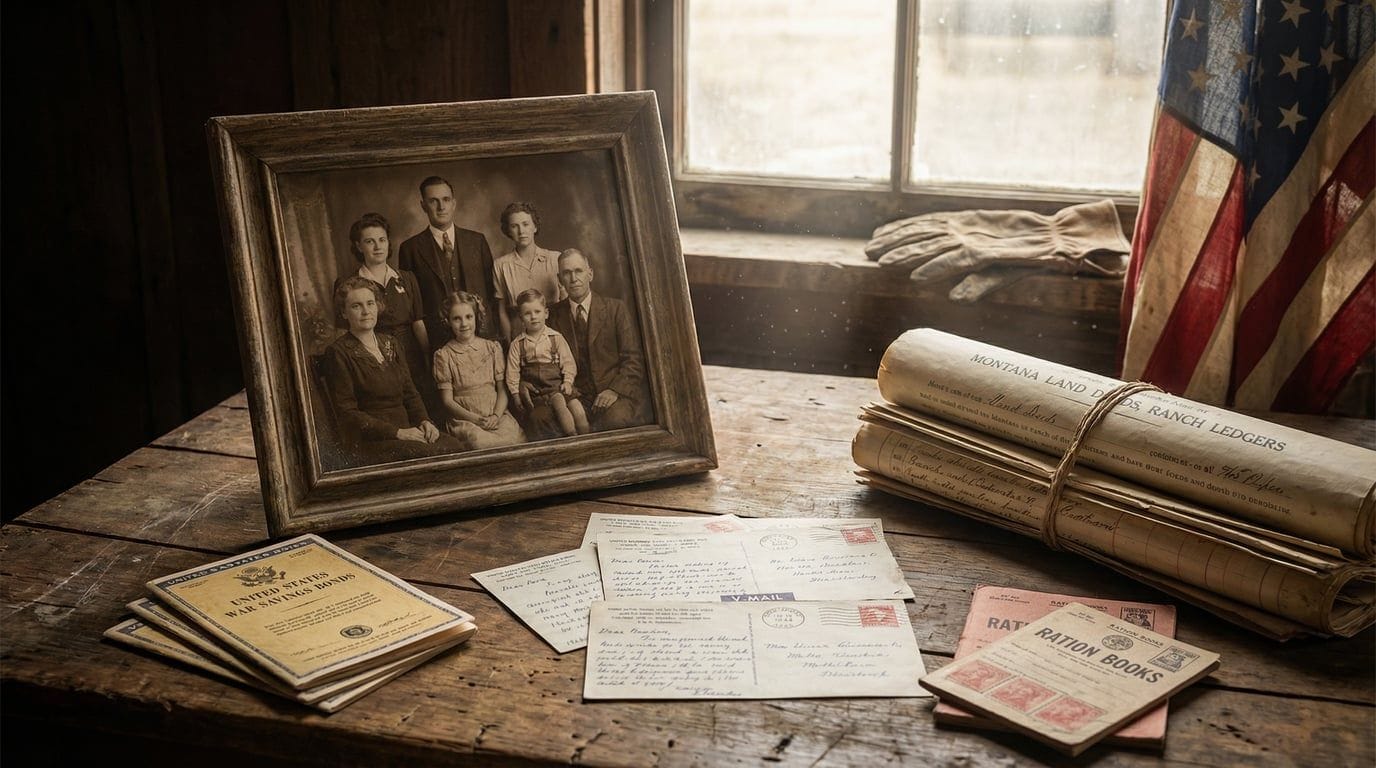
For a Montana ranch, this meant navigating a complex web of wartime realities. Rationing affected everything from gasoline to sugar to meat—ironic for a cattle ranch, but even beef production was heavily regulated to support military needs. Labor shortages were acute, as young men enlisted or were drafted, leaving ranches desperate for workers. The government encouraged women to take on traditionally male roles, fundamentally altering gender dynamics in rural communities. War bonds, victory gardens, and scrap metal drives became part of daily life, even in remote areas.
Sheridan will likely explore how these broader historical forces impact the Duttons specifically. Does the ranch face government pressure to increase beef production for the war effort? Do labor shortages force the family to hire workers they wouldn’t normally trust, creating security concerns? Does the influx of war news via radio and newspapers make the Montana plains feel simultaneously more connected to the world and more isolated from the actual fighting? These questions ground the Dutton story in authentic historical experience while maintaining the series’ focus on family and legacy.
Thematic Evolution: From Survival to Sacrifice
Each Yellowstone prequel has centered on a distinct thematic core. 1883 was fundamentally about survival—the Duttons’ brutal journey to Montana tested their physical endurance and willingness to sacrifice everything for the promise of land. 1923 explored resilience—how the family adapted to economic collapse, prohibition violence, and the erosion of frontier values while maintaining their grip on the ranch. 1944 appears poised to examine sacrifice in its most profound sense.
War demands sacrifice, but not always in obvious ways. Yes, soldiers sacrifice their lives on battlefields, but families sacrifice sons and husbands, communities sacrifice their young men, and individuals sacrifice their futures for an uncertain cause. For the Duttons, the question becomes: what are they willing to sacrifice to preserve their legacy? If John Dutton II goes to war, the family risks losing their heir. If he stays, they risk their reputation and standing in the community. If they focus entirely on the ranch, they may be seen as profiteering from wartime demand. If they prioritize patriotic duty over business, they risk the ranch’s financial stability.
These dilemmas have no easy answers, which is precisely what makes them dramatically compelling. Sheridan has never been interested in simple morality tales—his characters exist in morally complex spaces where good intentions lead to terrible consequences, and survival often requires compromising one’s values. 1944 will likely push this complexity further, exploring how a family dedicated to preserving their land navigates a historical moment when individual desires must be subordinated to collective national purpose.
The series may also examine the psychological sacrifice required of those who stay home. Spencer Dutton, if he appears, would understand this acutely—he fought in World War I and knows the survivor’s guilt, the nightmares, the sense of displacement that veterans experience. Watching his son potentially face the same fate would be its own form of sacrifice, a parent’s helpless anguish as history repeats itself. Similarly, women in the Dutton family would face their own sacrifices, taking on increased responsibilities while managing the constant fear of losing loved ones overseas.
Production Status and Release Timeline: What We Know
As of February 2026, 1944 remains in active development with a targeted late-2026 release date. While this timeline is ambitious, it’s not unprecedented for the Yellowstone franchise, which has maintained a remarkably consistent production schedule despite various challenges. However, several factors could impact this timeline, most notably Taylor Sheridan’s evolving relationship with Paramount.
In October 2025, Sheridan signed a five-year overall deal with NBCUniversal, signaling his eventual departure from Paramount. However, his television contract with Paramount doesn’t expire until the end of 2028, meaning 1944 will almost certainly be produced under the Paramount banner and released on Paramount+. This contractual reality provides some stability for the project, though it also places it within a compressed timeline—Sheridan has multiple series in various stages of production, including The Madison (premiering March 14, 2026) and Marshals (premiering March 1, 2026 on CBS).
Recent reports suggest that while filming has not yet commenced, the project is progressing through pre-production. Trailer footage that has circulated online indicates that the series is further along than initially believed, with refined post-production visuals suggesting significant work has already been completed. This aligns with Paramount’s stated goal of a late-2026 premiere, though industry observers note that this timeline could slip into early 2027 depending on Sheridan’s availability and production logistics.
The production will reportedly take place in Montana’s Bitterroot Valley, maintaining the franchise’s commitment to authentic Western locations. This geographical choice is significant—the Bitterroot Valley offers the same dramatic mountain vistas and expansive plains that have become visual signatures of the Yellowstone universe, ensuring 1944 will maintain the franchise’s cinematic aesthetic while telling a distinctly different story.
Casting Speculation and Character Possibilities
While official casting announcements remain scarce, the narrative requirements of 1944 provide clues about who might appear. John Dutton II is virtually certain to be a central character, though the actor who will portray him remains unknown. Dabney Coleman played an elderly John Dutton II in flashback scenes in the original Yellowstone, but Coleman’s tragic death in 2024 means a new actor will need to be cast for the character’s younger years.
Brandon Sklenar’s return as Spencer Dutton seems highly likely given his expressed interest and the character’s narrative importance. At 34 years old, Sklenar is young enough that aging him up to his mid-forties is entirely feasible with makeup and prosthetics—far easier than recasting the role, which would risk alienating fans who became deeply invested in his portrayal during 1923.
The fate of other 1923 characters remains more uncertain. Alexandra Dutton, Spencer’s wife, died giving birth to John Dutton II at the end of 1923, so Julia Schlaepfer will not return in that role. However, the series could introduce a new love interest for Spencer—1923’s narration mentioned that Spencer eventually had a relationship with an unnamed widow and had another child, though he never remarried. This opens intriguing possibilities for exploring Spencer’s emotional life two decades after losing Alexandra.
Elizabeth Dutton, Jack’s widow who was pregnant at the end of 1923, could potentially appear, though actress Michelle Randolph has indicated uncertainty about her character’s future. If Elizabeth returned to Boston as she planned, she might not factor into 1944’s Montana-based story. However, her child—Jack’s son or daughter—could appear as a young adult, adding another branch to the Dutton family tree and potentially creating inheritance complications or family dynamics worth exploring.
Beyond returning characters, 1944 will need to introduce new faces representing the next generation of ranch hands, neighbors, rivals, and allies. The World War II setting also opens possibilities for characters connected to the military, government officials dealing with wartime regulations, or even European refugees who might find their way to Montana—all potential sources of conflict and drama.
Why 1944 Matters for the Yellowstone Legacy
1944 isn’t just another prequel—it’s the keystone that holds the entire Yellowstone narrative architecture together. Without understanding this era, the transition from the early 20th-century struggles depicted in 1883 and 1923 to the modern-day power dynamics of Yellowstone remains incomplete. How did the Duttons transform from a family fighting for survival into the most powerful ranching dynasty in Montana? How did John Dutton II become the man who would raise Kevin Costner’s character with such an uncompromising commitment to the land? What experiences shaped his worldview and his parenting?
These questions can only be answered by exploring the World War II era, when the Duttons faced challenges that tested not just their physical endurance or financial resources, but their fundamental values and identity. The war forced Americans to think beyond their individual interests and consider their role in a global community. For a family whose entire identity revolves around protecting their specific piece of Montana land, this shift in perspective would have been profoundly disruptive.
Moreover, 1944 will likely explore how the Duttons navigated the modernization that accelerated during and after World War II. The war brought technological advances, new communication systems, changing social norms, and economic transformations that would fundamentally alter rural America. The Yellowstone Ranch that emerges from the 1940s would be different from the one that entered it—more connected to the broader world, perhaps more prosperous, but also more vulnerable to external forces and competing interests.
This evolution sets the stage for everything that follows. By the time we meet John Dutton III in Yellowstone, the ranch is under constant threat from developers, government agencies, tribal land claims, and market forces. These modern conflicts have roots in the changes that began during World War II, when the American West started its transformation from frontier to contested space, from regional concern to national interest. 1944 will show us the beginning of that transformation and how one family tried to resist it.
The Sheridan Touch: What to Expect
Taylor Sheridan has established a distinctive storytelling approach across the Yellowstone franchise—one that prioritizes character over plot, moral ambiguity over clear heroes and villains, and authentic Western atmosphere over Hollywood glamour. 1944 will undoubtedly maintain these hallmarks while adapting them to its unique historical context.
Expect stunning cinematography that captures Montana’s dramatic landscapes in different seasons and lighting conditions. Expect complex, flawed characters who make difficult choices with imperfect information. Expect dialogue that feels authentic to the period and region, avoiding both modern sensibilities and overly formal “period piece” language. Expect violence when necessary, but never gratuitous—Sheridan understands that violence in the West was often sudden, brutal, and consequential, not choreographed entertainment.
Most importantly, expect 1944 to ask difficult questions without providing easy answers. How do you maintain tradition in a rapidly changing world? What do you owe to your family versus your country? When does preserving legacy become selfishness? How do you honor the sacrifices of previous generations while making your own choices? These are the questions that have always driven the Yellowstone franchise, and 1944 will explore them through the specific lens of wartime America.
Conclusion: The Chapter We’ve Been Waiting For
As the Yellowstone universe continues to expand, 1944 stands as perhaps the most crucial addition yet. It’s not just filling a gap in the timeline—it’s illuminating the transformative period that shaped the Dutton family’s modern identity. By exploring how Spencer, John Dutton II, and the rest of the family navigated World War II’s challenges, the series will provide essential context for understanding the fierce protectiveness and uncompromising values that define later generations.
The late-2026 release timeline means fans won’t have to wait much longer to see this chapter unfold. While details remain scarce and casting is still being finalized, the foundation is solid: a compelling historical setting, rich character possibilities, and Taylor Sheridan’s proven ability to craft emotionally resonant Western drama. If 1883 was about survival and 1923 was about resilience, then 1944 promises to be about sacrifice—the ultimate test of what the Duttons are willing to give up to preserve their legacy.
For fans who have followed the Dutton family’s journey from the wagon trails of 1883 to the modern-day boardrooms of Yellowstone, 1944 represents the missing piece of the puzzle. It’s the story of how a family of survivors became a dynasty, how wartime sacrifice shaped peacetime values, and how one generation’s choices echo through all that follow. The Yellowstone Ranch didn’t just survive World War II—it was transformed by it. 1944 will finally show us how.
References
- Bored Panda - 1944 Release Date, Plot, Cast
- The Hollywood Reporter - Yellowstone Spinoffs Guide
- Wikipedia - Yellowstone Franchise
- Fort Worth Magazine - 1944 Explores Dutton Family Legacy
- Esquire - 1944 Cast and Release Date
- Screen Rant - Brandon Sklenar Spencer Dutton Return
- IMDb News - Brandon Sklenar Addresses Spencer Dutton Return
- Town & Country - Dutton Family Tree
- Reddit - Casting Spencer in 1944
- TVLine - 1923 Characters in 1944
- The Mirror US - Spencer Dutton Return
- Woman’s World - 1944 New Yellowstone Prequel Details
- Dallas News - Taylor Sheridan Shows 2026
- HTHR News - 1944 Yellowstone Spinoff
- Daniel News - 1944 Trailer 2026
- Cassia - 1944 Trailer Cast Update