
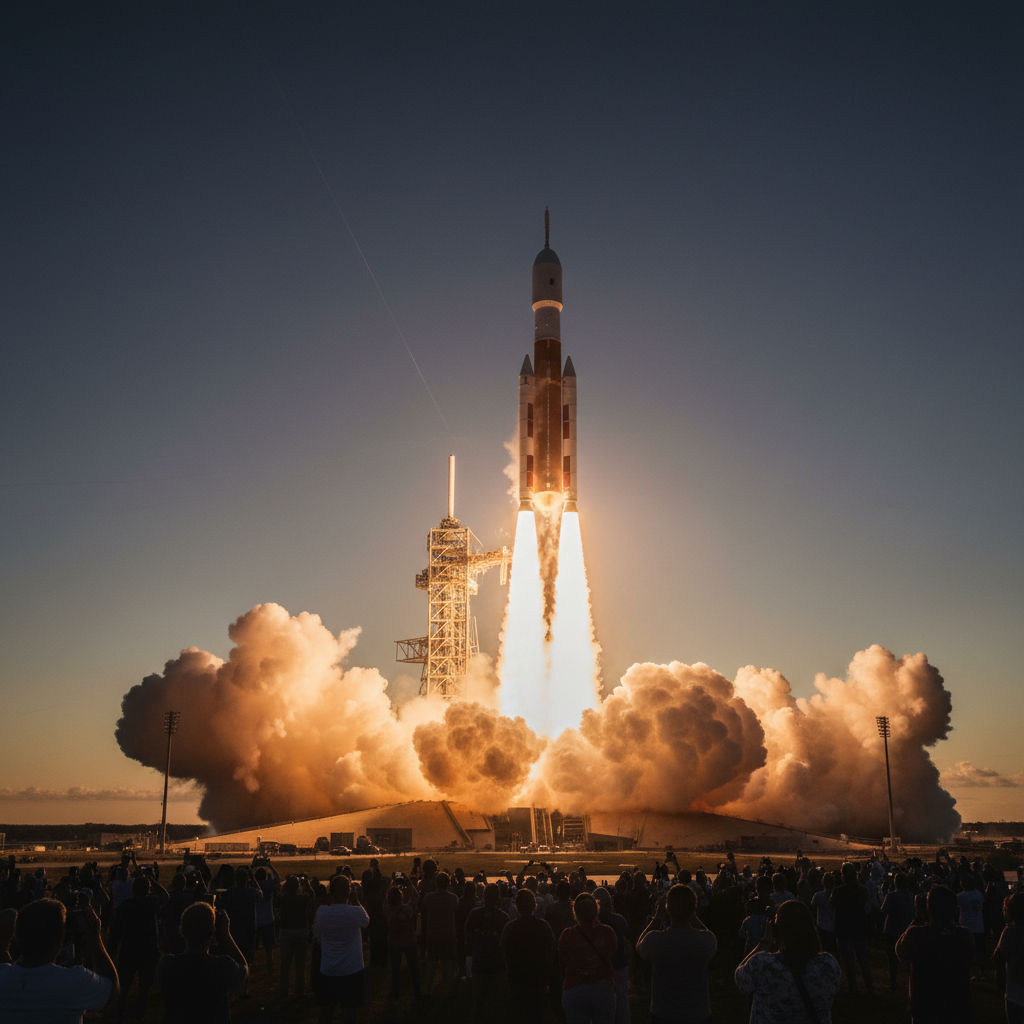
On April 2, 2026, humanity witnessed a historic moment as NASA's Artemis II mission launched from Kennedy Space Center, marking the first crewed voyage to lunar orbit since Apollo 17 in 1972. While the world celebrated the bravery of astronauts Reid Wiseman, Victor Glover, Christina Koch, and Jeremy Hansen, few realized that an invisible crew of artificial intelligence systems was working tirelessly alongside them—guiding their spacecraft, optimizing their communications, and ensuring their safe return.
This isn't science fiction. This is the reality of 21st-century space exploration, where AI has become as essential as rocket fuel. Let's dive deep into how artificial intelligence is woven into every layer of the Artemis II mission.
The Invisible Co-Pilot: AI in Orion's Navigation Systems
From Manual Control to Intelligent Automation
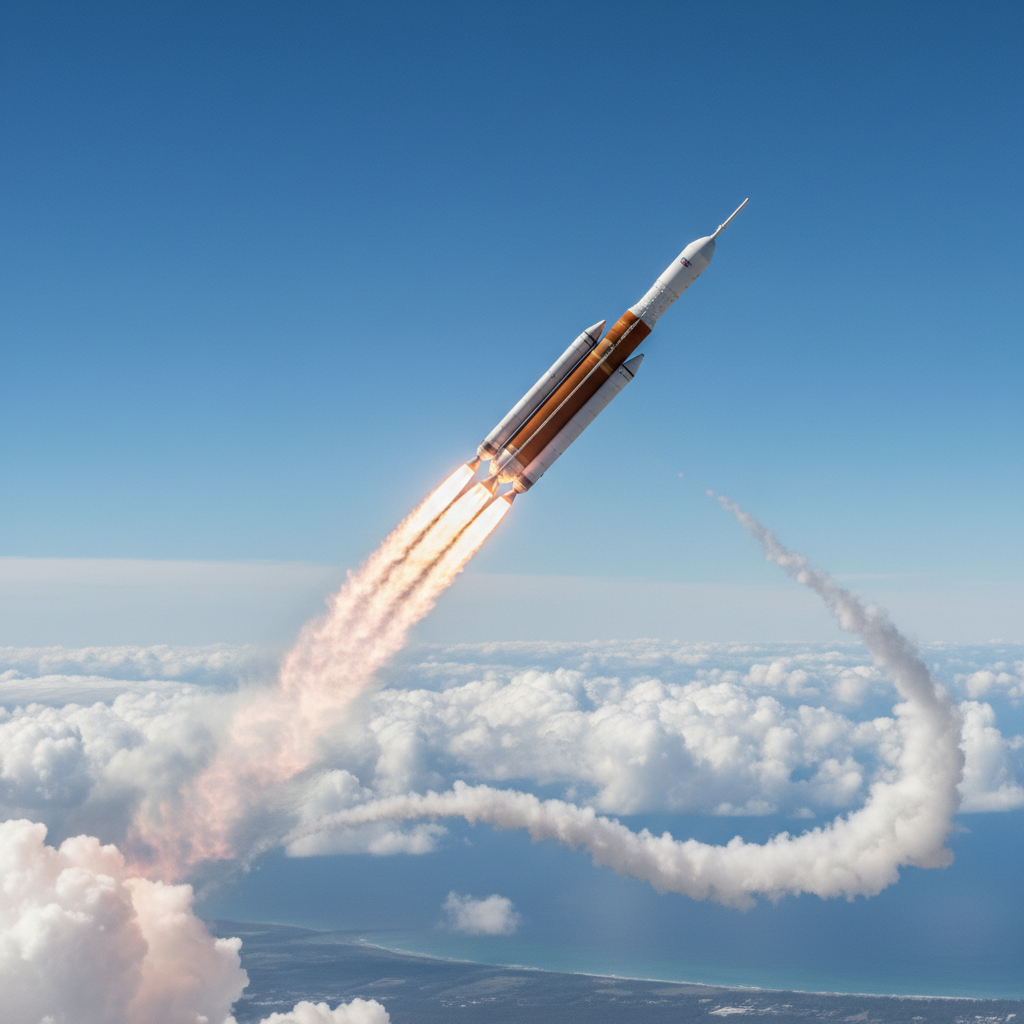
The Orion spacecraft represents a quantum leap from the Apollo era. While Apollo astronauts manually controlled many aspects of their mission, Artemis II's Orion CM-003 "Integrity" operates on a paradigm of intelligent autonomy. The spacecraft's flight systems are designed to handle routine operations automatically, with the crew serving as supervisors who can intervene when necessary.
According to mission protocols, Orion entered automated control immediately after separating from the Interim Cryogenic Propulsion Stage (ICPS). This wasn't simple autopilot—it's a sophisticated AI-driven system that:
- Continuously calculates optimal trajectories based on real-time gravitational data
- Adjusts thrust vectors to compensate for micrometeoroid impacts or system anomalies
- Manages power distribution across the spacecraft's complex electrical grid
- Predicts system failures before they occur using machine learning models trained on thousands of simulated mission scenarios
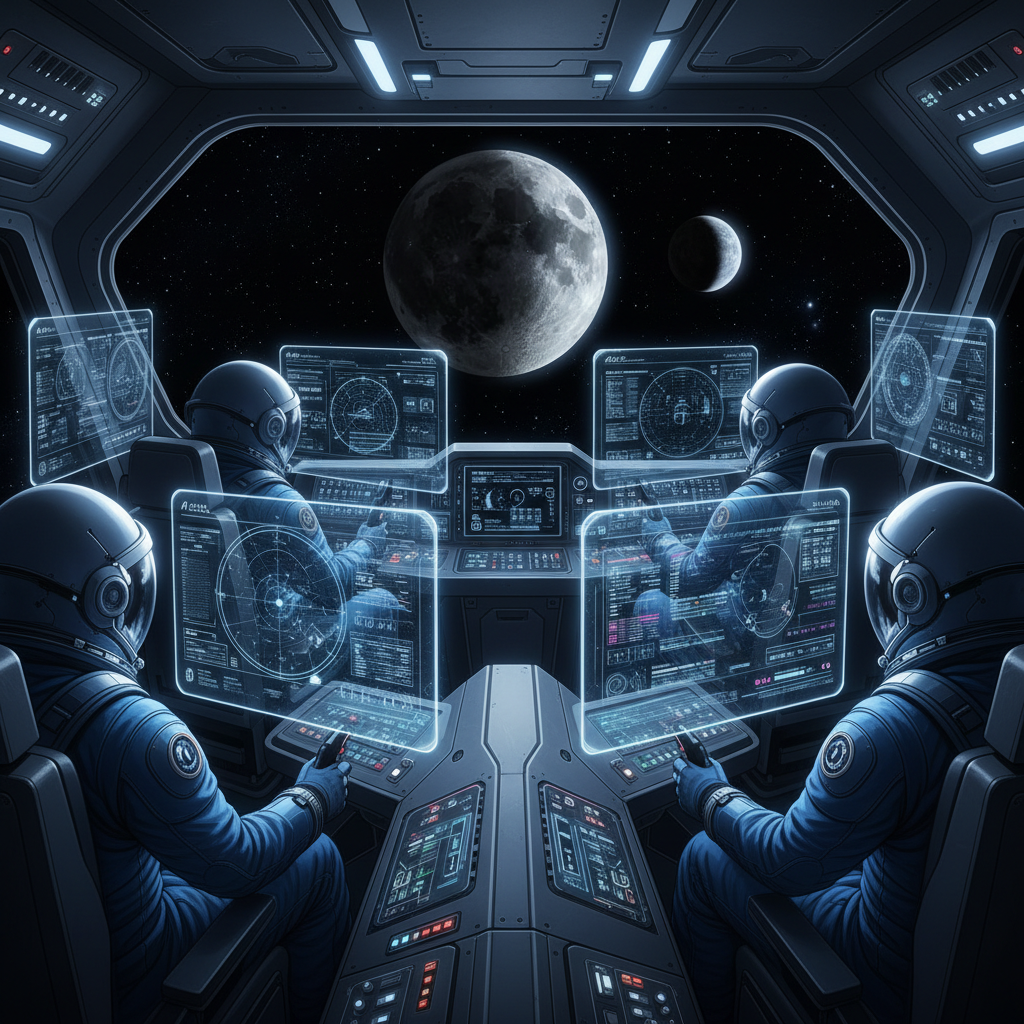
The commander, Reid Wiseman, sits in the left seat not to fly the spacecraft manually, but to monitor these AI systems and exercise abort authority when human judgment is required. This human-AI collaboration model represents NASA's vision for future deep space missions to Mars, where communication delays make real-time ground control impossible.
The Free-Return Trajectory: An AI-Calculated Safety Net
Artemis II follows a free-return trajectory—a path that uses the Moon's gravity to slingshot the spacecraft back to Earth without requiring additional propulsion. While the basic concept dates back to Apollo, modern AI systems have optimized this trajectory to an unprecedented degree.
Machine learning algorithms processed:
- Lunar gravitational field variations from NASA's GRAIL mission data
- Solar radiation pressure forecasts
- Earth-Moon-Sun positional dynamics over the 10-day mission window
The result? A trajectory that maximizes crew safety while minimizing fuel consumption—a calculation so complex it would have taken Apollo-era computers weeks to solve.
Mission Control Evolved: AI-Augmented Ground Operations
Predictive Analytics for Mission Success
While the crew travels to the Moon, NASA's Exploration Ground Systems team at Kennedy Space Center relies on AI to monitor the mission. Modern mission control isn't just about watching screens—it's about predicting the future.
AI systems continuously analyze:
- Telemetry data from over 1,000 sensors on Orion and the SLS rocket
- Historical mission patterns from Apollo, Shuttle, and Artemis I
- Environmental conditions at splashdown sites in the Pacific Ocean
These systems can detect subtle anomalies that might escape human observers. For example, if a fuel pump shows vibration patterns that preceded failures in simulations, the AI flags it for engineers before the astronauts even notice a problem.
The Communication Challenge: AI Bridges the Gap
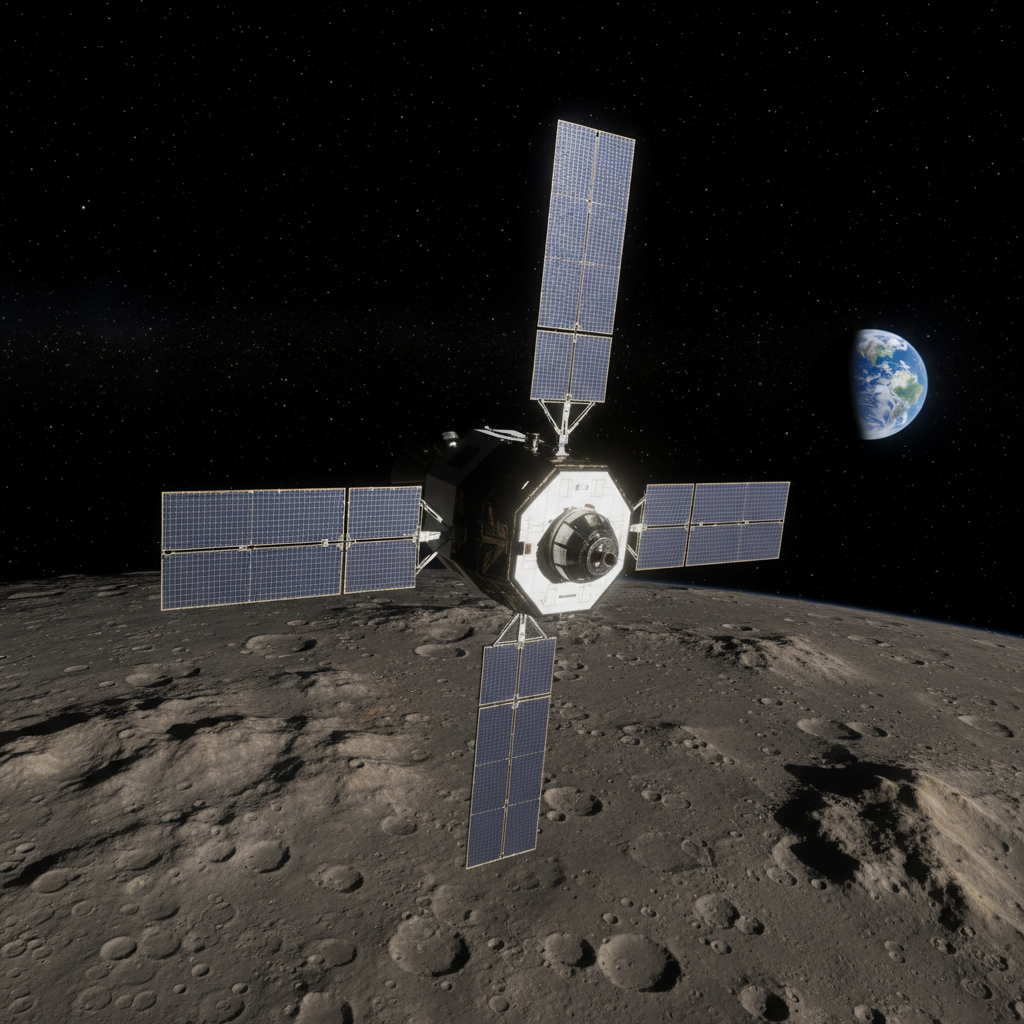
Artemis II operates at distances where light takes over a second to travel between Earth and spacecraft. At the Moon's orbit, a simple question-and-answer exchange takes nearly 3 seconds—an eternity when quick decisions matter.
NASA employs AI-powered delay-tolerant networking (DTN) protocols that:
- Prioritize critical data automatically during bandwidth constraints
- Compress scientific data using neural compression algorithms
- Reconstruct corrupted packets using error-correction AI
During the mission's most critical phases—launch, lunar orbit insertion, and reentry—these AI systems ensure that mission control maintains situational awareness despite the communication lag.
Health in the Void: AI-Powered Life Support
AVATAR: The Virtual Astronaut
One of Artemis II's most fascinating payloads is AVATAR (A Virtual Astronaut Tissue Analog Response)—a system that uses AI to model how space radiation affects human organs. While not a replacement for the crew, AVATAR serves as a digital twin that:
- Simulates radiation absorption in different body tissues
- Predicts long-term health impacts of the mission
- Recommends radiation shielding adjustments in real-time
This AI system helps mission planners understand the biological risks of deep space travel—critical knowledge for future Mars missions where astronauts will face even higher radiation doses.
Continuous Health Monitoring
Each Artemis II astronaut wears biometric sensors that stream data to AI analysis systems. These systems:
- Detect stress patterns in heart rate variability
- Monitor sleep quality in the microgravity environment
- Track cognitive performance through reaction-time tests
- Alert the crew medical officer to potential issues before symptoms appear
Unlike Apollo, where doctors on the ground could only check in periodically, Artemis II's AI provides 24/7 health surveillance—a capability that might one day save lives on multi-year Mars missions.
The SLS Rocket: AI-Optimized Propulsion
The Most Powerful AI-Managed Launch Vehicle
The Space Launch System (SLS) Block 1 that carries Artemis II is the most powerful rocket ever built. Its RS-25 engines and solid rocket boosters generate 8.8 million pounds of thrust—managed in part by AI systems that make over 1,000 adjustments per second during ascent.
These AI systems handle:
- Engine throttling to minimize structural stress on the vehicle
- Fuel mixture optimization for maximum efficiency
- Abort system arming based on trajectory calculations
- Stage separation timing to within milliseconds
The result? A launch profile that pushes the boundaries of physics while keeping the crew safe.
Machine Learning from Every Flight
Every SLS launch generates terabytes of data that feed NASA's machine learning models. Artemis I's uncrewed test flight in 2022 provided invaluable training data that improved Artemis II's AI systems. Future Artemis missions will benefit from this continuous learning cycle—each launch makes the next one safer and more efficient.
Preparing for Mars: AI Lessons from Artemis II
The 20-Minute Problem
While Artemis II operates at lunar distances with manageable communication delays, Mars missions face a 20-minute round-trip for signals traveling at light speed. When an astronaut on Mars says "Houston, we have a problem," it will take 20 minutes to receive a response.
This is why Artemis II's AI systems are designed to operate increasingly autonomously. Every automated decision Orion makes during this mission trains the AI for a future where real-time ground control is impossible.
Self-Healing Systems
NASA is testing AI-driven self-diagnostic and repair systems on Artemis II. These systems can:
- Identify malfunctioning components through pattern recognition
- Reroute power around damaged circuits
- Adjust life support parameters to compensate for system degradation
- Guide astronauts through repairs using AR interfaces powered by AI
These capabilities will be essential for Mars missions, where resupply is impossible and astronaut time is the most precious resource.
The Ethical Frontier: Human Judgment vs. AI Decisions
When to Override the Machine
Artemis II raises profound questions about human-AI collaboration in high-stakes environments. Mission protocols specify that the commander has ultimate authority—but in practice, will humans override AI recommendations during emergencies?
NASA has spent years studying this human factors challenge. The answer, it seems, lies in transparent AI—systems that explain their reasoning in ways humans can understand quickly. When Orion's AI recommends a trajectory adjustment, it displays:
- The predicted outcome of following the recommendation
- The confidence level of that prediction
- Alternative options and their risk assessments
This approach empowers astronauts to make informed decisions without being overwhelmed by data.
Beyond the Mission: AI's Role in the Artemis Program
Gateway and the Lunar Economy
Artemis II is just the beginning. The planned Lunar Gateway—a space station in lunar orbit—will rely heavily on AI for:
- Autonomous operations during crew absences
- Resource management for lunar surface missions
- Scientific data processing from lunar experiments
- Traffic coordination for multiple lunar landers
These AI systems will form the infrastructure backbone of humanity's return to the Moon—and eventually, our expansion into the solar system.
Training the Next Generation
The data from Artemis II's AI systems will train simulation environments for future astronauts. Using virtual reality and AI-driven physics engines, NASA can create training scenarios that prepare crews for situations no human has ever experienced.
Imagine training for a Mars landing by practicing in a simulation that incorporates every lesson learned from Artemis—every anomaly, every decision, every outcome.
Conclusion: A New Era of Exploration
As Artemis II's crew orbits the Moon, they carry with them not just the hopes of humanity, but the collective intelligence of decades of AI research. From the moment their SLS rocket ignited to their eventual splashdown in the Pacific, artificial intelligence has been their constant companion—guiding, protecting, and enabling their historic journey.
This mission proves that the future of space exploration is human-AI collaboration. Rockets may provide the thrust, but AI provides the brains. Together, they open pathways to worlds we've only dreamed of visiting.
The Artemis II astronauts are pioneers in the truest sense—not just of space, but of a new relationship between human explorers and their artificial intelligence partners. As we look toward Mars and beyond, this partnership will only grow stronger.
The Moon is just the beginning.
FAQ
How does Artemis II's AI differ from Apollo's guidance computer?
Apollo's guidance computer used fixed programs and human inputs. Artemis II's AI systems use machine learning to adapt to real-time conditions, predict problems before they occur, and optimize decisions based on thousands of simulated scenarios.
Can the Artemis II crew override AI decisions?
Yes. The commander has ultimate authority and can override any automated system. However, the AI is designed to present recommendations transparently, helping astronauts make informed decisions quickly.
What happens if AI systems fail during the mission?
Orion has multiple redundant systems and fallback modes. In the event of AI failure, the spacecraft can operate on simpler autopilot systems or receive direct commands from the crew. Mission Control on Earth also maintains oversight capabilities.
Will future Mars missions rely more on AI?
Absolutely. Mars missions face 20-minute communication delays, making real-time ground control impossible. Future spacecraft will need AI capable of operating autonomously for hours or days at a time.
How is AI used in astronaut training for Artemis missions?
NASA uses AI-powered simulations to create realistic training scenarios. Machine learning models analyze data from previous missions to predict potential problems, allowing crews to practice responses to situations they might encounter.
Sources:
- NASA Artemis Program Official Website
- Wikipedia: Artemis II Mission Overview
- NASA Exploration Ground Systems Technical Documentation
- Orion Spacecraft Systems Specifications
- AVATAR Payload Mission Description