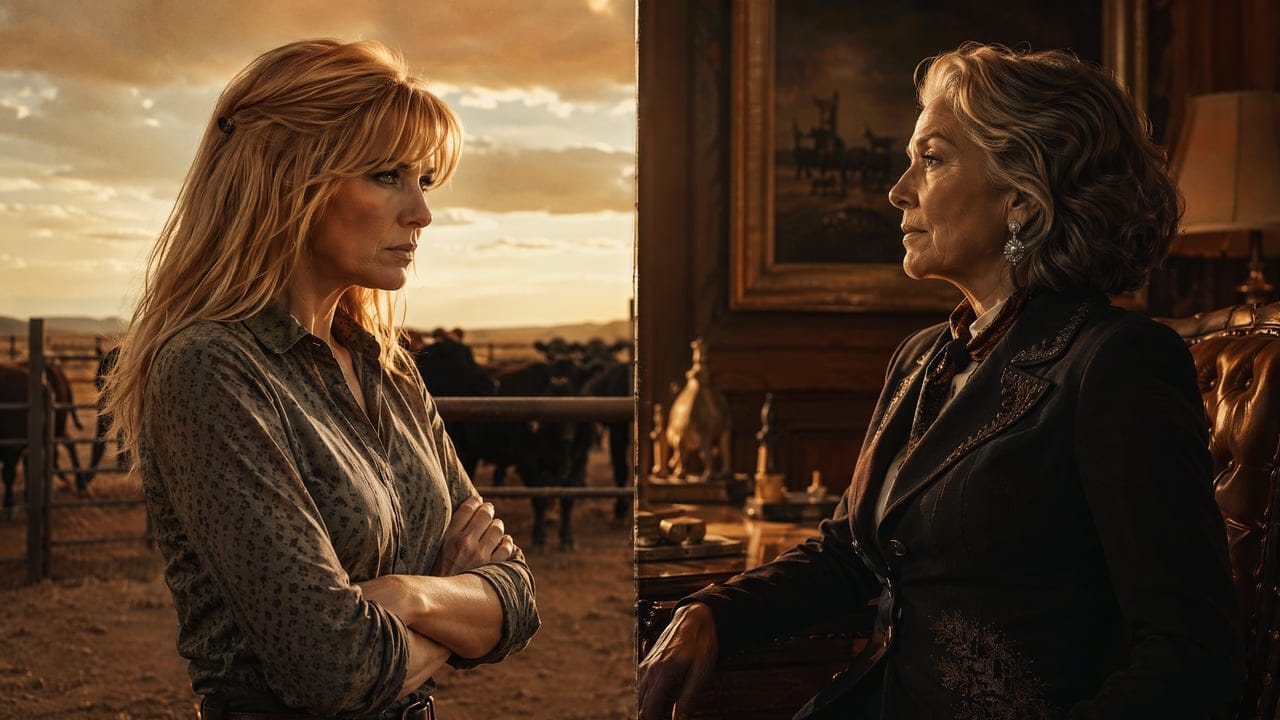
For five seasons of Yellowstone, Beth Dutton was the storm no one could survive. In Dutton Ranch, she finally meets a woman who does not run from storms—she owns the land they hit.
Beth Dutton has never lacked enemies. Corporate predators, political operators, real estate developers, hired killers, and even members of her own family have all tried to break her. Most of them underestimated her. Some feared her too late. Others, like Jamie Dutton, spent years mistaking her fury for instability when it was actually strategy sharpened by pain. Beth survived because she understood a simple rule of the Dutton world better than almost anyone: power belongs to the person willing to go further than everyone else.
Then Dutton Ranch introduces Beulah Jackson.
Played by Annette Bening with icy refinement and buried desperation, Beulah is not just another antagonist placed in Beth and Rip's path. She is something more dangerous: a mirror, a rival, and perhaps the first woman in the Yellowstone universe who can look Beth Dutton in the eye without flinching. She is the matriarch of 10 Petal Ranch, a Texas power structure with deep roots, local control, and generations of accumulated influence. If John Dutton ruled Montana through legacy, land, and fear, Beulah Jackson rules Texas through ownership, leverage, and social architecture. She does not merely possess power; she lives inside a world built to obey her.
That is what makes the Beth-versus-Beulah conflict so compelling. This is not simply a rivalry between two ranching families. It is a collision between two models of female power. Beth is fire: impulsive, brilliant, emotionally volcanic, and impossible to contain. Beulah is poison: slow, elegant, strategic, and already in the bloodstream of Rio Paloma before Beth even arrives. Beth wins by detonating the room. Beulah wins by making sure she owns the room, the doors, the locks, the land beneath it, and the men standing outside.
Beth Dutton: The Weapon That Learned to Build
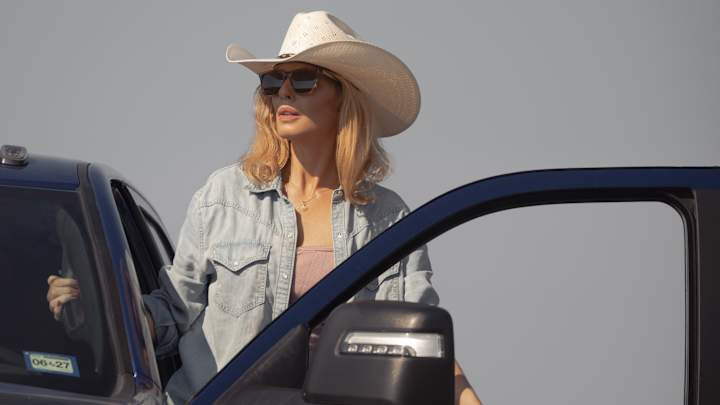
To understand why Beulah matters, it is necessary to understand who Beth is when Dutton Ranch begins. The Beth of Yellowstone was a weapon forged by trauma. Her mother's death, Jamie's betrayal, her forced sterilization, and John Dutton's impossible expectations all shaped her into someone who could not separate love from war. She loved her father by fighting for his ranch. She loved Rip by protecting the fragile private world they built together. She loved the Yellowstone by annihilating anything that threatened it.
But that version of Beth always existed inside John Dutton's orbit. However ruthless she became, her violence had a direction: defend the ranch, defend the family, defend the legacy. In Dutton Ranch, the equation changes. John is gone. Yellowstone is gone. Jamie is gone. Montana is no longer the battlefield. Beth is not fighting to preserve an inherited empire; she is trying to build a life with Rip and Carter in Texas.
Kelly Reilly has described this version of Beth as someone who is not immediately in "fight mode," because she now has her own family with Rip and Carter and is trying, at least in theory, to leave the ghosts of her past behind. That shift matters because it gives Beth something she rarely had in Yellowstone: the possibility of peace. But peace in Taylor Sheridan's world is never simply granted. It must be defended, and often the act of defending it destroys the very thing the characters were trying to protect.
Beth's power has always come from her willingness to be underestimated. People see the drinking, the rage, the obscene insults, the emotional brutality, and they mistake her for reckless. But Beth is rarely reckless without purpose. Her cruelty is often tactical. Her theatricality is a distraction. Her gift is psychological violence: she identifies what people want, what they fear, and where they are weakest, then drives a blade into the softest point.
That approach worked in Montana because Beth knew the board. She understood the Dutton name, the local politics, the economic players, and the family secrets. In Texas, she has to learn the board while already standing on it. That makes her vulnerable in a way viewers are not used to seeing. She may still be Beth Dutton, but in Rio Paloma, the Dutton name does not open every door. Worse, many of those doors already belong to Beulah Jackson.
Beulah Jackson: The Grizzly in Gucci
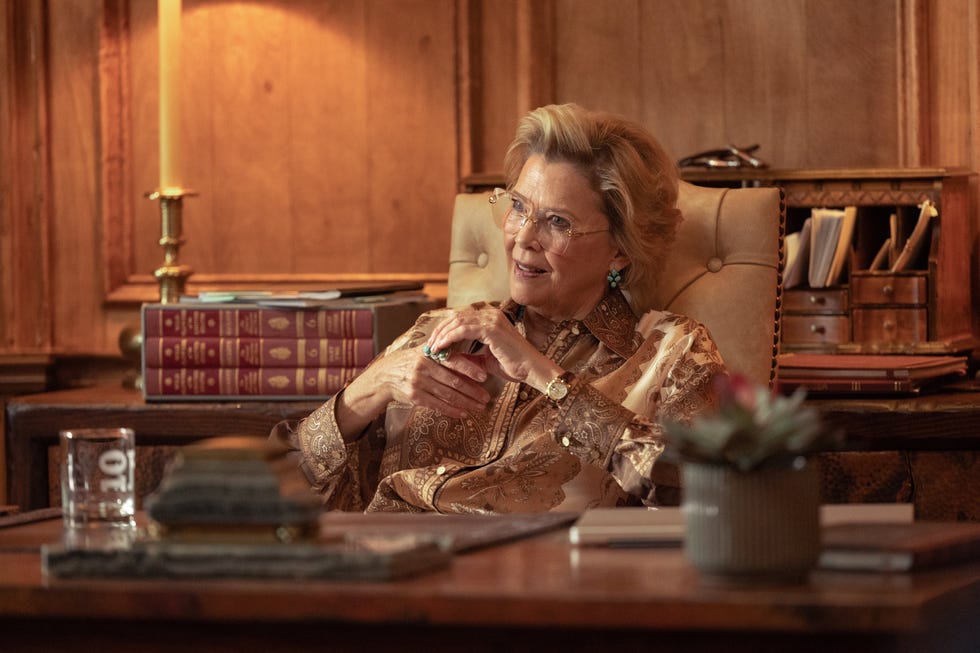
People's description of Beulah Jackson captures the character perfectly: Beth's new arch nemesis, or as Beth calls her, "the grizzly in Gucci." That nickname works because Beulah is both refined and predatory. She does not look like the kind of woman who needs to raise her voice to ruin someone. She does not need Beth's profanity, Beth's public explosions, or Beth's open contempt. Beulah's menace comes from the opposite direction. She is polished enough to seem civilized, but everything about her suggests that civilization is merely the outfit power wears when it does not want to get blood on its hands.
Annette Bening has described Beulah as tough, shrewd, and desperate, a woman trying to save her sons and protect her granddaughter while making choices that "have not been safe." That detail is crucial because it prevents Beulah from becoming a one-note villain. She is not dangerous simply because she enjoys domination. She is dangerous because she believes control is the only way to keep her collapsing world intact. Her brutality is maternal, dynastic, and defensive all at once.
This makes her a fascinating counterpoint to Beth. Beth's maternal instincts are still raw and complicated. Her relationship with Carter has always been uneasy, moving between harshness, protectiveness, and moments of unexpected tenderness. Beulah, by contrast, appears to have spent decades turning motherhood into governance. Her children are not simply people she loves; they are extensions of an empire she must manage, correct, protect, and sometimes conceal.
That difference becomes especially important because Beulah's family is already unstable when Beth arrives. Rob-Will is violent and impulsive. Joaquin appears more business-minded, but he too is bound inside Beulah's machinery of control. Early recaps suggest that the Jackson family's internal problems are not background texture; they are central to the conflict. Rob-Will's violence and the attempt to manage its consequences immediately reveal that 10 Petal Ranch is not merely powerful—it is rotten in ways Beulah cannot fully contain.
That is where Bening's performance becomes so important. Beulah is not calm because she has nothing to fear. She is calm because panic would expose how much she has to fear. Under the wardrobe, accent, and aristocratic ranching authority is a woman trying to hold together sons who are not okay, a legacy that may be slipping, and a region that no longer obeys her as easily as it once did.
Why Beulah Is More Dangerous Than Beth's Old Enemies
Beth has faced powerful enemies before, but most of them came from outside the land. Market Equities wanted profit. Developers wanted access. Politicians wanted influence. Jamie wanted legitimacy. Those threats were dangerous, but they often misunderstood what the land meant to the Duttons. They saw Montana as an asset, a legal problem, a transaction, or a pathway to power. Beth could defeat them because she understood that they were ultimately playing a different game.
Beulah is different because she plays the same game.
She understands land not as property but as bloodline. She understands that a ranch is not merely acreage; it is identity, history, hierarchy, and control. Like John Dutton, she rules through the belief that land must remain in the hands of those strong enough to keep it. TV Insider even frames Beulah as a kind of Texas version of John Dutton: the head of a massive family-owned ranch with serious influence in the state.
That comparison is one of the smartest ideas in Dutton Ranch. John Dutton's death left a vacuum in Beth's life. She spent years fighting for him, resenting him, loving him, and trying to survive the emotional damage of being his daughter. Now, in Texas, she meets a woman who carries a similar gravitational force. Beulah is not John, but she occupies John's structural role in this new world: the entrenched land monarch whose power predates the protagonist's arrival.
The difference is that Beth cannot weaponize daughterhood against Beulah. With John, Beth's fury was intimate. Her loyalty was personal. Her wounds gave her access to his weaknesses. With Beulah, Beth has no such leverage—at least not yet. Beulah is not family. She is not haunted by Beth's history. She does not owe Beth love, guilt, recognition, or apology. That makes her more difficult to manipulate.
Beulah's power is also more institutional than Beth's. She appears to control not just land but infrastructure. In the premiere, Beth's attempt to schedule slaughter for her cattle brings her directly into Beulah's domain, where she quickly realizes the game is rigged in favor of the Jackson family. Review Geek's recap describes how Beulah stonewalls Beth and how the Jackson family seems to "hold all the keys to the locks and control the doors in Rio Paloma."
That is a brilliant setup because it puts Beth in a rare position: she is not dealing with someone who wants to break into her world. She has broken into someone else's.
The First Faceoff: Game Recognizes Game
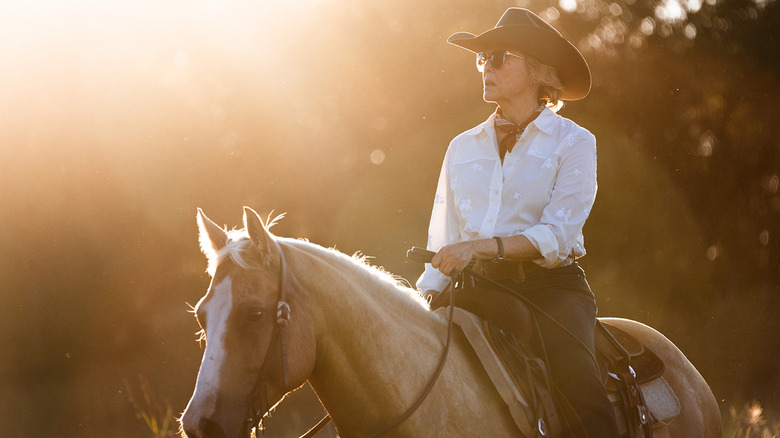
The first Beth and Beulah confrontation is important because it establishes that this rivalry will not be one-sided. Vulture called their first faceoff a highlight of the premiere, noting that Beth has spent much of her adult life crushing enemies and roughing up people she merely dislikes. In Rio Paloma, however, Beth and Rip are genuine upstarts, trying to build a business in a place where no one knows them well enough to fall into line.
That phrase—genuine upstarts—is essential. Beth has been many things, but rarely an outsider without inherited local power. Even when she was personally damaged or emotionally isolated in Yellowstone, she still carried the Dutton name like a weapon. In Texas, the name matters less than the land she has just acquired, and that land is precisely what Beulah wanted.
The Edwards Ranch, which becomes the new Dutton Ranch, was reportedly a piece of property the Jacksons had pursued for years. According to premiere recaps, the Edwards family refused to sell to the Jacksons because they loathed them, making Beth and Rip's purchase an immediate insult to Beulah's authority. Before Beth even opens her mouth, her presence represents defiance. She has acquired what Beulah could not.
That gives their rivalry a personal charge from the beginning. Beulah does not simply dislike Beth because Beth is rude, aggressive, or inconvenient. She dislikes Beth because Beth's existence on that land proves Beulah's power has limits. For a woman like Beulah, that is intolerable.
Beth, meanwhile, recognizes something in Beulah that she has rarely encountered: an equal mind. Reilly has said that others have tried to match Beth's energy, but Beulah is the first to succeed. She described the experience of Beth meeting another woman she can relate to as "going up a gear," even suggesting that Beth sees herself in Beulah.
Beth Is Fire, Beulah Is Poison
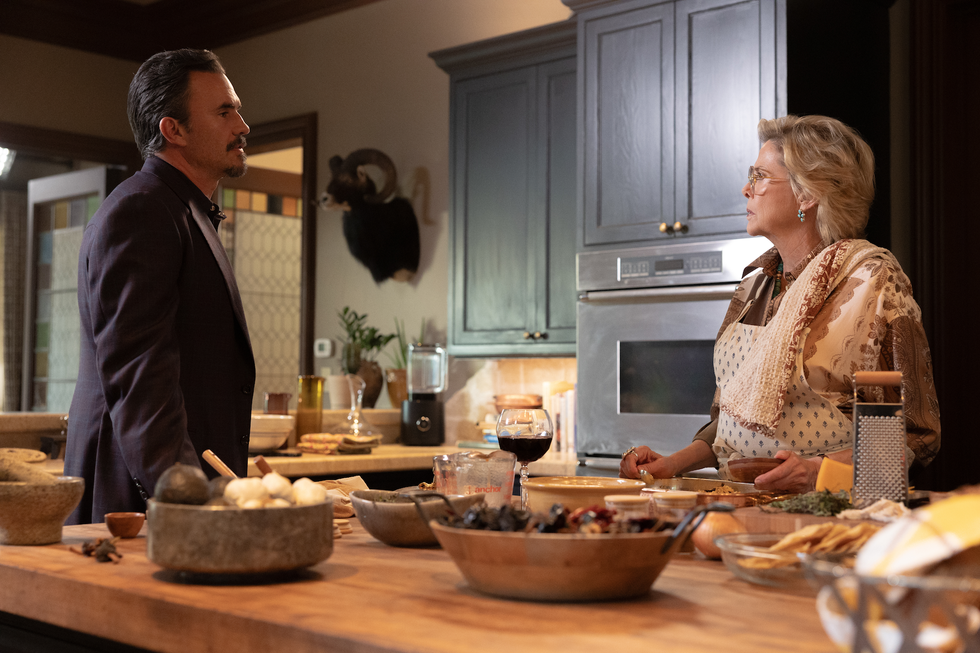
The simplest way to understand the difference between Beth and Beulah is this: Beth attacks; Beulah absorbs.
Beth's violence is expressive. Even when strategic, it has heat. She wants her enemies to know she is coming. She wants them to feel the humiliation of being seen, named, and destroyed. Her insults are not decorative; they are weapons of domination. Beth makes people smaller before she ruins them.
Beulah's violence seems colder. She does not need to dominate a scene by erupting because she has already dominated the system around the scene. She controls access, resources, family, and reputation. If Beth is a match dropped in gasoline, Beulah is arsenic in the water supply. By the time you realize she is killing you, she may already control the doctor, the sheriff, the butcher, and the neighbor who saw what happened.
This difference creates a fascinating dramatic tension. Beth's usual methods may not work against Beulah because Beulah is not easily embarrassed. She does not seem like someone who can be baited into losing control in public, at least not without significant pressure. Beth can provoke men because many of them need to prove dominance in the moment. Beulah does not need to prove dominance; she assumes it.
But Beulah's weakness may be the very thing that makes her powerful: her family. Bening has repeatedly framed Beulah's motivation around protecting her sons and granddaughter. That means Beth may eventually locate Beulah's softest point not in business, politics, or land, but in maternal failure.
Beth knows something about family rot. She watched the Dutton family devour itself from within. She knows what happens when fathers shape children into weapons, when siblings become enemies, when legacy becomes a curse. If Beulah has built 10 Petal Ranch on the same kind of emotional violence that John built into Yellowstone, Beth may be uniquely equipped to recognize the cracks.
Can Beth Win Without Becoming Beulah?
One of the most compelling aspects of Beulah Jackson is how she forces Beth to confront John Dutton's shadow from the outside. Beth loved John, but she was also damaged by him. She admired his strength, inherited his ruthlessness, and spent much of her life trying to be useful to him. In Beulah, Beth encounters someone who resembles John not emotionally but structurally: an aging land ruler trying to preserve a dynasty at any cost.
That creates a psychological trap. If Beth defeats Beulah, is she defeating an enemy—or symbolically defeating the kind of power that shaped her? If she becomes more like Beulah in order to survive Texas, is she escaping John's legacy or repeating it in a new state?
The show's official setup emphasizes that Beth and Rip are trying to build a future far from the ghosts of Yellowstone, only to collide with brutal new realities and a rival ranch that will stop at nothing to protect its empire. That language makes Beulah more than a plot obstacle. She is the embodiment of the old world Beth thought she had left behind: land, blood, violence, and the moral cost of survival.
But Beulah may also represent Beth's future. Beth is now a landowner, a wife, and a mother figure. She is no longer only John Dutton's daughter or Rip Wheeler's lover. She is becoming the center of her own family structure. The question is what kind of matriarch she will become.
Will she build something healthier than Yellowstone? Or will the pressures of ranching, violence, and legacy turn her into another version of the very people who wounded her?
Beulah Jackson is frightening because she suggests one possible answer.
Conclusion: The Rival Beth Needed
The Yellowstone universe has often been male-oriented, built around fathers, sons, brothers, cowboys, patriarchs, and land wars framed through masculine inheritance. Beth was always the great exception: a female character so forceful that she could dominate a male-coded world without being softened to fit it. But even Beth's story was often defined by male relationships—John, Jamie, Rip, and the men who threatened the ranch.
With Beulah, Dutton Ranch shifts the axis. This is not merely Beth fighting men on behalf of a father's empire. This is Beth confronting another woman who has built, inherited, and weaponized an empire of her own. Reilly has spoken about the significance of bringing Annette Bening into a universe that has often leaned male, and the result is a rivalry that feels different from the old Yellowstone conflicts.
The difference is not that women are suddenly more moral, more peaceful, or more emotionally intelligent. Dutton Ranch is not interested in that kind of simplification. Beth and Beulah are both dangerous. Both are capable of cruelty. Both understand violence. Both are protective to the point of destruction. The point is not that female power is gentler. The point is that female power, in this world, can be just as dynastic, territorial, corrupt, and fascinating as male power.
That is why Beulah is such a strong addition. She does not exist to make Beth look heroic by contrast. She exists to complicate Beth. She exists to show that the structures Beth fought against in Montana were not unique to John Dutton—they are embedded in the ranching world itself. And she exists to ask the hardest question of all: can Beth escape that world, or will she become its next queen?