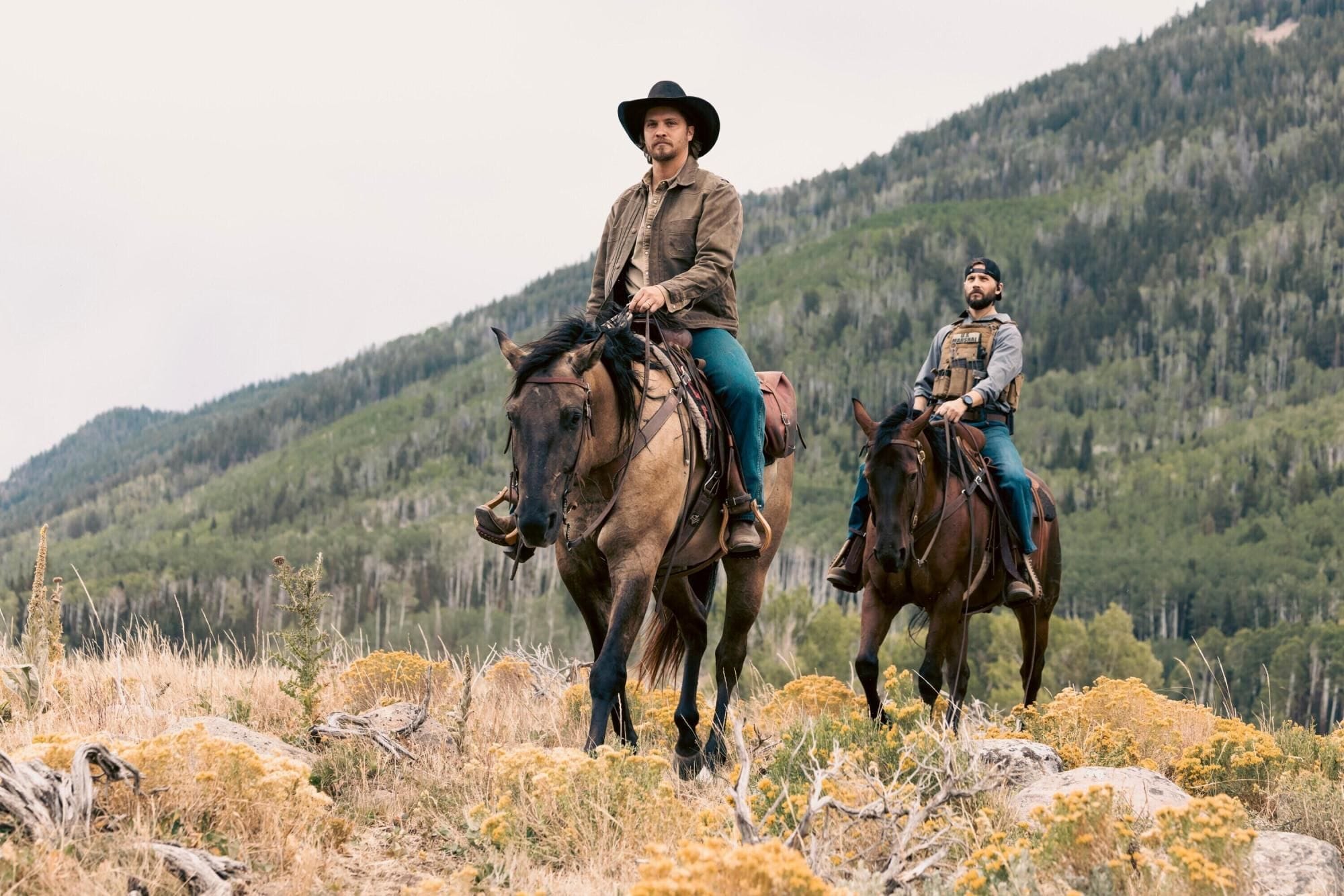
Spoiler Warning: This article contains spoilers for both the Yellowstone series finale and the Marshals series premiere.
When the final credits rolled on Yellowstone’s series finale in December 2024, something unprecedented happened. For the first time in modern television history, a cultural phenomenon of such magnitude had reached its conclusion without overstaying its welcome. Taylor Sheridan’s neo-Western masterpiece had delivered five seasons of operatic family drama, political intrigue, and stunning Montana vistas, then quietly rode off into the sunset—leaving behind a legacy that seemed, at the time, untouchable.
Or so we thought.
Three months later, Marshals premiered on CBS, and everything changed. Here was a show that dared to do what seemed impossible: continue the story of one of television’s most beloved characters while fundamentally reimagining what a Yellowstone series could be. The result is a fascinating experiment in franchise evolution—one that reveals as much about the changing landscape of television as it does about the enduring appeal of the Dutton mythology.
The End of an Era
To understand what Marshals represents, we must first acknowledge what Yellowstone achieved. In an age of fragmented viewership and declining broadcast ratings, Sheridan created something that felt almost miraculous: a mass-appeal drama that commanded the cultural conversation. The show didn’t just attract viewers; it created a shared experience. Sunday nights became appointment television again. Water coolers buzzed with debates about Beth Dutton’s latest scheme or John Dutton’s moral compromises. The show’s blend of Shakespearean family drama, Western iconography, and political commentary struck a chord that resonated far beyond its Paramount Network origins.
But all great stories must end, and Sheridan understood something that many creators forget: the power of a satisfying conclusion.
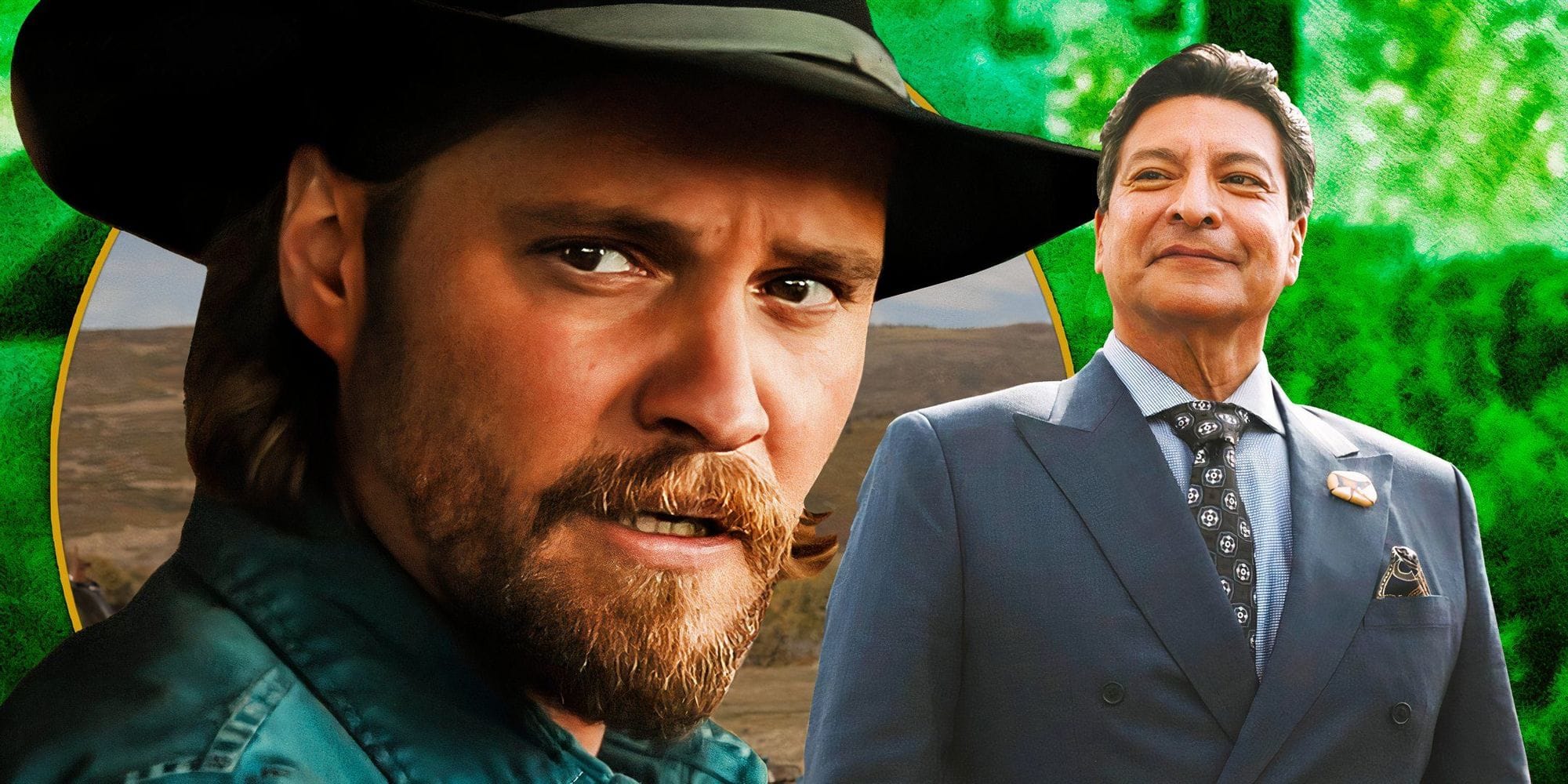
The Yellowstone finale, “Life Is A Promise,” was controversial, certainly. John Dutton’s death off-screen (following Kevin Costner’s real-world departure) frustrated many. Jamie Dutton’s violent end at the hands of his sister felt inevitable yet tragic. The sale of the Yellowstone Ranch back to the Broken Rock Reservation—fulfilling the prophecy established in 1883—was poetic justice for some, a betrayal of the family’s legacy for others.
Yet for Kayce Dutton, the ending was perfect. After five seasons of struggling between his father’s expectations and his own moral compass, between the weight of the Dutton name and his desire for a simpler life, Kayce finally achieved what he’d always wanted. He sold the ranch. He chose his family over his birthright. He rode into the sunset with Monica and Tate, free at last from the generational curse that had claimed so many Duttons before him.
It was, by every measure, a happy ending. Which is exactly why it couldn’t last.
The Problem with Happy Endings (Revisited)
Television abhors contentment. A satisfied character is a boring character. When Luke Grimes accepted the role of Kayce Dutton in Marshals, he understood this fundamental truth. “Obviously we can’t just watch this guy have his dream life,” Grimes explained in interviews. “There’s no drama. Something’s gonna have to happen that gets in the way of him having that.”
But Marshals faced a unique challenge. Unlike 1883 or 1923, which explored Dutton family history through prequel narratives, this was a direct sequel. It wasn’t asking viewers to meet new characters in a different time period—it was asking them to accept fundamental changes to a character they’d watched grow and evolve across five seasons. Kayce Dutton had earned his peace. Taking it away required justification that went beyond mere plot mechanics.
The solution the creators found was as brutal as it was narratively elegant: Monica’s death. By killing off Kayce’s wife—the anchor of his redemption, the reason he chose family over ranch—the show demolished the foundation of his happy ending. But this wasn’t just narrative convenience. As showrunner Spencer Hudnut revealed, the decision was born of practical necessity. Kelsey Asbille, who played Monica, was unavailable for the spinoff. The creators faced an unenviable choice: recast an iconic role (and face fan revolt), write Monica out ambiguously (and undermine five seasons of relationship building), or kill her off (and embrace the tragedy).
They chose tragedy. But they chose it with purpose.
A New Sheriff in Town: The Procedural Pivot
The most striking thing about Marshals isn’t that it continues Kayce’s story—it’s how it continues that story. Yellowstone was, at its core, a serialized family saga. Each season built upon the last, with plot threads weaving together into an increasingly complex tapestry. The show demanded commitment; miss an episode, and you might miss the subtle setup for a major payoff three seasons later.
Marshals takes a different approach. As a CBS procedural, it embraces a case-of-the-week structure that would have been unthinkable in the Yellowstone writers’ room. Each episode presents Kayce and his fellow marshals with a new crime to solve, a new threat to neutralize, a new corner of Montana’s criminal underworld to illuminate. The serialization that defined Yellowstone takes a backseat to immediate gratification.
This is both the show’s greatest strength and its most controversial choice. Critics have noted that Marshals lacks the “campy panache” of a true Sheridan project. The production values are lower. The storytelling is more conventional. The violence, while present, feels less operatic. As Variety’s review noted, the show has “the lowered production value and case-of-the-week structure of more meat-and-potatoes broadcast fare.”
But this criticism misses the point. Marshals isn’t trying to be Yellowstone. It’s trying to be something else entirely—something that honors its predecessor while carving out its own identity.
The Evolution of Kayce Dutton
The genius of Marshals lies in how it transforms Kayce’s character without betraying his essence. In Yellowstone, Kayce was defined by contradiction. He was a Navy SEAL who wanted peace. A Dutton who questioned his family’s methods. A warrior who dreamed of being a rancher. His entire arc was about reconciling these competing identities, and by the finale, he had finally integrated them into something coherent: a man who chose love over legacy, family over fight.
Marshals takes that integrated character and shatters him. Monica’s death doesn’t just remove his wife; it removes the future he had carefully constructed. The ranch is gone. The family unit is broken. Tate, now a teenager, carries his own grief while watching his father struggle. Kayce is, in every meaningful sense, lost.
The choice to become a U. S. Marshal isn’t a triumphant return to service; it’s an act of desperation. As his new boss Pete Calvin explains, the job is meant to be an “antidote” to the trauma of combat—a way to channel aggression into helping rather than harming. But we know Kayce. We’ve watched him for five seasons. We know that his capacity for violence is matched only by his capacity for love, and that the line between protection and destruction has always been thin for him.
What makes this transformation compelling is how it honors what came before while pushing into new territory. Kayce isn’t suddenly a different person; he’s the same complicated man, responding to catastrophic loss in ways that feel consistent with everything we know about him. The cowboy who became a SEAL who became a rancher is now a lawman, but the throughline is clear: he protects what he loves, and he loves deeply.
The Sheridan Question
No discussion of Marshals would be complete without addressing the Taylor Sheridan question. For the first time in the franchise’s history, Sheridan is not the primary creative force. The show was developed by Spencer Hudnut, whose credits include SEAL Team and The Blacklist: Redemption. While Sheridan retains an executive producer credit and receives “created by” acknowledgment, the day-to-day storytelling is Hudnut’s domain.
This has led to criticism that Marshals lacks Sheridan’s distinctive voice. The dialogue is less quotable. The plotting is more conventional. The thematic depth that characterized Yellowstone—its exploration of American identity, land ownership, and generational trauma—feels less pronounced.
But Hudnut’s approach has its own merits. Where Sheridan’s writing often leans into melodrama and operatic conflict, Hudnut brings a workmanlike efficiency that suits the procedural format. The show moves quickly. The cases are engaging. The character dynamics, while less explosive, have room to develop gradually.
More importantly, Hudnut understands what he’s inherited. “Taylor’s fingerprints are obviously all over this show,” Hudnut told the Television Critics Association. “He created these great characters. He created this great universe.” This isn’t a creator trying to erase what came before; it’s a creator trying to extend it in a new direction.
The question isn’t whether Marshals is as good as Yellowstone—it’s a different kind of show entirely. The question is whether it succeeds on its own terms while honoring its origins. And on that measure, the early episodes suggest it does.
The Broken Rock Connection
One of Marshals’ smartest decisions is maintaining the connection to Yellowstone’s most compelling ongoing storyline: the relationship between the Duttons and the Broken Rock Reservation. Gil Birmingham returns as Thomas Rainwater, now the owner of the former Yellowstone Ranch, and Mo Brings Plenty reprises his role as Rainwater’s deputy. Their presence isn’t mere fan service; it’s essential to the show’s thematic coherence.
In Yellowstone, the Dutton-Broken Rock conflict was the crucible that forged Kayce’s character. He was married to Monica, a Native American woman. He lived between two worlds, belonging fully to neither. The show’s finale, with the ranch returning to tribal ownership, was meant to heal this historical wound.
Marshals picks up this thread and examines its complications. The marshals’ jurisdiction often overlaps with reservation territory, forcing Kayce to navigate the same cultural tensions that defined his earlier life. But now he’s on the other side—an agent of federal authority policing conflicts between white settlers and Native communities. The irony isn’t lost on him, and it shouldn’t be lost on viewers.
This storyline represents Marshals’ most direct engagement with Yellowstone’s legacy. While the procedural elements provide weekly entertainment, the Broken Rock narratives carry the weight of history. They remind us that the Dutton story was never just about one family; it was about America’s original sin and the possibility, however remote, of redemption.
What the Critics Are Missing
Marshals debuted to mixed reviews, earning a 43% rating on Rotten Tomatoes—the first “rotten” score in the franchise’s history. Critics have focused on the show’s procedural nature, its lower production values, and its departure from Sheridan’s signature style.
But these criticisms fundamentally misunderstand what the show is trying to do. Marshals isn’t attempting to replicate Yellowstone’s success; it’s attempting to expand the franchise’s reach. By moving to CBS and adopting a more accessible format, the show introduces the Dutton universe to viewers who never subscribed to Paramount+. It lowers the barrier to entry while maintaining enough continuity to reward longtime fans.
Consider the alternative. Sheridan could have continued Yellowstone indefinitely, as so many successful shows do, gradually diminishing returns until the audience drifted away. Or he could have walked away entirely, leaving the universe dormant. Instead, he chose a middle path: allow another creator to explore new territory with established characters, trusting that the foundation he built was strong enough to support different kinds of stories.
This is how franchises evolve. This is how they survive. The Star Trek of the 1960s bears little resemblance to the Star Trek of today, but the spirit remains. The James Bond of Dr. No would be unrecognizable to viewers of No Time to Die, yet the character endures. Change isn’t betrayal; it’s the price of longevity.
The Future of the Duttonverse
Marshals is just one piece of Sheridan’s expanding universe. The Dutton Ranch, focusing on Beth and Rip, is currently filming. 1944, another prequel, is in development. The Madison, originally conceived as a Yellowstone spinoff, has evolved into its own entity. The franchise that began as a single family saga has become something larger: an ecosystem of interconnected stories exploring different facets of American life.
Whether all of these projects succeed is beside the point. What matters is that the universe remains alive, capable of surprising us with new perspectives on familiar themes. Marshals represents a gamble—that audiences will follow Kayce Dutton into unfamiliar territory, that the procedural format can support genuine character development, that a franchise can evolve without losing its soul.
The early streaming numbers suggest the gamble is paying off. According to FlixPatrol, Marshals became an instant global hit, reaching Number 5 worldwide on Paramount+ and Number 2 in the United States. Critics may be skeptical, but audiences are voting with their viewing hours.
Conclusion: Legacy as Living Thing
The word “legacy” gets thrown around a lot in discussions of Yellowstone and its spinoffs. We talk about the Dutton family legacy, the legacy of the ranch, the legacy of the show itself. But legacy isn’t a monument; it’s a conversation across time. It’s the choices we make in the present in dialogue with the past.
Marshals understands this. It doesn’t pretend that Yellowstone never happened, nor does it try to recreate that show’s magic. Instead, it asks a different question: What comes after the happy ending? What does redemption look like when the world conspires to take it away? How do we honor the dead while building a future for the living?
Kayce Dutton’s journey from rancher to marshal isn’t a betrayal of his character; it’s the next logical chapter in a life defined by adaptation. The cowboy who became a soldier who became a family man is now a lawman, but the essential question remains the same: How do we protect what we love without becoming what we hate?
Yellowstone gave Kayce the space to ask that question. Marshals gives him the chance to answer it, one case at a time, one day at a time, one step further from the shadow of his father’s legacy and toward whatever light he can find.
That’s not just good television. That’s how stories stay alive.
Marshals airs Sundays at 8:00 PM ET/PT on CBS and streams on Paramount+.
Related Reading:
- From Ranch to Badge: Kayce Dutton’s Journey of Redemption in ‘Marshals’
- The Necessity of Monica’s Death: Why the Creators Made This Choice
What do you think? Does Marshals honor the Yellowstone legacy, or does it betray it? Share your thoughts in the comments below.
#Marshals #Yellowstone #KayceDutton #LukeGrimes #TaylorSheridan #SpencerHudnut #TVReview #LegacyTV #SpinoffSeries #CBS