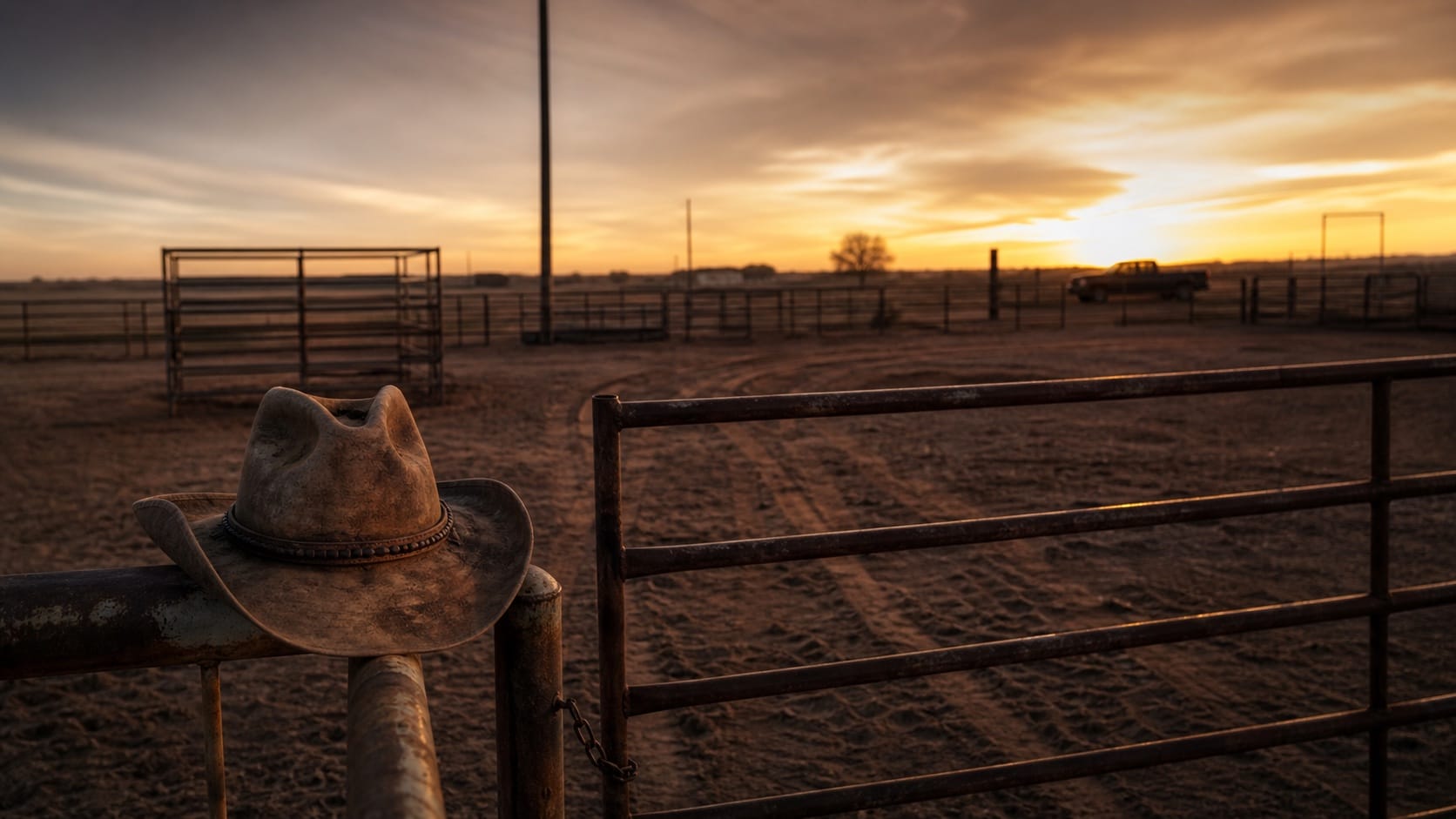
Rip and Beth had to kill the cattle in Dutton Ranch Episode 4 because the herd was infected with foot-and-mouth disease, and the outbreak had moved past the point where a single animal could be isolated. By the time "Start With a Bullet" reaches its ending, the show makes the decision feel unavoidable: the whole herd has become a danger to the ranch, nearby animals, and Beth and Rip's new business.
That does not make the scene easy to watch. Episode 4 gives Dutton Ranch its darkest ending so far, forcing Rip, Beth, Azul, and Zachariah to destroy the cattle they were trying to build a future around.
The short answer is simple: the cattle were not killed because Beth and Rip gave up. They were killed because foot-and-mouth disease is fast-spreading, economically devastating, and extremely difficult to contain once a herd is exposed.
The longer answer is more complicated. In real life, an outbreak would involve veterinarians, laboratory confirmation, animal health officials, quarantine, movement controls, and a formal response plan. Dutton Ranch compresses all of that into a brutal ranch sequence because it is telling a drama, not a public health manual.
Here is what Episode 4 confirms, why the cattle had to be put down, and what the ending means for Beth and Rip after the herd is gone.
What Happened at the End of Dutton Ranch Episode 4?
Episode 4, "Start With a Bullet," follows the crisis that began in Episode 3. Beth and Rip's new herd has been exposed to foot-and-mouth disease after the bull they bought at auction turns out to be infected.
At first, there is still a small hope that the disease can be limited. By Episode 4, that hope is gone.
The episode confirms that the disease has spread through the herd. The cattle show visible symptoms, and Rip understands that the outbreak is not contained to one animal anymore. He then makes the call that defines the episode: the entire herd has to be destroyed.
Rip, Beth, Azul Ramos, and Zachariah Moss drive the cattle toward a burial pit. The show keeps much of the violence offscreen, but the sound and structure of the sequence make the meaning clear. They are not selling the cattle, treating them, or waiting out the infection. They are ending the herd.
That is why the episode lands so hard. Beth and Rip have already lost their Yellowstone home, rebuilt in Texas, and started chasing a new beef business. Then Episode 4 wipes out the livestock that made that future possible.
Why Did Rip and Beth Have to Kill the Cattle?
The reason is foot-and-mouth disease, often shortened to FMD.
In the show, the disease is presented as the kind of outbreak that cannot be allowed to spread beyond the ranch. That tracks with the real-world disease logic. USDA APHIS describes FMD as a severe, fast-spreading viral disease that affects cloven-hoofed animals such as cattle, pigs, sheep, goats, and deer. It is also one of the hardest animal diseases to control.
The disease is not mainly frightening because every infected adult animal dies. In fact, many infected animals survive. The bigger problem is that infected animals can spread the virus and may be left weakened, less productive, and commercially damaging to a herd.
For Beth and Rip, that creates three problems at once:
- Containment: if the virus spreads beyond their land, the damage gets much bigger.
- Business: their premium beef plan collapses if the herd is infected.
- Evidence: the diseased bull points back to the auction, which may mean fraud or sabotage.
Once the entire herd is infected or exposed, killing the cattle becomes the ranch's grim containment move.
Why Not Just Treat the Cattle?
That is the question many viewers ask first.
The problem is that foot-and-mouth disease is not handled like a simple individual illness where a rancher gives medicine, waits a few days, and sells the cattle later. It is a high-consequence herd disease. It spreads quickly, triggers major reporting and control concerns, and can damage entire livestock markets.
USDA APHIS says most infected animals may survive, but survival does not solve the problem. A surviving animal can still be part of a broader outbreak response. The ranch cannot simply pretend the herd is normal because the commercial and disease-control risks are too high.
That is why Episode 4 treats the herd as a total loss.
Could a real response involve vaccination? Sometimes, yes. APHIS says emergency vaccination may be authorized during an outbreak to help prevent further spread and protect healthy animals. But vaccination is not a magic fix for cattle that are already clinically infected, and response plans still include depopulation of affected or in-contact animals depending on the situation.
In other words, the show is not inventing the idea that exposed animals may have to be destroyed. It is dramatizing one of the harshest versions of a real outbreak response.
What Does "Culling the Herd" Mean?
In this context, culling means destroying the infected or exposed animals to stop the disease from continuing to spread.
USDA APHIS response materials describe "stamping-out" as depopulation of clinically affected and in-contact susceptible animals. APHIS also lists quarantine, movement controls, diagnostics, tracing, surveillance, disposal, cleaning, disinfection, and, when appropriate, emergency vaccination as parts of an FMD response.
Dutton Ranch shows only the most cinematic and painful part: the herd being killed.
That is partly why the scene feels so raw. It strips away paperwork, state response, laboratory procedures, and compensation systems. What remains is Rip and Beth facing the animals themselves.
From a storytelling standpoint, that makes the loss personal. From a real-world standpoint, the scene should be understood as a dramatic shortcut for a much larger disease-control process.
Was the Meat Unsafe to Eat?
Not in the way many viewers assume.
USDA APHIS states that FMD is not a human health or food safety threat and is not the same as human hand, foot, and mouth disease. USDA briefing materials also note that meat and milk processed from FMD-infected animals can be safe to consume.
So why not salvage the meat?
Because the issue is not only whether a steak would hurt someone. The issue is disease control, inspection, trade, transport, and whether moving products or animals could worsen the outbreak. In a serious FMD event, the economic damage comes from containment measures, movement restrictions, market disruption, and loss of disease-free status.
For the show, Beth and Rip are not in a position to quietly turn the herd into product. Their entire selling point was premium Dutton beef. A herd tied to FMD cannot support that business.
That is the key distinction: the cattle are not useless because FMD is a human food poison. They are commercially and biologically dangerous because FMD is a livestock outbreak.
Did the Bull Cause the Outbreak?
Yes, Episode 4 strongly points to the auction bull as the source.
The show has been building this since Episode 2, when Beth and Rip bought the bull at auction. By Episode 3, Rip suspects the animal was not properly vetted. By Episode 4, the whole herd is sick, and Beth begins checking the paper trail behind the sale.
Comic Basics notes that Beth contacts the doctor tied to the medical examination, only to discover there is no record of that exam for the bull. TechRadar also identifies the local cattle auctioneer as the man responsible for selling Beth and Rip the diseased bull.
That does not fully answer whether the outbreak was an accident, fraud, or a deliberate attack.
What is confirmed:
- The bull from the auction is treated as the likely source.
- The herd becomes infected.
- The medical paperwork looks suspicious.
- Rip believes the auctioneer knowingly sold diseased cattle.
What is not confirmed:
- Whether Beulah directly infected the bull.
- Whether Joaquin Reyes organized the sale.
- Whether the auctioneer knew the full truth.
- Whether the outbreak was meant specifically to destroy Beth and Rip.
The show wants viewers to suspect sabotage, but it has not proven the full chain yet.
Was Beulah Behind the Diseased Bull?
That is the big fan theory after Episode 4, but it is still a theory.
Beulah Jackson benefits from Beth and Rip's disaster. The Duttons lose their herd, their Dallas beef opportunity, and their immediate leverage as newcomers in Rio Paloma. Beulah also has enough local power to make the audience wonder how much she knows about every deal around town.
But Episode 4 does not show Beulah ordering the bull to be infected or sold to the Duttons.
The more interesting possibility is that Beulah may not be the only power player. Comic Basics points toward a theory involving Joaquin Reyes, fake blood test reports, and a middleman. Episode 4 also keeps Beulah's position complicated by showing her relationship with Everett and her tension around family power.
So the clean answer is:
Beulah is suspicious, Joaquin is suspicious, and the auction sale is suspicious. But the show has not confirmed who engineered the outbreak.
Why the Ending Hits Rip So Hard
Rip has killed before. That is not new.
What makes Episode 4 different is that these cattle are not enemies. They are not threats. They are the living foundation of the future he and Beth are trying to build.
The scene forces Rip to do something that looks like ranch work but feels like a funeral. He is not protecting the herd by killing one animal. He is ending the herd to protect everything around it.
That is why the episode's title, "Start With a Bullet," works on more than one level. It refers to literal gunfire, but it also marks the beginning of a new phase in the season. Beth and Rip's Texas story is no longer about whether they can start over. It is about what they become after that new start is attacked.
The ending also changes Rip's relationship with the ranch itself. The land is still there, but the living business has been erased.
Why Beth Keeps Carter Away
Carter's reaction is one of the most important emotional beats after the cattle are gone.
He is furious that Beth kept him away from the ranch while it happened. From Carter's point of view, if he is supposed to become a rancher, he should have been there for the worst part too.
Beth sees it differently. She does not want him carrying that image. She does not think the massacre is a lesson he needs.
That conflict matters because it shows the family divide opening under the ranch crisis. Carter wants to be treated like a man. Beth still sees a boy she can protect. Rip is caught between ranch reality and family damage.
Episode 4 therefore gives the Duttons two losses:
- the herd
- Carter's trust
That second loss may last longer than the first.
What the Ending Means for Episode 5
Episode 5 is titled "Peaceful Find Peace," and the official setup says Beth offers Beulah a high-stakes deal to secure both their futures.
That makes sense after Episode 4.
Beth and Rip cannot simply buy another herd and move on. They need to know whether they were targeted, how deep the auction fraud goes, and whether Beulah is an enemy, a temporary partner, or both.
The cattle deaths also put Beth in a strange position. She has lost the thing she planned to sell, but she may have gained a reason to go after everyone who touched the deal.
Episode 5 should answer one question above all:
Does Beth want justice, leverage, revenge, or a new business path?
With Beth, the answer is usually all four.
What to Read Next
- Dutton Ranch Episode 3 Cow Disease Explained
- Dutton Ranch Episode 5 Release Date, Time, and Preview
- Dutton Ranch Episode Guide
- Who Is Beulah Jackson in Dutton Ranch?
- Dutton Ranch Reviews: What Critics and Fans Are Saying
Quick FAQ
Why did Rip and Beth kill all the cattle in Dutton Ranch Episode 4?
They killed the cattle because foot-and-mouth disease had spread through the herd. Once the herd was infected or exposed, the show presents culling as the only way to stop the outbreak from spreading further.
What disease did the cattle have?
The cattle had foot-and-mouth disease, also known as FMD. It affects cloven-hoofed animals such as cattle, pigs, sheep, goats, and deer.
Is foot-and-mouth disease dangerous to humans?
USDA APHIS says FMD is not a human health or food safety threat and is not the same as human hand, foot, and mouth disease.
Could Rip and Beth have vaccinated the herd?
Vaccination can be part of an FMD response, but it is not a simple cure for an already infected herd. Real response plans may still involve depopulation of infected and exposed animals, depending on the outbreak.
Did Beulah infect the bull?
Not confirmed. Episode 4 makes the auction sale suspicious and points toward a possible setup, but it does not prove Beulah personally caused the infection.
Why was Carter angry at Beth?
Carter was angry because Beth kept him away from the ranch while the herd was killed. He believes he should have been there if he is expected to become a real rancher.
What happens next after the cattle are killed?
Episode 5 should follow Beth's next move. The official setup says she offers Beulah a high-stakes deal, which suggests the cattle disaster pushes Beth into a new round of bargaining and retaliation.