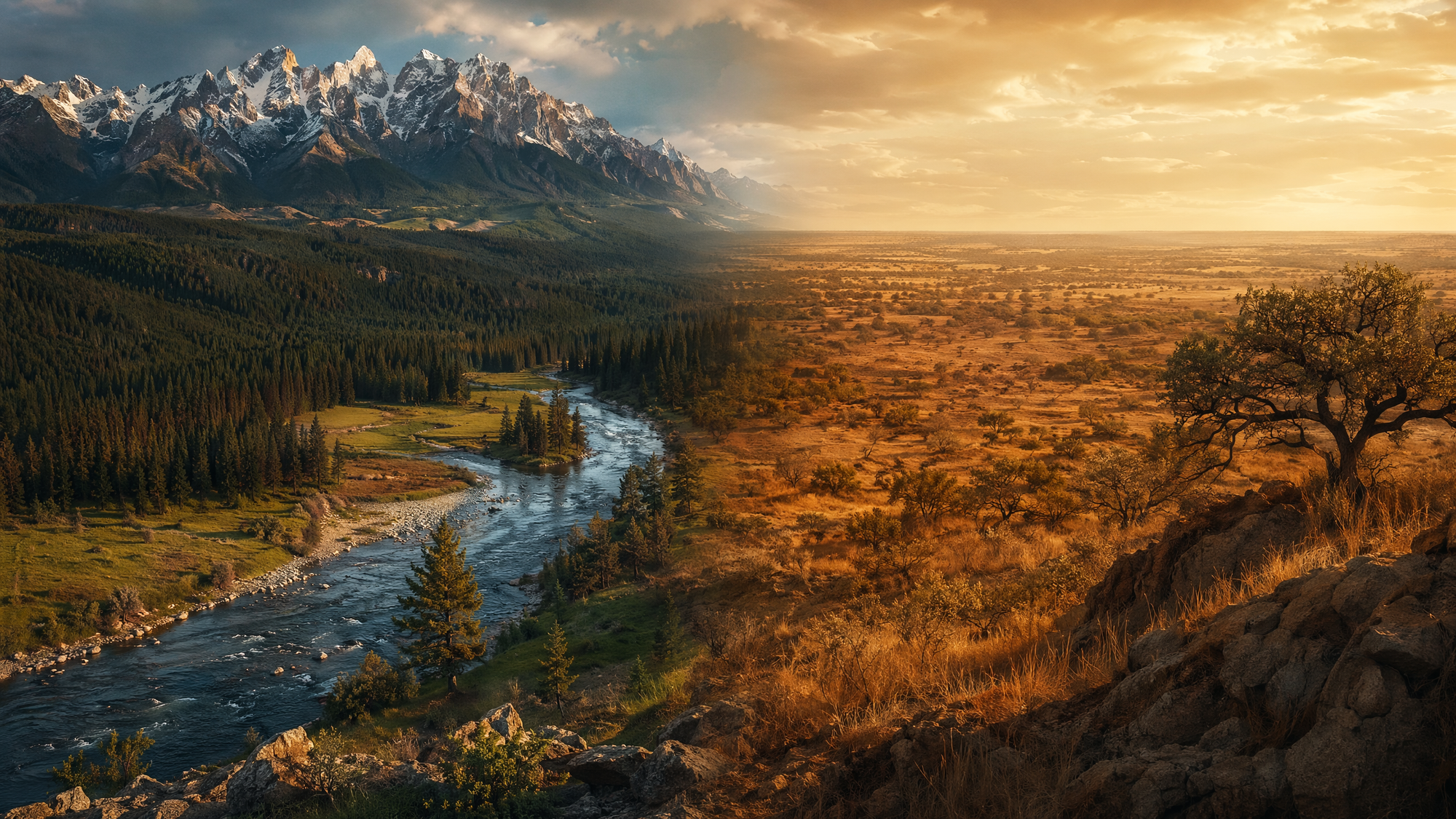

When Beth Dutton and Rip Wheeler pack up their lives and leave Montana for Texas, they’re not simply relocating to a new ranch. They’re crossing into a fundamentally different world—one where the rules, the culture, the climate, and even the very relationship between humans and land operate on entirely different terms. For five seasons, Yellowstone was inseparable from Montana’s towering peaks, alpine meadows, and crystalline rivers. The Dutton Ranch sat nestled in mountain valleys, protected by natural barriers and defined by vertical grandeur. Now, in Dutton Ranch, that epic verticality gives way to horizontal vastness, mountain protection yields to exposed vulnerability, and the lush green of Montana summers transforms into the sun-bleached brown of Texas brush country.
This geographical shift is far more than a change of scenery—it’s a narrative revolution. The move from Montana to Texas fundamentally alters the visual language of the series, the practical challenges the characters face, the cultural context in which they operate, and the symbolic meaning of their struggle. Understanding these differences is essential to appreciating what Dutton Ranch is attempting to achieve: not a simple continuation of Yellowstone, but a reinvention that honors the original while charting bold new territory.
The Geography: Mountains vs. Plains, Protection vs. Exposure
Montana: Fortress in the Mountains
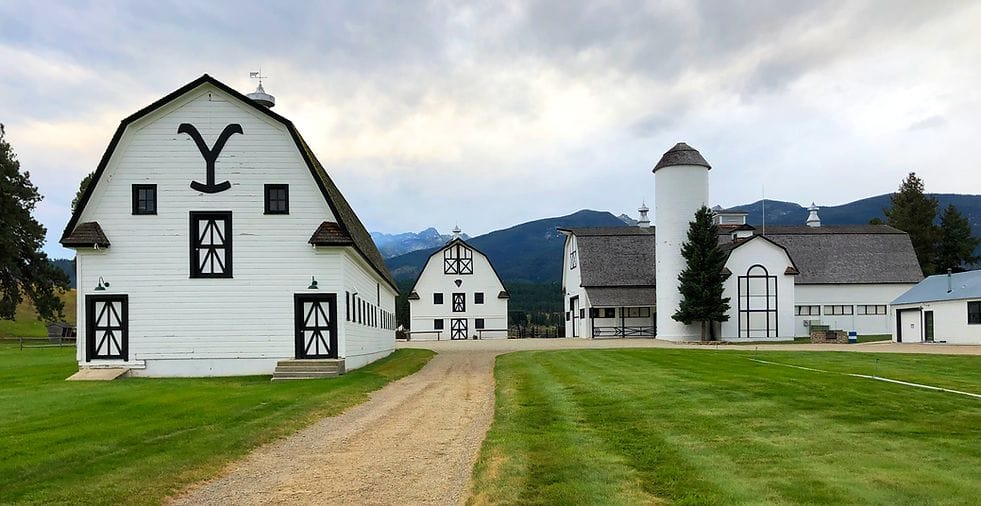
The Yellowstone Dutton Ranch, filmed at the real Chief Joseph Ranch in Darby, Montana, occupied one of the most visually stunning locations in American television. Situated in the Bitterroot Valley, surrounded by the Bitterroot Mountains to the west and the Sapphire Mountains to the east, the ranch enjoyed natural protection and breathtaking beauty. Aerial shots routinely showcased snow-capped peaks, dense forests, and the winding Bitterroot River cutting through verdant valleys. citation
This geography wasn’t just pretty—it was strategic. Mountains provided natural barriers against encroachment, limited access points that could be controlled, and created microclimates that supported diverse ecosystems. The ranch’s 2,500 acres felt vast but contained, a kingdom unto itself with clear boundaries defined by topography. Water was abundant from mountain snowmelt, forests provided timber and shelter, and the elevation moderated summer heat while creating harsh but manageable winters.
Montana’s ranching tradition developed around this geography. Cattle grazed in mountain meadows during summer and were brought down to valley pastures in winter. The landscape supported both cattle and horses, with Montana becoming famous for breeding quality working horses. The state’s semi-arid climate and short growing season meant ranchers focused on livestock rather than crops, generating income from land that had limited agricultural alternatives. citation
Texas: Exposed on the Plains
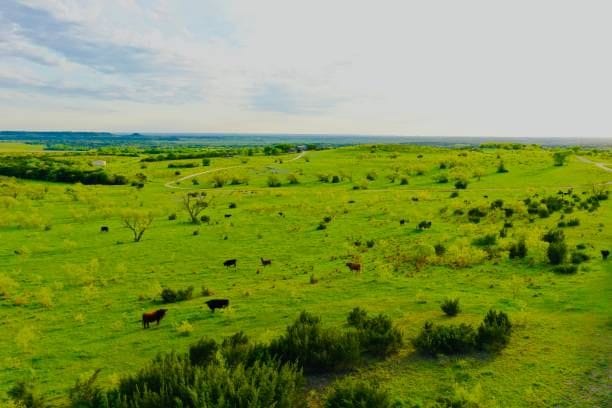
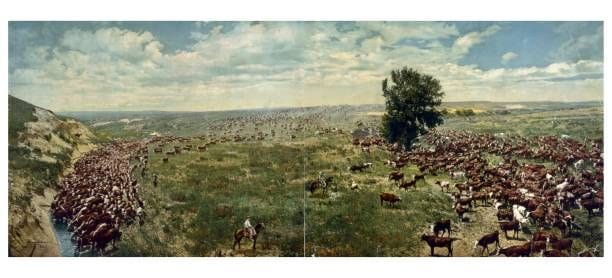
The Dutton Ranch in Texas, filmed primarily in North Texas locations around Fort Worth, Dallas, Ferris, and Weatherford, presents a radically different landscape. While the show is set in the fictional South Texas town of Rio Paloma, the filming locations capture the essence of Texas brush country: flat or gently rolling terrain, sparse vegetation dominated by mesquite and scrub brush, and an overwhelming sense of horizontal space that stretches to distant horizons. citation
Director and cinematographer Christina Alexandra Voros emphasized this fundamental difference: “The shift from Montana’s dramatic mountain valleys to Texas’s flat, sun-bleached terrain gives Dutton Ranch a fundamentally different visual identity. Where Yellowstone felt epic and sweeping, Dutton Ranch feels intimate and exposed—there’s nowhere to hide in the Texas brush country, and the relentless heat becomes almost a character itself.” citation
This exposure is both literal and metaphorical. Without mountains to provide natural barriers, the Texas ranch is vulnerable from all directions. Threats can approach unseen across the flat terrain. There’s no high ground to defend, no narrow passes to control. The 7,000-acre Dutton Ranch in Texas is actually larger than their Montana property, but it feels more vulnerable precisely because of its openness.
Water scarcity is a constant concern in Texas ranching. Cole Hauser highlighted this challenge: “The idea of cowboying in a different environment. A lot of people say cowboying is the same everywhere. It’s not. The challenge of just getting water for cows… what are they going to do?” citation In Montana, mountain snowmelt provided reliable water sources. In Texas, ranchers must manage groundwater, drill wells, and carefully maintain stock tanks—all while facing periodic droughts that can devastate herds.
The Climate: Cold Endurance vs. Scorching Heat
Montana: The Winter Crucible
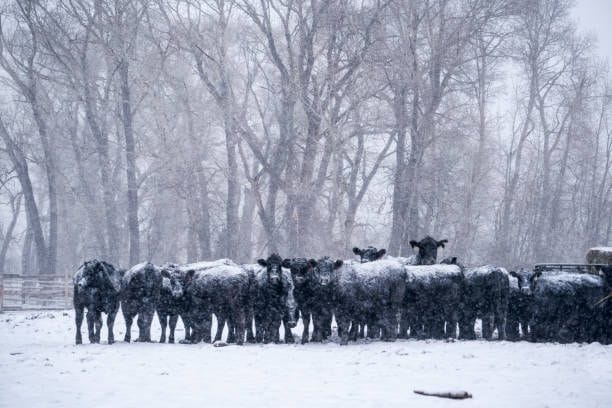
Montana ranching is defined by its brutal winters. Temperatures regularly drop below zero, blizzards can last days, and the infamous “Winter of 1886-87” killed an estimated 60% of Montana’s cattle (362,000 head) through starvation and exposure. citation Montana ranchers adapted by developing cold-hardy cattle breeds, stockpiling massive quantities of hay for winter feeding, and building infrastructure to protect livestock from the elements.
In Yellowstone, winter was a recurring visual and narrative element. Snow-covered landscapes, frozen rivers, and characters bundled in heavy coats reminded viewers that survival in Montana required preparation, resilience, and respect for nature’s power. The ranch’s bunkhouse, barns, and equipment were all designed around the reality of months-long winters.
Texas: The Heat as Enemy
Texas ranching faces the opposite extreme. Summer temperatures routinely exceed 100°F, and the combination of heat and humidity can be lethal to both humans and animals. The cast and crew of Dutton Ranch experienced this firsthand during filming. Kelly Reilly noted that even the horses struggled with the adjustment: “The Montana-love from the horses is another reminder that Texas has been an adjustment for every creature.” citation
The production also contended with 275 venomous snakes on set—a danger virtually non-existent in Montana filming. citation This detail underscores a broader reality: Texas ranching involves constant vigilance against threats that Montana ranchers rarely encounter. Rattlesnakes, scorpions, fire ants, and aggressive wild hogs are part of daily life in Texas brush country.
Drought is the defining climate challenge in Texas ranching. While Montana faces harsh winters, those winters also guarantee spring snowmelt and water security. Texas ranchers can go years with inadequate rainfall, forcing them to sell off herds, drill deeper wells, or abandon ranching altogether. This economic vulnerability adds a layer of precarity that Montana ranchers, for all their winter hardships, don’t face to the same degree.
The Ranching Culture: Tradition vs. Adaptation
Montana: Generational Legacy
Montana ranching culture is built on continuity and tradition. Many Montana ranches have been in the same families for generations, with ranching knowledge passed down from grandparents to grandchildren. The state’s relatively small population (about 1.1 million people) and vast land area (fourth largest state) mean that ranching communities are tight-knit, with neighbors often living miles apart but maintaining strong social bonds through shared work, rodeos, and community events.
Montana cowboys are known for their self-reliance and stoicism. The state’s harsh conditions breed a culture that values competence, toughness, and the ability to handle problems independently. In Reddit discussions about Montana cowboy culture, residents emphasize that “if he’s from Montana, and did not work with cattle for a time, he’ll correct anyone who tries to call him a cowboy.” citation Authenticity matters in Montana—cowboy identity must be earned through actual ranch work, not adopted as fashion.
This cultural context defined Rip Wheeler’s character in Yellowstone. His loyalty, competence, and quiet authority were quintessentially Montana. He knew every inch of the Dutton Ranch, commanded respect from the bunkhouse crew, and operated within a clearly defined hierarchy where his role and responsibilities were understood by all.
Texas: Multicultural Ranching
Texas ranching culture is more diverse and fluid. With a population of nearly 30 million people and a long border with Mexico, Texas ranching has been shaped by Mexican vaquero traditions, Anglo-American cattle drives, and waves of immigration from around the world. The very word “cowboy” derives from the Spanish “vaquero,” and many Texas ranching practices—roping techniques, saddle design, even the iconic cowboy hat—trace their origins to Mexican ranch culture. citation
In Dutton Ranch, this cultural difference is immediately apparent. Rip’s ranch hands speak primarily Spanish, creating a language barrier that forces him to adapt his leadership style. He’s no longer operating in a familiar cultural context where everyone shares the same background and assumptions. Cole Hauser described the adjustment: “It’s like going to the moon for these characters.” citation
Texas also has a more commercialized cowboy culture. While Montana’s cowboy identity is closely tied to actual ranch work, Texas embraces a broader “cowboy” aesthetic that includes rodeos, country music, western fashion, and tourism. This creates a cultural landscape where authenticity and performance coexist—something that might frustrate Beth and Rip, who are used to Montana’s more straightforward, work-defined identity.
The Economics: Scale and Competition
Montana: Quality Over Quantity
Montana is home to approximately 2.2 million cattle, making it a significant but not dominant player in the American beef industry. Montana ranching emphasizes quality over quantity, with the state known for producing premium beef and breeding high-quality working horses. The state’s large average ranch size (Montana farms and ranches average among the largest in the nation) and relatively low land prices make it attractive for those who can handle the climate challenges. citation
In Yellowstone, the Dutton Ranch was portrayed as one of the largest and most powerful ranches in Montana—a plausible scenario given the state’s small population and concentration of land ownership. The Duttons’ wealth and influence made sense in a state where a large ranch could dominate regional politics and economics.
Texas: The Cattle Capital
Texas is the undisputed cattle capital of America, with approximately 12.5 million cattle—more than five times Montana’s herd. citation The state’s vast size (268,000 square miles compared to Montana’s 147,000), warmer climate allowing year-round grazing, and proximity to major markets make it the center of the American beef industry.
This scale changes everything for the Duttons. In Montana, they were big fish in a small pond. In Texas, they’re newcomers in a market dominated by established ranching dynasties like the fictional Jackson family’s 10 Petal Ranch, which has controlled the region for 190 years. The economic competition is fiercer, the stakes are higher, and the Duttons’ Montana reputation means nothing in a state where ranching success is measured by different metrics.
The presence of Beulah Jackson as the primary antagonist reflects this economic reality. She’s not just a rival rancher—she’s the embodiment of entrenched Texas ranching power, with generations of accumulated wealth, political connections, and local knowledge that the Duttons lack. Her 190-year family legacy dwarfs even the Dutton family’s multi-generational Montana history.
The Visual Language: Epic Grandeur vs. Harsh Intimacy
Yellowstone’s Cinematic Montana
Yellowstone’s cinematography was defined by sweeping aerial shots of mountain ranges, golden-hour lighting on alpine meadows, and the dramatic contrast between lush valleys and rugged peaks. The show’s visual style emphasized scale and grandeur, with the landscape functioning as both setting and character. The mountains provided natural framing for shots, creating compositions that felt both epic and contained.
The color palette of Yellowstone featured rich greens, deep blues, and the warm golds of Montana sunlight. Even in winter, the landscape had a stark beauty—white snow against dark evergreens, frozen rivers catching pale sunlight. The visual style communicated abundance, natural wealth, and a landscape that, while harsh, was also nurturing and protective.
Dutton Ranch’s Texas Aesthetic
Christina Alexandra Voros deliberately crafted a different visual identity for Dutton Ranch: “A landscape very often teaches you how it needs to be filmed. The light in Texas is so different from the light in Montana. There is a harshness to it and a warmth to it.” citation
The Texas landscape lacks Montana’s vertical drama, forcing the cinematography to find beauty and tension in horizontal space, vast skies, and the subtle textures of brush country. The color palette shifts to browns, tans, and bleached yellows—earth tones that communicate scarcity rather than abundance. The relentless Texas sun creates harsh shadows and washed-out midday light that contrasts sharply with Montana’s softer, more forgiving illumination.
This visual shift serves the narrative. Where Yellowstone was about defending a kingdom, Dutton Ranch is about building something from scratch in hostile territory. The exposed landscape mirrors Beth and Rip’s vulnerability. There’s nowhere to hide, no natural fortress to retreat to. Every threat is visible from miles away, but so are the Duttons—they’re as exposed as their enemies.
The flatness of the terrain also changes how action and tension are filmed. In Montana, characters could disappear into forests, take cover behind rocks, or use elevation for tactical advantage. In Texas, confrontations happen in open spaces where everyone can see everything. This visual openness creates a different kind of tension—not the claustrophobic danger of being trapped, but the psychological pressure of constant exposure.
The Symbolic Meaning: What the Land Represents
Montana: Heritage and Burden
In Yellowstone, the Montana ranch represented heritage, legacy, and the weight of history. John Dutton fought to preserve his family’s land not just for economic reasons, but because it embodied generations of Dutton sacrifice and achievement. The land was sacred, a trust passed down from father to son, carrying with it both privilege and obligation.
But that heritage was also a burden. Beth, Jamie, and Kayce all struggled under the weight of their father’s expectations and the ranch’s demands. The land required constant defense against developers, rival ranchers, Native American land claims, and government interference. By the end of Yellowstone, the ranch had consumed the family—John was dead, Jamie was murdered by Beth, and the surviving Duttons were scattered.
Texas: Freedom and Reinvention
The Texas ranch in Dutton Ranch represents something fundamentally different: the possibility of reinvention. Beth and Rip aren’t defending an inherited legacy—they’re building something new. The land is theirs to shape, free from the ghosts of previous generations and the expectations that defined their Montana lives.
Kelly Reilly emphasized this shift: “Beth isn’t in fight mode. She has her own family with Carter now, and Rip and Beth together, it’s almost like leaving the ghosts of her past behind.” citation The Texas landscape, harsh and unforgiving as it is, offers freedom that Montana never could.
But freedom comes with its own challenges. Without the structure and support system of the Montana ranch, Beth and Rip must prove themselves in a new environment where their reputation and skills don’t automatically command respect. The discovery of buried bodies on their property and the emergence of Beulah Jackson as an adversary suggest that even in Texas, the past has a way of catching up.
The horizontal vastness of the Texas landscape symbolizes possibility—there’s room to grow, to expand, to become something different. But it also symbolizes isolation and vulnerability. In Montana, the Duttons were surrounded by family, loyal ranch hands, and a community (however contentious) that knew and respected them. In Texas, they’re outsiders, strangers in a land with its own rules and power structures.
The Practical Challenges: What Changes for Beth and Rip
Water Management
In Montana, water was abundant. In Texas, it’s the most critical resource. Rip must learn new skills: managing groundwater rights, maintaining wells and stock tanks, and planning for drought. A Montana rancher’s winter hay stockpile is replaced by a Texas rancher’s water infrastructure as the key to survival.
Livestock Management
Texas cattle ranching differs significantly from Montana practices. The breeds are different (heat-tolerant cattle like Brahman crosses versus cold-hardy Montana breeds), the grazing patterns are different (year-round grazing versus seasonal rotation), and the health challenges are different (parasites and heat stress versus cold exposure and predators).
Labor and Language
Rip’s Montana crew spoke English and shared a common cultural background. His Texas crew speaks primarily Spanish and brings different ranching traditions. This isn’t just a language barrier—it’s a fundamental shift in how ranch operations are organized and communicated. Rip must learn to lead in a multicultural environment where his Montana methods may not translate directly.
Community Relations
In Montana, the Duttons were established power players. In Texas, they’re the new arrivals, viewed with suspicion by entrenched interests like the Jackson family. Building alliances, earning respect, and navigating local politics require different skills than defending an inherited position.
Climate Adaptation
The cast’s real-world struggles with Texas heat and venomous snakes mirror what Beth, Rip, and Carter would experience. They must adapt to a climate that’s not just different but opposite—learning to manage heat stress, drought, and dangers they never faced in Montana.
Conclusion: A New Frontier
The move from Montana to Texas in Dutton Ranch is far more than a change of address. It’s a complete reimagining of what a Western drama can be, trading the epic grandeur of mountain ranching for the harsh intimacy of brush country survival. The shift forces beloved characters to adapt, struggle, and reinvent themselves in ways that honor their Yellowstone origins while pushing them into genuinely new territory.
For viewers, this geographical transformation offers both comfort and challenge. The comfort comes from following familiar characters—Beth’s fierce determination, Rip’s quiet competence, Carter’s coming-of-age journey. The challenge comes from seeing those characters stripped of their Montana advantages and forced to prove themselves in an environment that doesn’t care about their past accomplishments.
The Texas landscape—flat, exposed, unforgiving, and beautiful in its own harsh way—becomes a perfect metaphor for Beth and Rip’s journey. They’re starting over, building something new, and facing threats that can approach from any direction. There are no mountains to hide behind, no inherited power structures to rely on, no safety in tradition. There’s only the land, the work, and the question of whether they have what it takes to succeed on entirely new terms.
As Christina Alexandra Voros observed, the landscape teaches you how it needs to be filmed. It also teaches the characters how they need to live. Montana taught the Duttons about heritage, loyalty, and defense. Texas will teach them about adaptation, reinvention, and whether freedom is worth the price of vulnerability.
Welcome to Texas. The rules have changed. The landscape has changed. And Beth and Rip must change with it—or fail.
Dutton Ranch streams new episodes every Friday on Paramount+ and airs on Paramount Network at 8 PM ET/PT.*