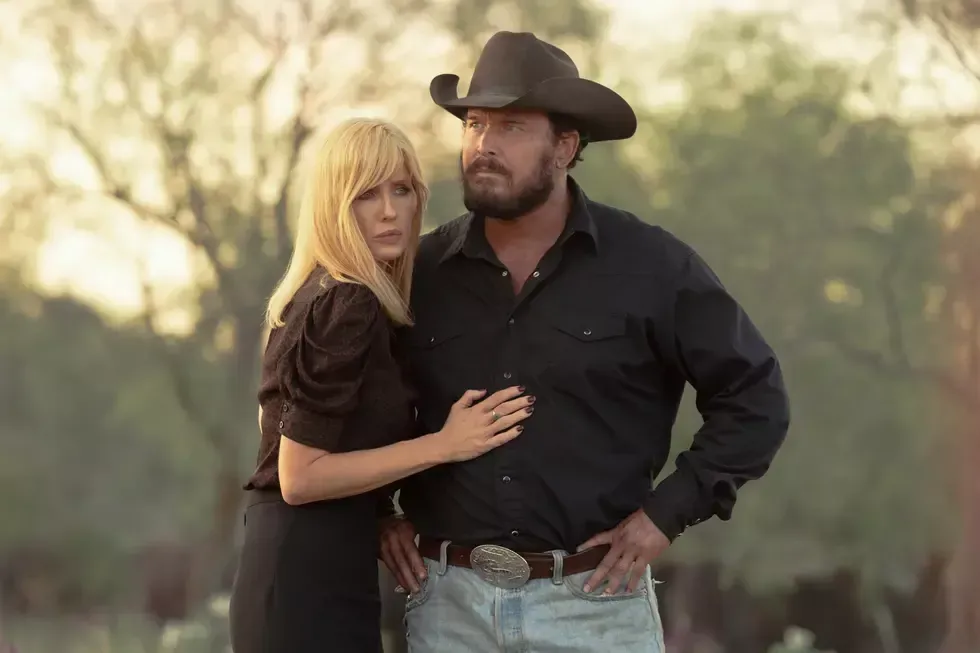
The final moments of Yellowstone left fans with a bittersweet sense of closure. After five seasons of brutal family warfare, political machinations, and the relentless fight to preserve the Dutton legacy, the series concluded with the sale of the iconic Montana ranch and the scattering of the Dutton family to their separate destinies. Yet, for Beth Dutton and Rip Wheeler, the story was far from over. Now, with Dutton Ranch premiering on May 15, 2026, viewers are about to witness the next chapter in their tumultuous journey—one that promises to honor the past while forging an entirely new path forward.
Understanding how Dutton Ranch connects to Yellowstone’s finale is essential for appreciating the emotional weight and narrative continuity of this highly anticipated spinoff. This isn’t just another Western drama set in Taylor Sheridan’s expanding universe; it’s a direct sequel that grapples with the ghosts of the original series while introducing fresh conflicts, new adversaries, and uncharted territory—both literally and metaphorically.
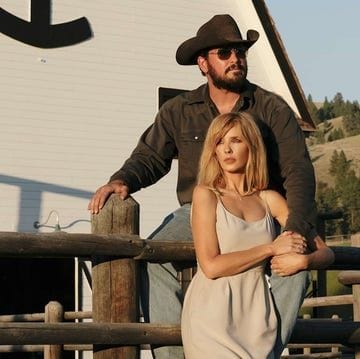
The Yellowstone Finale: Blood, Betrayal, and a Bittersweet Goodbye
To understand where Dutton Ranch begins, we must first revisit how Yellowstone ended. The final season of the flagship series opened with a devastating blow: the murder of John Dutton, the family patriarch played by Kevin Costner. What initially appeared to be suicide was later revealed to be an orchestrated hit connected to Sarah Atwood and Jamie Dutton, John’s adopted son and Beth’s lifelong nemesis.
The revelation of Jamie’s involvement in their father’s death became the catalyst for the series’ most explosive confrontation. Beth Dutton, portrayed with fierce intensity by Kelly Reilly, had harbored an unshakable hatred for Jamie since their teenage years—a resentment born from a traumatic incident in which Jamie had her forcibly sterilized without her knowledge when she sought his help for an abortion. This betrayal festered for decades, poisoning any chance of reconciliation between the siblings.
The final confrontation between Beth and Jamie was brutal, visceral, and inevitable. Beth arrived at Jamie’s house, and the two engaged in a violent physical altercation that ended with Beth stabbing her brother to death. Rip Wheeler, Beth’s husband and the ranch’s longtime foreman, helped dispose of Jamie’s body at the infamous “Train Station”—the remote gorge where the Duttons had long disposed of their enemies’ remains.
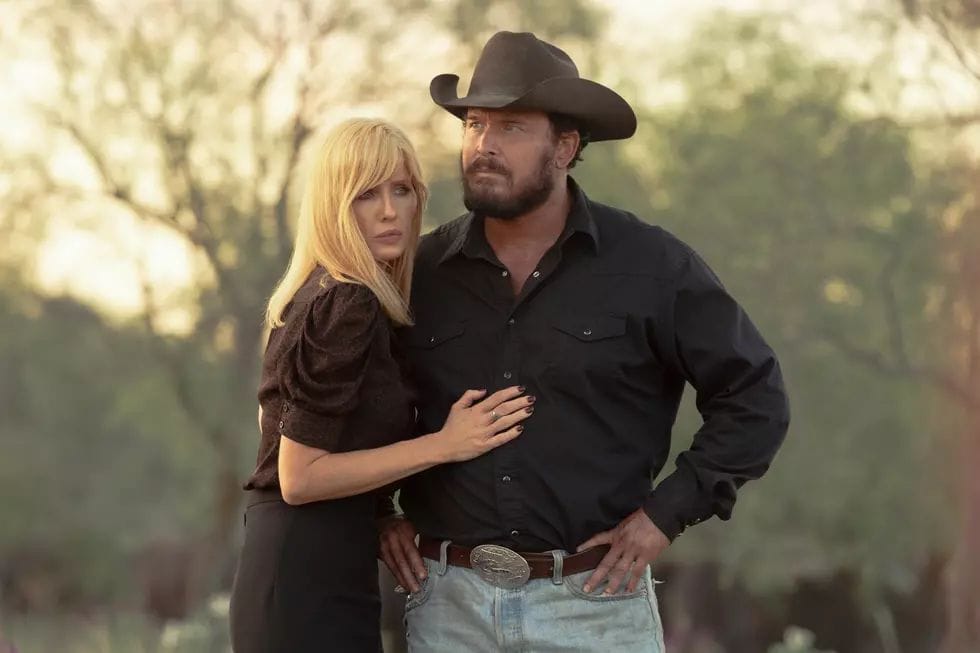
While Jamie’s death provided Beth with a sense of closure, it also left unresolved questions about consequences and accountability. The murder of a sitting Attorney General, even one as morally compromised as Jamie, should have triggered massive legal repercussions. Yet Yellowstone’s finale glossed over these implications, leaving many fans wondering if this loose thread would be addressed in future installments.
Meanwhile, Kayce Dutton, the youngest son, orchestrated the sale of the Yellowstone ranch back to the Broken Rock Indian Reservation, fulfilling a vision he had received and honoring the land’s original stewards. Beth and Rip, no longer tethered to the family property, purchased a ranch in Dillon, Montana, intending to build a peaceful life together with their adopted son, Carter. The series ended with the Dutton siblings on good terms, each pursuing their own path forward.
The One-Year Gap: Peace Before the Storm
Dutton Ranch doesn’t pick up immediately after the Yellowstone finale. According to Kelly Reilly and Cole Hauser, approximately one year has passed between the two series. This time jump is crucial to understanding the emotional state of the characters when the spinoff begins.
During this intervening year, Beth and Rip enjoyed a period of relative peace on their Montana ranch in Dillon. For the first time in their lives, they weren’t fighting to defend the Yellowstone Dutton Ranch from developers, politicians, or rival ranchers. They weren’t navigating the complex and often toxic dynamics of the Dutton family. They were simply living—raising Carter, managing their own land, and building the future they had always dreamed of but never had the space to pursue.
Kelly Reilly explained in a recent interview that Jamie’s death gave Beth the closure she desperately needed. “It was such a powerful heartbeat in Beth, that betrayal, that pain, and so the ending of Yellowstone, when that storyline is ended, literally, there is a sense of closure for her on that,” Reilly noted.
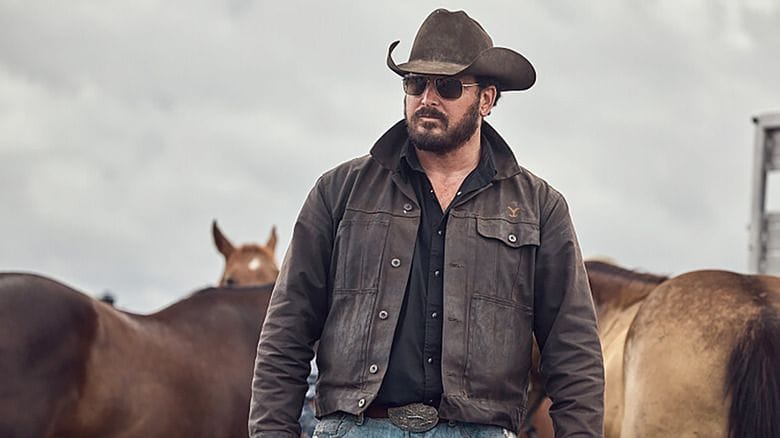
This year of peace, however, was fleeting. Something happens in Montana—something significant enough to uproot Beth, Rip, and Carter from their home and send them fleeing to South Texas. The exact nature of this inciting incident remains one of Dutton Ranch’s most closely guarded secrets, but the official series description offers tantalizing clues: “As Beth and Rip fight to build a future together—far from the ghosts of Yellowstone—they collide with brutal new realities and a ruthless rival ranch that will stop at nothing to protect its empire.”
The phrase “ghosts of Yellowstone” is particularly evocative. What ghosts are Beth and Rip running from? The most obvious answer is the legal and moral consequences of Jamie’s murder. While Yellowstone’s finale treated the killing as a closed chapter, the reality is that the disappearance of a state Attorney General would trigger extensive investigations. Did someone discover evidence linking Beth and Rip to Jamie’s death? Did the “Train Station” finally come under scrutiny from law enforcement?
The trailer for Dutton Ranch offers additional hints. Viewers see flames tearing through the Montana ranch, threatening the cattle and the land itself. This catastrophic fire could be the catalyst that forces Beth and Rip to abandon Montana and start over in Texas. Whether the fire is accidental, the result of natural causes, or deliberately set by enemies seeking revenge remains to be seen.
From Montana Mountains to Texas Plains: A Geographic and Emotional Shift
The move from Montana to South Texas represents more than just a change of scenery—it’s a complete reinvention of Beth and Rip’s identities. Montana, with its towering mountains and vast wilderness, was the Dutton family’s ancestral homeland. Every acre of the Yellowstone ranch was soaked in history, blood, and legacy. For Rip, who had spent his entire adult life as the ranch’s foreman and John Dutton’s most loyal soldier, Montana was the only home he had ever truly known.
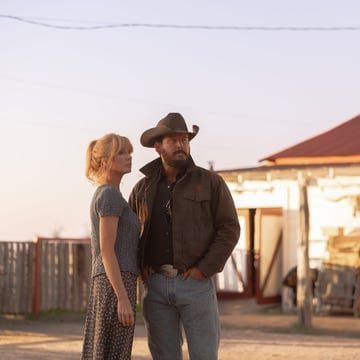
Texas, by contrast, is unfamiliar territory. The landscape is flatter, hotter, and more unforgiving. The culture, politics, and ranching practices differ significantly from what Beth and Rip knew in Montana. In the trailer, Rip is heard saying, “Welcome to Texas, honey,” to Beth—a line that carries both excitement and apprehension. Rip also admits that he misses waking up to the Montana mountains, underscoring the emotional cost of their relocation.
The decision to set Dutton Ranch in Texas also reflects Taylor Sheridan’s expanding vision for the Yellowstone universe. Sheridan, who owns a ranch in Texas and has deep ties to the state, has increasingly incorporated Texas settings into his storytelling. The Four Sixes Ranch, featured prominently in later seasons of Yellowstone when Jimmy was sent there, is located in Guthrie, Texas. Sheridan’s series Landman is also set in Texas, exploring the oil industry and its impact on modern cowboy culture.
For Beth and Rip, Texas represents a blank slate—an opportunity to build something entirely their own, free from the Dutton family’s complicated legacy. They acquire a 7,000-acre ranch in South Texas and name it Dutton Ranch, reclaiming the family name on their own terms. But as the trailer makes clear, starting over is never as simple as it seems.
New Enemies, Old Patterns: The Beulah Jackson Conflict
If Yellowstone taught us anything, it’s that the Duttons attract conflict wherever they go. In Dutton Ranch, the primary antagonist is Beulah Jackson, played by Academy Award nominee Annette Bening. Beulah is the matriarch of a powerful ranching dynasty that has controlled the South Texas region for 190 years. Like John Dutton before her, Beulah is fiercely protective of her family’s empire and will stop at nothing to defend it.
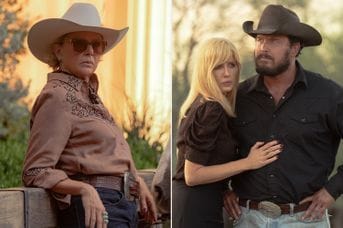
The parallels between Beulah and John Dutton are striking and intentional. Both are aging patriarchs (or matriarchs) clinging to a way of life that is rapidly disappearing. Both view their land as sacred, inextricably linked to their family’s identity and honor. And both are willing to use violence, intimidation, and manipulation to protect what they believe is rightfully theirs.
In the trailer, Beulah delivers a chilling line to Beth and Rip: “Rip and Beth have secrets, and people with secrets can be useful, corruptible even.” This suggests that Beulah has somehow learned about Beth and Rip’s past—possibly including Jamie’s murder or other dark deeds committed in Montana. The threat of exposure gives Beulah leverage over the couple, creating a power dynamic that echoes the blackmail and manipulation that defined so much of Yellowstone’s drama.
The conflict between the Duttons and the Jacksons appears to center on a land dispute, a classic Western trope that Yellowstone explored extensively. The trailer shows Rip discovering a buried body on the Dutton Ranch property, an ominous discovery that likely ties into the Jackson family’s history and their determination to reclaim or control the land.
Ed Harris also joins the cast as Everett McKinney, a veteran-turned-veterinarian who appears to have connections to the Jackson family. In the trailer, Everett describes Beulah as “Miss Rio Paloma herself,” suggesting she wields significant influence in the region. The presence of veteran actors like Bening and Harris signals that Dutton Ranch is not simply coasting on the popularity of its lead characters—it’s assembling a formidable ensemble to tell a complex, layered story.
Carter’s Journey: From Boy to Man
One of the most compelling subplots in Dutton Ranch will be the continued development of Carter, the orphaned boy Beth and Rip took in during Yellowstone. Played by Finn Little, Carter represents the future—a young man who must learn what it means to be a Dutton (or a Wheeler) in a world that is rapidly changing.
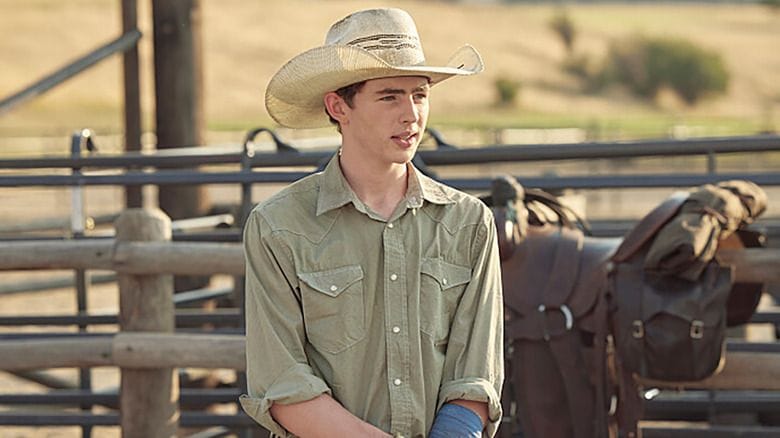
The official IMDb description of Dutton Ranch emphasizes this theme: “Beth Dutton and Rip Wheeler fight to survive on their cherished 7,000-acre ranch amid tough times and stiff competition, while ensuring young Carter becomes the man he’s supposed to be.”
In Yellowstone, Carter was often caught between Beth’s tough-love approach and Rip’s more patient mentorship. Beth, unable to have biological children due to Jamie’s betrayal, projected both her maternal instincts and her unresolved trauma onto Carter. Rip, who had his own troubled youth before John Dutton took him in, saw in Carter a reflection of his younger self—a boy in need of guidance, discipline, and unconditional loyalty.
Now, in Texas, Carter faces new challenges. The trailer hints at potential danger surrounding Carter, with some analysts speculating that he may be targeted by the Jackson family or caught in the crossfire of the escalating ranch war. Whether Carter will follow in Rip’s footsteps as a loyal ranch hand and enforcer, or forge his own path, remains one of the series’ most intriguing questions.
Thematic Continuity: Legacy, Violence, and Redemption
At its core, Dutton Ranch grapples with the same themes that made Yellowstone so compelling: the weight of legacy, the cyclical nature of violence, and the possibility (or impossibility) of redemption.
Beth and Rip’s decision to name their new property Dutton Ranch is significant. They could have chosen any name, could have completely severed ties with the past and started fresh under a new identity. Instead, they chose to honor the Dutton name—a name synonymous with power, violence, and an unyielding determination to protect what’s yours at any cost.
This decision suggests that Beth and Rip haven’t truly escaped the “ghosts of Yellowstone.” They carry those ghosts with them, embedded in their identities and their worldview. Beth is still the fierce, uncompromising woman who will destroy anyone who threatens her family. Rip is still the loyal enforcer, willing to get his hands dirty to protect the people he loves. The question Dutton Ranch must answer is whether these traits will serve them in their new life, or whether they will ultimately lead to their downfall.
The theme of violence is particularly important. Yellowstone was often criticized for its unflinching portrayal of brutality, from the “Train Station” murders to the countless beatings, shootings, and acts of intimidation committed by the Duttons and their allies. The series finale’s casual treatment of Jamie’s murder—with no apparent legal consequences—felt to many viewers like a moral cop-out, suggesting that the Duttons could literally get away with murder as long as they stayed loyal to each other.
Dutton Ranch has the opportunity to reckon with this legacy of violence. Will Beth and Rip face consequences for their past actions? Will the cycle of violence continue in Texas, or will they find a way to break free from it? The trailer’s emphasis on fire, buried bodies, and escalating conflict suggests that violence will remain central to the story. But there’s also the possibility of growth and change. Kelly Reilly has hinted that Beth has achieved a measure of closure after Jamie’s death, suggesting that she may be in a different emotional place than she was in Yellowstone.
The Broader Yellowstone Universe: Where Dutton Ranch Fits
Dutton Ranch is just one piece of Taylor Sheridan’s ever-expanding Yellowstone universe. The franchise now includes multiple prequels (1883, 1923), a contemporary spinoff focused on Kayce Dutton (Marshals), and another modern series (The Madison), with additional projects like 1944 and 6666 in development. Understanding where Dutton Ranch fits in this timeline is crucial. Unlike the prequels, which explore the Dutton family’s origins and the historical forces that shaped the American West, Dutton Ranch is a direct sequel to Yellowstone. It takes place in the modern day, running parallel to Marshals, which follows Kayce’s career as a U. S. Marshal.
There has been speculation about potential crossovers between Dutton Ranch and Marshals. After all, Beth and Kayce ended Yellowstone on good terms, and both series are set in the same time period. However, Kelly Reilly has confirmed that there are no crossover plans for Dutton Ranch Season 1. This makes sense narratively—Beth and Rip have moved to Texas specifically to escape their past and start fresh. A crossover with Kayce would undermine that sense of geographic and emotional distance.
That said, the “Train Station” has become a recurring concern in Marshals, suggesting that the legal and moral implications of the Duttons’ past actions are finally being addressed. If Kayce’s investigation into the Train Station uncovers evidence linking Beth and Rip to Jamie’s murder, it could create a compelling conflict that forces the siblings to confront each other across series. For now, though, Dutton Ranch appears to be charting its own course.
What to Expect: The Road Ahead
Dutton Ranch premieres on May 15, 2026, with a two-episode launch on both Paramount+ and Paramount Network. The first season will consist of nine episodes, with new installments airing weekly through early July.
Based on the trailers, interviews, and official descriptions, here’s what fans can expect:
A Slow-Burn Mystery: The discovery of a buried body on the Dutton Ranch property suggests a central mystery that will unfold over the course of the season. Who is buried there? How does it connect to the Jackson family? And what does it mean for Beth and Rip’s future in Texas?
Escalating Conflict: The rivalry between the Duttons and the Jacksons will intensify, likely culminating in a violent confrontation. The trailer’s emphasis on fire, guns, and physical altercations suggests that Dutton Ranch will not shy away from the brutal, visceral storytelling that defined Yellowstone.
Character Development: With Beth and Rip removed from the Dutton family dynamics that shaped them in Yellowstone, the series has an opportunity to explore new facets of their personalities. How do they function as a couple when they’re not constantly in crisis mode? How do they navigate parenthood with Carter? And can they build a life that isn’t defined by violence and revenge?
High Production Values: Filmed on location in Texas, Dutton Ranch promises the same cinematic quality that made Yellowstone a visual feast. The shift from Montana’s mountains to Texas’s plains will offer a fresh aesthetic while maintaining the franchise’s commitment to authentic Western settings.
Conclusion: A New Chapter, Same Old Ghosts
Dutton Ranch represents both a continuation and a departure. It honors the legacy of Yellowstone by bringing back two of the series’ most beloved characters and exploring the consequences of the original show’s finale. At the same time, it offers a fresh start—a new setting, new conflicts, and new opportunities for growth and change.
The series’ central question is whether Beth and Rip can truly escape the “ghosts of Yellowstone,” or whether those ghosts will follow them to Texas and destroy everything they’re trying to build. Can people who have lived by violence and intimidation for so long find peace? Or are they doomed to repeat the same patterns, generation after generation?
As fans prepare to return to the world of the Duttons, one thing is certain: Dutton Ranch will be a wild ride. With a stellar cast, a compelling premise, and the creative vision of Taylor Sheridan’s team, the series has the potential to stand on its own while honoring the legacy of the show that started it all. The Montana mountains may be in the rearview mirror, but the Dutton spirit—fierce, uncompromising, and utterly unforgettable—burns as bright as ever under the Texas sun.
Dutton Ranch premieres Friday, May 15, 2026, on Paramount+ and Paramount Network. Don’t miss the two-episode premiere that will set the stage for the next great chapter in the Yellowstone saga.