August 12, 2026 · AI Products
On August 11, xAI published a product page and launch note for Grok Bot. Within hours it was climbing Hacker News and circulating across X.
The headline was not "a smarter Grok." It was blunter than that:
> Today we’re launching Grok Bot, AI teammates you can give real work to.
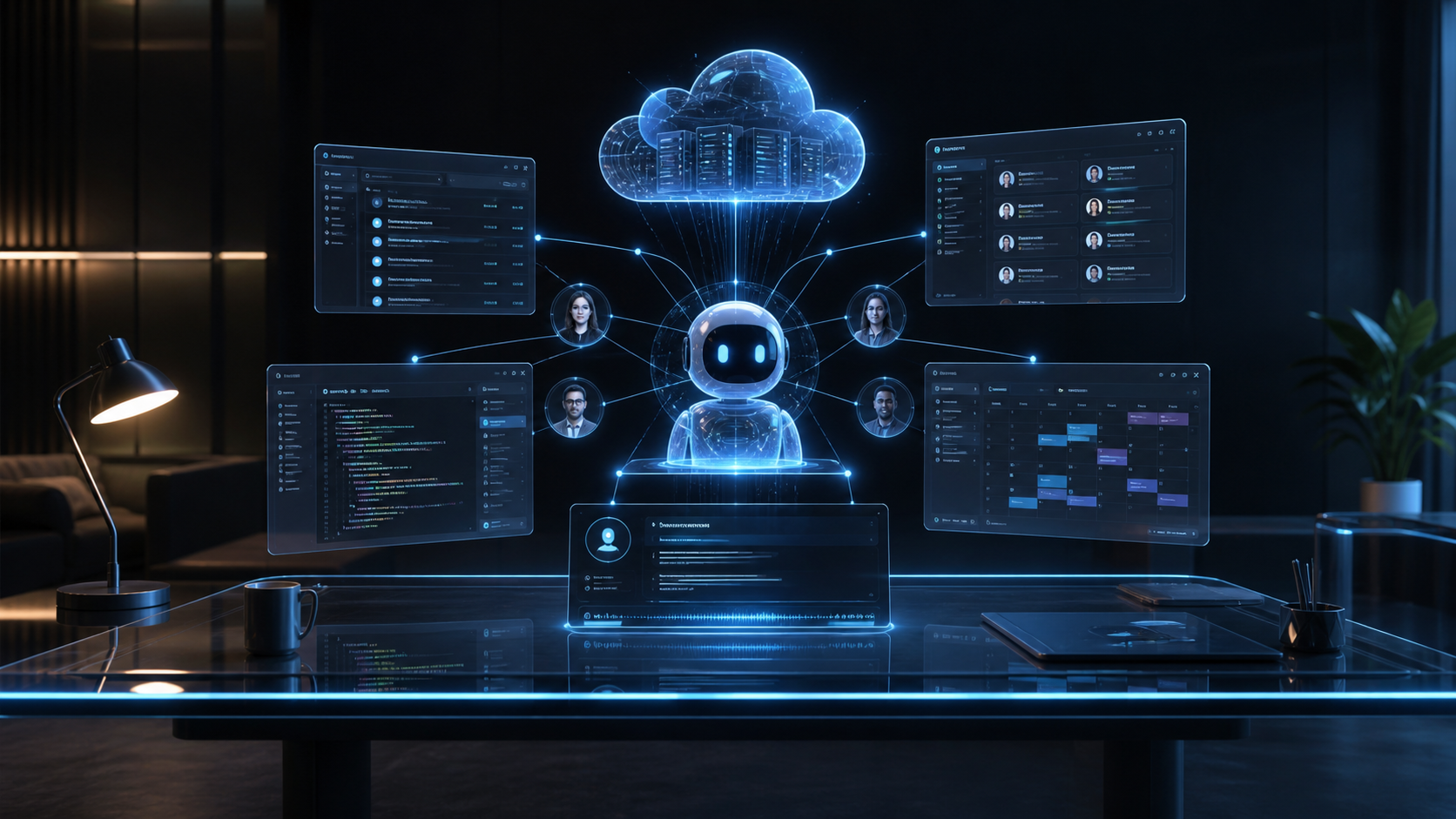
That sentence is the whole product story. Grok Bot is not being sold as a better chat box. It is being sold as a colleague with its own computer, its own logins, and the ability to finish multi-step work while you do something else.
That is why the internet reacted. Not because the model said something funny. Because the product category just moved again: from tab complete, to prompts, to coding agents, and now to always-on teammates that live inside your tools.
What Grok Bot actually claims to be
According to the official launch post and product page, Grok Bot is built around five ideas:
- A computer of its own. Each bot runs in a cloud computer. Work does not die when you close a tab.
- Tool login, not just tool calling. Bots can sign into apps and websites the way a person would, including systems without clean APIs or MCP connectors.
- Message it like a teammate. Desktop and iOS share the same thread. No workflow builder required to start.
- Many bots in parallel. You can run one bot on pipeline, one on ops, one on engineering, and put them in a shared thread.
- Teach by demonstration. Ask a bot to watch you complete a workflow once. It saves the routine and can run it later.
The internal examples are deliberately mundane, which is the point. xAI says SpaceXAI teams already use bots for sales outbound, CRM updates, onboarding ops, invoice processing, bug reproduction, and ticket handoffs. One product quote on the launch page captures the positioning cleanly:
> There is a huge difference between 90% done and 100% done. Most AI gets you almost there. Grok Bot can finish the swing, because the work lands where a human would put it, in the actual tool.
In other words: the unfinished last mile is the product.
Why social media treated this as a category moment
Most AI launches fail the same way. They ship a better answer box, then ask users to imagine the rest.
Grok Bot is louder because it tries to close three gaps that people have been complaining about for a year:
- Context dies between sessions. Grok Bot says bots keep context and get sharper over time.
- Agents stall without a browser-shaped environment. Grok Bot gives each bot a computer.
- Humans become the middleman between agents. Grok Bot says bots can message each other and only pull you in for approval.
That is also why comparisons to OpenClaw and other personal-agent stacks showed up immediately on Hacker News. The debate is no longer "can a model write an email?" It is "should one product own the full operating surface of a digital coworker?"
One early-access commenter on HN put the product evolution more cleanly than most marketing copy:
> in the same way we went from tab complete -> prompts -> agents, this feels like a next step on that evolution.
That is the social media thesis. Grok Bot is not competing only with ChatGPT or Claude. It is competing with the idea that agent work should still live inside a chat transcript.
The Cursor pricing is not a footnote
The second reason this launch went nuclear is commercial, not technical.
On the pricing section of the product page, Grok Bot is sold through Cursor plans:
- Cursor Ultra: $200 per month
- Cursor Premium Teams: $120 per seat per month
xAI also says Grok Bot is included for people already on Cursor Ultra or SuperGrok Heavy, and that beta access is available today for SuperGrok Heavy, Cursor Ultra, and Cursor Teams Premium subscribers on desktop and iOS. Enterprise sits on a waitlist.
That packaging matters.
Cursor was already the brand many engineers trusted for coding agents. Grok Bot uses that distribution and those price points to push the same habit into the rest of work: outbound, ops, tickets, reporting, inbox. The HN thread immediately treated the pricing labels as a signal that this is the next stage of the "Code → Cowork" product ladder.
It also created a trust collision. Several commenters said they would never hand account access to a Musk-adjacent stack, no matter how capable the agent looks. That reaction is not a side issue. If the product depends on signing into tools and holding context, brand trust becomes part of the security model.
The real product bet: always-on work, not smarter replies
Strip away the launch quotes and the bet is simple.
The last wave of AI products optimized for response quality. This wave optimizes for work continuity.
A chat model wins when the answer is better. An always-on bot wins when:
- the task survives your offline hours
- the result lands in the real system of record
- multiple specialists can run without you copy-pasting context
- routines improve after one demonstration instead of fifty prompts
That is why the "own computer" claim is the core of the launch. Without a persistent execution environment, agents keep collapsing into clever demos. With one, they start looking like shift workers.
And that is also why the economics discussion got sharp so fast. One HN user said they spent more tokens in a month of always-on bots than in the previous five years of ordinary usage. Whether or not every user hits that extreme, the direction is obvious: perpetual agents burn perpetual tokens. Grok Bot is priced like a seat, but its real unit of cost is continuous action.
The hard questions the launch does not dissolve
The product page is polished. The open questions are not.
1. Trust is the product surface. If a bot signs into Zendesk, Gmail, CRM, and GitHub, the attack surface is no longer a single prompt. It is every page the bot can open and every credential it can hold. "Comes back when approval is needed" is useful. It is not a complete security architecture.
2. Prompt injection gets more expensive when bots act. A bad answer is embarrassing. A bad action is operational damage. The more a bot can click, send, draft, and file, the more a poisoned page or email becomes a workflow hijack rather than a text glitch.
3. Parallel bots can externalize spam. One of the most-shared HN reactions was about a user who asked a bot to contact roughly 40 fabric suppliers. For the user, that is leverage. For the suppliers, it is a preview of AI-amplified outreach volume. When thousands of people get the same leverage, every inbox becomes an arms race between agents that send and agents that filter.
4. "Teammate" language hides governance work. A teammate has permissions, audit logs, offboarding, and liability. A bot with a computer needs the same. Product marketing can say "message it like a colleague." Companies still have to answer who owns the mistakes.
None of these issues make Grok Bot uninteresting. They make it real.
What this signals for the rest of the market
Grok Bot is a useful weather report for 2026 AI products.
Chat is no longer the prize. The prize is delegation under partial trust.
That means the next competitive layer is not only model quality. It is:
- durable computer environments
- login and browser control
- multi-agent coordination
- routine learning from demonstration
- seat-based packaging that feels like headcount, not tokens
It also means the market is splitting. One side wants local, inspectable, low-trust agents. The other wants hosted, always-on teammates that can finish work across SaaS tools. Grok Bot is a loud bet on the second path, using Cursor's distribution and xAI's model stack to make the teammate metaphor feel product-ready.
Whether enterprises buy that bet will not be decided by a demo of drafting LinkedIn messages. It will be decided by a duller test: can a company give a bot enough access to be useful without giving it enough access to become a liability?
The clean read
Grok Bot is hot on social media because it finally names the product people have been improvising toward for months.
Not another assistant that waits for a prompt. A small team of bots that keep working after you put the phone down.
If the last era of AI was about generating text, this one is about occupying roles. Grok Bot is one of the clearest attempts yet to turn that shift into a commercial product: a computer, a login, a routine, a price per seat, and a promise that the work lands where a human would have put it.
The hype is understandable. So is the skepticism. Both are responding to the same fact.
The chat window is no longer the center of the product. The teammate is.
Sources: