Introduction: A Sign From Above
If the first four episodes of Marshals were about Kayce Dutton trying to move forward from his past, Episode 5—“Lost Girls”—is about discovering that some legacies are meant to be carried forward, not left behind. Airing on March 29, 2026, this episode marks a significant tonal shift for the series, moving away from procedural cases involving bombers and rancher standoffs to tackle one of the most heartbreaking real-world crises facing Indigenous communities: the epidemic of missing and murdered Indigenous women and girls (MMIW).
The episode’s title works on multiple levels. On the surface, it refers to the teenage girls who have vanished from the Broken Rock Reservation, victims of a sex trafficking ring that preys on vulnerable Indigenous youth. But it also speaks to the girls who have been “lost” by a system that consistently fails them—law enforcement agencies that dismiss them as runaways, investigations that go nowhere, families left without answers for years or even decades.
And in a more personal sense, the title might also refer to Monica Dutton herself—the woman Kayce lost to cancer, whose absence haunts every frame of this series. But as “Lost Girls” makes beautifully clear, Monica isn’t really gone. Her advocacy work, her passion for protecting Indigenous women and children, and her unwavering belief in justice live on through Kayce and Tate.
This comprehensive recap breaks down every major moment of Episode 5, exploring how a chance encounter at a gas station becomes a race against time to save ten missing girls—and how Kayce discovers that sometimes the universe (or Monica) has a way of putting you exactly where you need to be.
Opening: The Wild Mustang and a Father’s Fear
Monica’s Horse
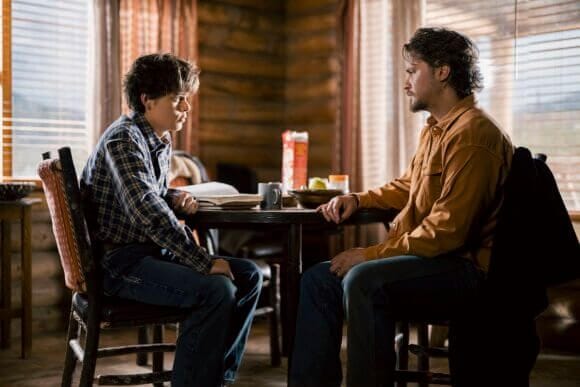
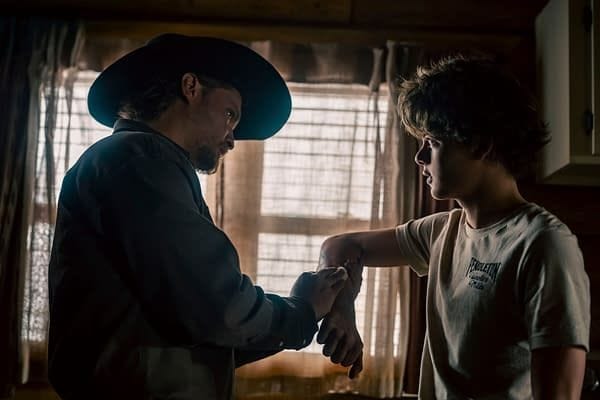
“Lost Girls” opens with a scene that immediately establishes the episode’s emotional stakes: Kayce rescuing Tate from Monica’s wild mustang. The horse, which once had a deep bond with Monica, has become increasingly aggressive and unpredictable since her death. When Tate tries to connect with the animal—a way of feeling close to his late mother—the stallion attacks, injuring Tate’s arm and pride.
Kayce’s warning is stark: “The only way left in this world to hurt me is through you, son.” It’s a line loaded with foreshadowing and vulnerability. Kayce has lost his wife, his family ranch, and his old life. Tate is all he has left, and the thought of losing him—even to a horse accident—is unbearable.
The decision to sell Monica’s horse becomes a point of conflict between father and son. For Kayce, it’s a practical safety measure—the horse is dangerous and needs to find a new home before someone gets seriously hurt. But for Tate, selling the mustang feels like erasing his mother’s memory, letting go of one more piece of her.
The Failed Sale
Kayce and Tate drive all the way to Wyoming to meet a potential buyer, but the sale falls through spectacularly when the horse bites the buyer and refuses to cooperate. Tate can’t help but smile—maybe the horse doesn’t want to leave them after all. Maybe, as Tate will later suggest, Monica doesn’t want them to sell it.
It’s a small moment, but it establishes the episode’s central theme: the idea that Monica is still present in their lives, still guiding them, still trying to protect the vulnerable. And as it turns out, that failed horse sale is about to lead Kayce and Tate to exactly where they need to be.
The Encounter: Hayley at the Gas Station
A Strange Reunion
At a truck stop in Wyoming, while Kayce is inside paying, Tate spots a familiar face: Hayley Charlo, a girl from his school on the Broken Rock Reservation. He hasn’t seen her in months, and something about her behavior immediately strikes him as wrong. She’s nervous, evasive, and clearly in a hurry. When Tate tries to talk to her, she brushes him off and disappears.
Tate tells Kayce that Hayley “didn’t seem like herself,” and Kayce’s instincts immediately kick in. What is a teenage girl from the Broken Rock Reservation doing at a truck stop across state lines? Why was she so nervous? And why did she look so scared?
The Investigation Begins
Back at Marshals headquarters, Kayce runs Hayley’s name through the system and discovers something chilling: she was reported missing four months ago. The local police on the reservation classified her as a runaway—a teenage girl who stole her mother’s car and took off. But Kayce and Miles (Tatanka Means) both know better. Indigenous girls don’t just run away. They’re taken.
Miles immediately recognizes the pattern: online grooming followed by trafficking. Someone used social media to build trust with Hayley, then lured her away from the reservation. And Hayley isn’t the only one. Another girl, Ava, went missing from Broken Rock a year ago under similar circumstances. Miles was working that case during his last days on the reservation police force before joining the Marshals.
The team wants to investigate immediately, but there’s a problem: they’ve just been assigned to protect Sam LaChance, a homicide suspect who’s serving as a key witness in a federal fraud case. Cal (Logan Marshall-Green) can’t officially authorize them to work the missing girls case—it’s outside their jurisdiction, and the reservation has its own police force.
Going Rogue: The Unofficial Investigation
Cal’s Dilemma
Cal is caught between his duty as a team leader and his understanding that the reservation police lack the resources to properly investigate these disappearances. The Broken Rock police force is severely underfunded and understaffed, which is why so many missing Indigenous women and girls stay missing for years—or forever.
Kayce and Miles convince Cal to let them have an “unofficial chat” with Hayley’s mother while the rest of the team handles the witness protection assignment. It’s a compromise that allows them to at least gather some information without officially interfering with the reservation’s jurisdiction.
Meeting the Mothers
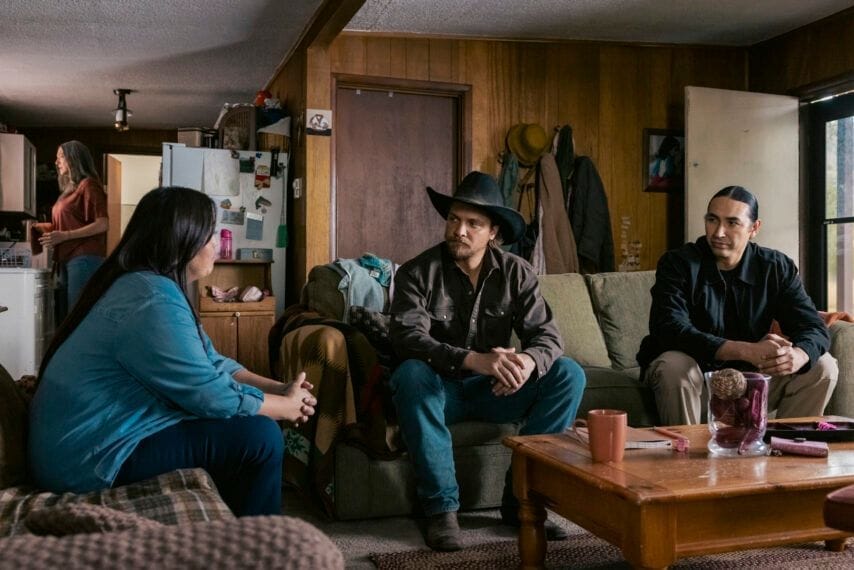
The visit to Hayley’s mother is heartbreaking. She confirms that Hayley stole her car and disappeared four months ago. The police recovered the vehicle but did nothing to find her daughter. They wrote her off as a runaway, another troubled Indigenous teenager who would probably come back on her own.
But Hayley’s mother knows better. She’s part of a group of mothers on the reservation who are searching for their missing daughters—a grassroots organization that formed because law enforcement wasn’t doing the job. And one of those mothers is Ava’s mom, who reveals something that hits Kayce like a punch to the gut: Monica was going to help their organization before she died. Monica was going to use her voice and her connections to bring attention to the crisis of missing Indigenous women.
It’s a revelation that reframes Monica’s death not just as a personal tragedy for Kayce and Tate, but as a loss for the entire community. Monica was an advocate, a fighter, someone who saw injustice and refused to look away. And now Kayce has a chance to finish what she started.
Rainwater’s Skepticism
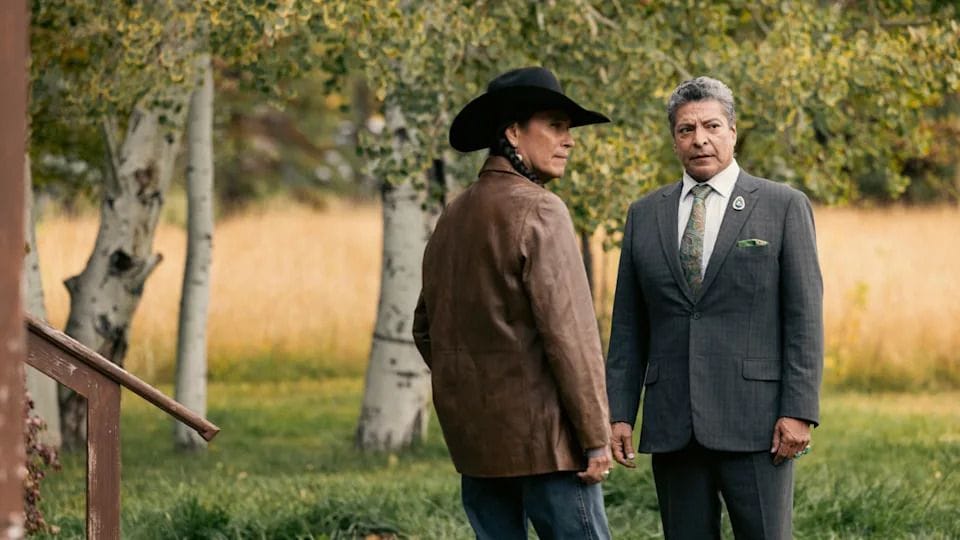
Thomas Rainwater (Gil Birmingham) arrives with Mo (Mo Brings Plenty), and his reaction to the Marshals’ involvement is complicated. On one hand, he appreciates that Kayce cares. On the other hand, he’s seen this before: federal law enforcement promising to help find missing Indigenous women, only to abandon the cases when they become too difficult or politically inconvenient.
Rainwater points out that Kayce and Miles are on the reservation unofficially, without an invitation from the tribal police. He’s not trying to be difficult—he’s protecting his people from false hope. Better to have no help than to have help that disappears after a week, leaving families with renewed grief and no answers.
But Kayce makes a promise: “We’re not going to give up on this.” And Rainwater, who has known Kayce for years and trusts him in a way he doesn’t trust most federal agents, decides to believe him.
The Breakthrough: Fishhooks and Bledsoe
The Catfisher
While Kayce and Miles are on the reservation, Belle (Arielle Kebbel) and Andrea (Ash Santos) have been quietly working the case from headquarters. They’ve identified the man who’s been grooming girls on social media: a predator who uses fake profiles to build trust with vulnerable teenagers, then arranges to meet them in person.
Kayce and Miles track down the catfisher and bring him in for questioning. The interrogation scene is brutal and effective, featuring an on-theme detail that will make viewers cringe: fishhooks. The implication is clear—Kayce and Miles aren’t playing by the rules anymore. They’re using whatever methods necessary to get information, and they’re willing to cross lines they wouldn’t normally cross when children’s lives are at stake.
The catfisher gives them a name: Kurt Bledsoe, a man with a lengthy rap sheet for pimping and pandering. Belle and Andrea’s research confirms that Bledsoe is suspected of running a sex trafficking ring that specifically targets Indigenous girls from reservations. He’s the man at the top of the operation, the one buying and selling these girls.
Turning Over the Catfisher
In a move that continues Marshals’ pattern of morally ambiguous justice, Kayce and Miles don’t arrest the catfisher. Instead, they turn him over to Mo for “punishment” on the reservation. As Mo loads the man into his SUV, he delivers a chilling line: “You preyed on the rez, now the rez is going to prey on you.”
It’s frontier justice, Dutton-style. And it’s exactly the kind of extrajudicial action that makes Kayce such a complicated protagonist. He’s a federal law enforcement officer who regularly bypasses the legal system when he thinks it’s failing to deliver justice. It’s effective, and it feels satisfying in the moment, but it’s also deeply problematic—and it’s the kind of behavior that will eventually catch up with him.
The Race Against Time: Finding Hayley
Rainwater’s Official Request
With the name “Bledsoe” in hand and a clear lead to follow, Rainwater swallows his pride and makes an official request for the Marshals to assist the tribal police. Cal agrees, and suddenly the team is authorized to work the case full-time.
Belle and Andrea have been working the case “off the books” the whole time, using CCTV footage and investigative work to track Bledsoe’s movements. They’ve issued an AMBER alert for Hayley and are monitoring all possible routes out of Wyoming.
The Gas Station Return
Kayce and Miles return to the gas station where Tate first spotted Hayley, following a hunch that she might come back. And she does. Hayley is there, looking even more frightened than before. When Kayce approaches her, she begs him not to take her in. She explains that there are nine other girls being held by Bledsoe, and if she disappears, he’ll kill them all.
It’s an impossible choice. Kayce can save Hayley right now, guaranteeing her safety but potentially dooming the other nine girls. Or he can let her go, using her as a lead to find the others—but risking that Bledsoe will discover she talked to a cop and kill her.
Kayce makes the difficult decision to let Hayley stay, respecting her choice to protect the other girls. But he gets crucial information from her: Bledsoe is moving the girls to a location “marked by trees.” It’s not much, but it’s something.
Miles’ Anger
Miles is furious with Kayce’s decision. He understands the logic, but he’s also driven by personal guilt and frustration. Since joining the Marshals, Miles has become an outsider on the reservation—seen as someone who chose the federal government over his own people. Finding these girls is his chance at redemption, his way of proving that he hasn’t abandoned his community.
The tension between Kayce and Miles adds emotional weight to the investigation. Both men want the same thing—to save these girls—but they’re approaching it from different places of pain and obligation.
The Highway Shootout: Empty Victory
Tracking the Camper
Using CCTV footage and Hayley’s description of “trees,” the team identifies a camper van that matches Bledsoe’s vehicle. They track it to a highway and launch a pursuit, calling in backup and preparing for a high-speed takedown.
The chase is tense and well-executed, with the Marshals using tactical driving and coordinated communication to box in the camper. When the traffickers refuse to stop, a shootout erupts on the highway. The Marshals neutralize the threats and bring the vehicle to a halt.
The Devastating Discovery
Kayce and Miles rush to open the camper, expecting to find Hayley and the nine other girls inside. But the camper is empty. Bledsoe has already moved them to another vehicle, using the camper as a decoy.
In the shootout, Bledsoe himself is killed, eliminating their best lead to finding the girls. And worse, they discover that one of the girls—Ava, who went missing a year ago—is already dead. Bledsoe murdered her, and her body will need to be recovered and returned to her mother.
The episode ends with a “To Be Continued” title card, leaving the fate of Hayley and the nine other girls uncertain. It’s a cliffhanger that transforms “Lost Girls” from a standalone episode into the first half of a two-part story arc.
Character Development: Tate’s Growing Role
From Bystander to Participant
One of the most significant developments in “Lost Girls” is the expansion of Tate’s role in the series. In previous episodes, Tate has been largely sidelined, appearing in brief scenes at East Camp but not contributing much to the overall narrative. Episode 5 changes that by making Tate the catalyst for the entire investigation.
Tate’s observation that Hayley “didn’t seem like herself” is what prompts Kayce to investigate. His instincts are sharp, and his connection to the reservation community gives him insight that Kayce doesn’t always have. Tate knows these kids, understands their world, and can spot when something is wrong.
Monica’s Spiritual Presence
Tate’s belief that Monica guided them to Hayley is one of the episode’s most touching elements. After the failed horse sale and the chance encounter at the gas station, Tate tells Kayce: “Maybe Mom doesn’t want us to sell the horse. Maybe she wanted us to be there to find Hayley.”
It’s a beautiful interpretation of events that reframes the entire episode. What seemed like bad luck—the horse refusing to be sold—was actually good fortune. Monica’s spirit (or the universe, or simple chance) put Kayce and Tate in exactly the right place at exactly the right time to encounter a missing girl who desperately needed help.
Whether you believe in that kind of spiritual guidance or not, the emotional truth of Tate’s interpretation is undeniable: Monica’s legacy of protecting Indigenous women and children lives on through her family.
Themes and Analysis
The MMIW Crisis
“Lost Girls” tackles the real-world epidemic of Missing and Murdered Indigenous Women and Girls (MMIW) with sensitivity and urgency. The statistics are horrifying: Indigenous women are murdered at a rate more than ten times the national average, and thousands of cases remain unsolved or uninvestigated.
The episode doesn’t shy away from the systemic failures that contribute to this crisis: underfunded tribal police forces, federal agencies that dismiss Indigenous women as “runaways,” and a legal system that creates jurisdictional confusion between tribal, state, and federal authorities. Rainwater’s skepticism about federal help is rooted in decades of broken promises and abandoned investigations.
By centering this issue in a mainstream CBS procedural, Marshals is bringing attention to a crisis that often goes ignored by popular media. And by connecting it to Monica’s legacy, the show makes it personal and emotionally resonant for viewers who have been following Kayce’s story since Yellowstone.
Frontier Justice vs. Rule of Law
The episode continues Marshals’ exploration of the tension between frontier justice and the rule of law. Kayce’s decision to turn the catfisher over to Mo rather than arresting him is vigilante justice, plain and simple. It’s the same kind of extrajudicial punishment that the Dutton family has been dispensing for generations.
The show seems to be asking: when the legal system fails to protect the vulnerable, is it morally acceptable to bypass that system? When tribal police lack resources and federal agencies don’t care, is frontier justice the only option? These are complicated questions without easy answers, and Marshals deserves credit for raising them rather than pretending they don’t exist.
The Cost of Redemption
Miles’ arc in this episode is particularly compelling. He’s a man caught between two worlds: no longer fully trusted on the reservation because he works for the federal government, but also not fully accepted by his federal colleagues because of his tribal connections. Finding these girls represents a chance for Miles to prove his loyalty to his community and redeem himself in the eyes of people who see him as a sellout.
But redemption has a cost. Miles’ anger at Kayce for letting Hayley go shows how personal this case has become for him. He’s not just doing his job—he’s fighting for his identity and his place in both the reservation community and the Marshals team.
Connections to Yellowstone
Monica’s Advocacy Work
The revelation that Monica was planning to help the organization of mothers searching for missing Indigenous women adds new depth to her character and provides a direct link to Yellowstone Season 3, Episode 6. In that episode, Monica put herself at risk to help find a missing Indigenous woman and her child, demonstrating her commitment to protecting vulnerable members of her community.
This callback enriches both series. It shows that Monica’s advocacy wasn’t a one-time thing—it was a core part of who she was. And it gives Kayce’s mission in “Lost Girls” additional emotional weight. He’s not just doing his job as a Marshal; he’s continuing Monica’s work, honoring her memory by protecting the people she cared about.
Kayce’s Moral Complexity
The episode also reinforces the moral complexity that defined Kayce’s character throughout Yellowstone. He’s capable of great compassion (letting Hayley make her own choice about staying) and brutal violence (the interrogation of the catfisher) in the same episode. He operates in shades of gray, making decisions based on what he thinks is right rather than what the law says is legal.
This moral flexibility made Kayce one of Yellowstone’s most interesting characters, and it’s what makes him compelling as the lead of Marshals. He’s not a traditional hero, and the show doesn’t pretend he is.
Critical Analysis: Strengths and Weaknesses
What Works
The Social Relevance: By tackling the MMIW crisis, “Lost Girls” elevates Marshals beyond typical procedural fare. It’s using its platform to shine a light on a real-world issue that desperately needs more attention.
Tate’s Expanded Role: Giving Tate a meaningful part in the investigation makes him feel like a real character rather than just “Kayce’s kid.” His connection to Hayley and his belief in Monica’s spiritual guidance add emotional depth.
The Moral Ambiguity: The episode doesn’t offer easy answers about frontier justice or the failures of the legal system. It presents complicated situations and lets viewers grapple with the implications.
The Emotional Stakes: The connection to Monica’s legacy makes this case feel personal in a way that previous episodes haven’t. We understand why Kayce is so invested, and that investment makes us care more about the outcome.
What Doesn’t Work
Jurisdictional Confusion: The episode’s handling of jurisdictional issues is muddled. The Marshals seem to be operating unofficially, then officially, then unofficially again, without clear explanation of what authority they actually have.
The Witness Protection Subplot: The Sam LaChance witness protection assignment feels like a distraction that exists solely to create artificial obstacles for the team. It doesn’t add much to the episode and could have been cut without losing anything essential.
Pacing Issues: The episode tries to balance multiple storylines—the horse sale, the witness protection, the missing girls investigation, Cal’s relationship with his daughter Maddie—and sometimes loses focus as a result. A tighter narrative structure might have been more effective.
The Cliffhanger: While the “To Be Continued” ending creates suspense, it also means “Lost Girls” doesn’t stand alone as a complete episode. Viewers will need to watch Episode 6 to get any sense of resolution, which can be frustrating.
Looking Ahead: Episode 6 Preview
The preview for Episode 6, “Out of the Shadows,” promises to resolve the cliffhanger and reveal the fate of Hayley and the other missing girls. The team will need to track down whoever Bledsoe sold the girls to, likely leading to another dangerous confrontation.
The episode title suggests that secrets will be revealed—possibly more about Belle’s gambling problem and her mysterious past as “Turek,” which was hinted at in the Episode 3 cold open. And with Monica’s remembrance ceremony approaching, Episode 6 will likely provide some emotional closure for Kayce and Tate’s grief.
Final Verdict: A Powerful, If Imperfect, Episode
Rating: 8/10
“Lost Girls” is Marshals at its most ambitious and emotionally resonant. By tackling the MMIW crisis and connecting it to Monica’s legacy, the episode transcends typical procedural storytelling and becomes something more meaningful. The performances are strong across the board, with Luke Grimes and Tatanka Means delivering particularly compelling work as two men fighting for redemption in different ways.
The episode’s weaknesses—pacing issues, jurisdictional confusion, and an incomplete narrative due to the cliffhanger ending—prevent it from being a masterpiece. But its strengths far outweigh its flaws. “Lost Girls” is the kind of episode that reminds viewers why they fell in love with Taylor Sheridan’s storytelling in the first place: it’s emotionally complex, socially relevant, and unafraid to ask difficult questions about justice, legacy, and the cost of doing what’s right.
Most importantly, it proves that Monica Dutton’s death wasn’t just a plot device to give Kayce angst—it was the beginning of a new chapter in her story, one where her advocacy work continues through the people who loved her. And that’s a legacy worth honoring.
Key Takeaways:
- Tate’s chance encounter with Hayley at a gas station launches an investigation into a sex trafficking ring targeting Indigenous girls from Broken Rock
- Monica was planning to help an organization of mothers searching for missing Indigenous women before she died, giving Kayce’s mission personal significance
- The team identifies Kurt Bledsoe as the trafficker, but he’s killed in a highway shootout before revealing where he’s hidden the girls
- Kayce lets Hayley stay with her captors to protect nine other girls, a controversial decision that angers Miles
- The episode ends on a cliffhanger with Hayley and nine other girls still missing, setting up Episode 6’s rescue mission
- Tate believes Monica’s spirit guided them to find Hayley, reframing the failed horse sale as divine intervention
- The episode tackles the real-world MMIW crisis with sensitivity while continuing Marshals’ exploration of frontier justice vs. rule of law
Next Episode: “Out of the Shadows” will continue the search for the missing girls and feature Monica’s remembrance ceremony on the reservation.