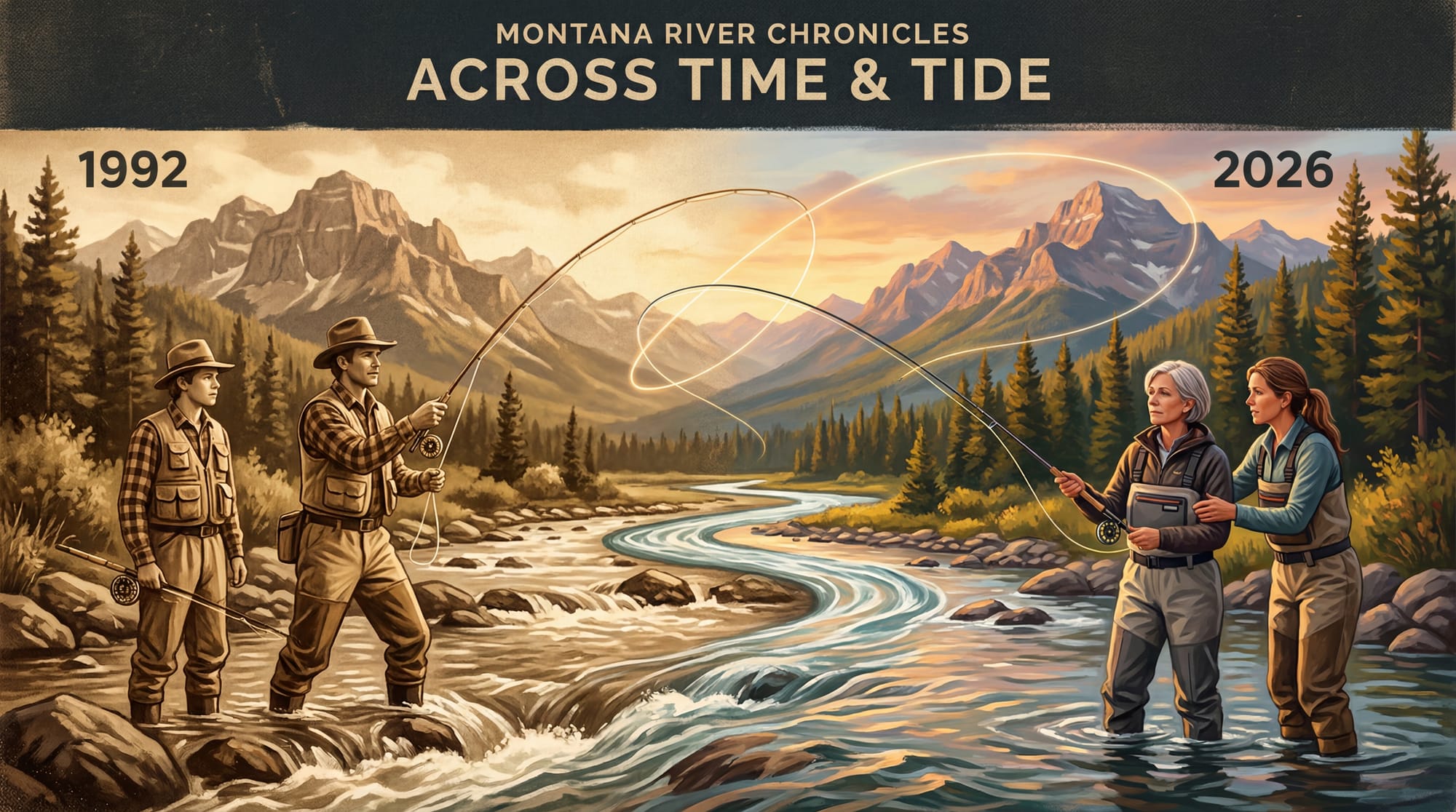
When the first episode of The Madison ends with a dedication to Robert Redford, it’s not just a tribute to a Hollywood legend who passed away in 2025—it’s an acknowledgment of a profound artistic debt. Taylor Sheridan’s new series doesn’t just reference Redford’s 1992 masterpiece A River Runs Through It; it’s built on the same spiritual foundation. Both works use Montana’s rivers as a canvas to explore brotherhood, loss, and the search for meaning in an increasingly complicated world.
This isn’t coincidence. It’s intentional homage. And understanding the connection between these two works reveals why The Madison feels different from Sheridan’s other projects—more contemplative, more poetic, more concerned with the soul than the spectacle.
Quick Overview: Two Stories, One River
What connects The Madison to A River Runs Through It:
- Montana Rivers as Sacred Space: Both works treat fly fishing waters as places of spiritual significance, not just recreation
- Brotherhood and Tragedy: Two brothers bond through fishing, then tragedy strikes
- The Outsider’s Journey: A character must learn to understand Montana and fishing to understand someone they love
- Fishing as Religion: The act of fly fishing becomes a form of prayer, meditation, and connection
- Visual Poetry: Both works prioritize stunning cinematography of Montana’s landscape
- The Healing Power of Nature: Rivers offer what civilization cannot—peace, perspective, and presence
The Dedication: Why Redford Matters to Sheridan
“For Robert Redford”
The first episode of The Madison closes with a simple dedication: “For Robert Redford.” For viewers unfamiliar with the backstory, it might seem like a standard Hollywood tribute. But the connection runs much deeper.
The Redford-Sheridan Connection:
1. The Yellowstone That Almost Was
Taylor Sheridan originally pitched Yellowstone to HBO with Robert Redford attached to play John Dutton. According to Sheridan, an HBO executive told him the show would only work with someone of Redford’s caliber. When that version fell through, Paramount picked it up with Kevin Costner in the role—and the rest is television history.
But Sheridan never forgot that Redford was his first choice, his ideal embodiment of the Montana rancher patriarch. citation citation
2. A Shared Vision of Montana
Both Redford and Sheridan see Montana not just as a location but as a character—a landscape with moral authority, spiritual power, and transformative potential. Redford’s A River Runs Through It (1992) established this vision cinematically. Sheridan’s entire television empire has been built on it.
3. The Influence of A River Runs Through It
When Sheridan decided to write a drama centered on Montana’s fishing waters, Redford’s film “immediately came to mind,” according to reports. The Madison’s director and cinematographer Christina Alexandra Voros confirmed that while the dedication was entirely Sheridan’s decision, she fully endorsed it, saying Redford’s influence “bleeds throughout the series.” citation citation
4. A Personal Loss
Redford died on September 16, 2025, just months before The Madison premiered in March 2026. The dedication carries the weight of personal loss—a filmmaker honoring the artist who showed him what Montana storytelling could be.
The Opening Parallel: Two Brothers, One Last Trip
A River Runs Through It (1992): Norman and Paul
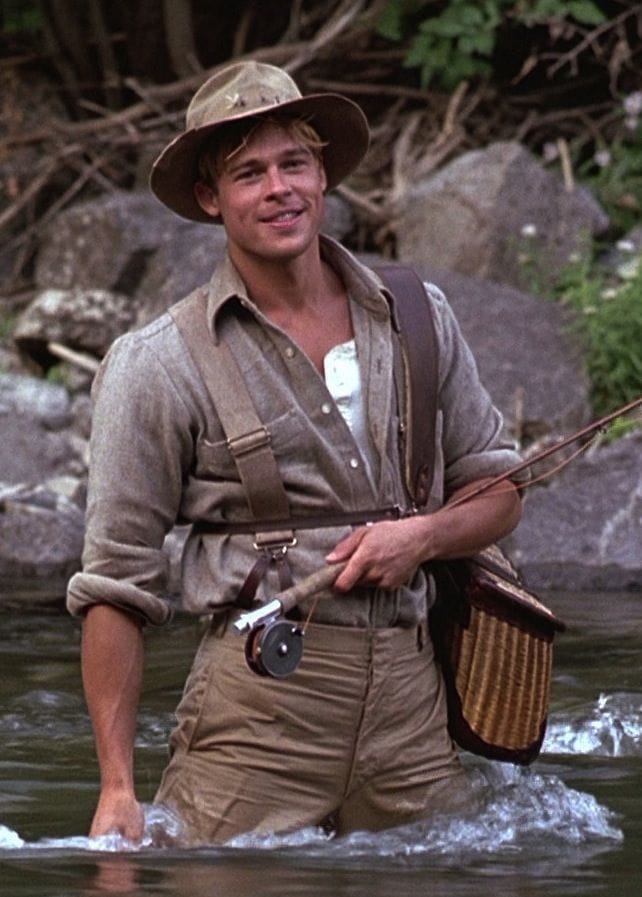
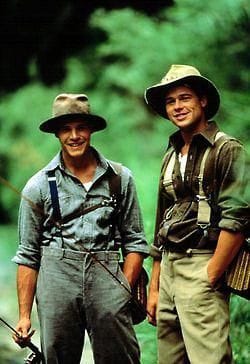
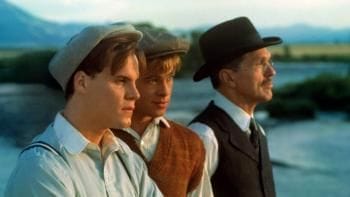
Robert Redford’s film, based on Norman Maclean’s semi-autobiographical novella, tells the story of two brothers growing up in early 20th century Montana. Norman (Craig Sheffer) is studious and responsible; Paul (Brad Pitt) is charismatic and reckless. Their Presbyterian minister father teaches them that “there is no clear line between religion and fly fishing.”
The Final Fishing Trip:
Near the end of the film, Norman (who has accepted a teaching position in Chicago) takes one last fishing trip with Paul and their father. Norman begs Paul to leave Montana and come to Chicago, to escape his gambling debts and drinking. Paul refuses: “I will never leave Montana.”
Shortly after, Paul is found beaten to death—murdered, likely over gambling debts. The film ends with an elderly Norman reflecting on his brother, on the river, and on the mystery of loving someone you cannot save.
The Themes:
- Brotherhood: Deep love between very different brothers
- Tragedy: The “good” brother survives; the wild one dies
- Place: Montana as home, identity, and destiny
- Fishing as Connection: The one language both brothers speak fluently
- Unfinished Business: Norman’s lifelong regret that he couldn’t save Paul
The Madison (2026): Preston and Paul
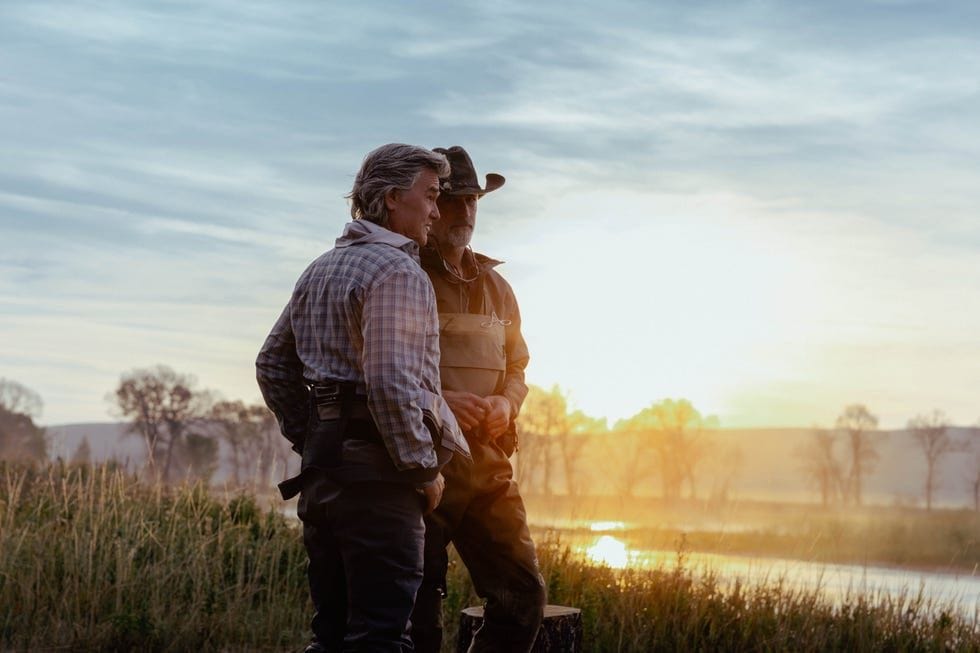
Sheridan’s series opens with a nearly identical setup: two brothers on a Montana fishing trip. Preston Clyburn (Kurt Russell) is planning to return to New York the next day, but his brother Paul (Matthew Fox) has a birthday surprise—a flight into exclusive backcountry waters for “special fishing.”
The Fatal Trip:
Unlike the film, where Paul’s death happens off-screen and after the final fishing trip, The Madison kills both brothers immediately. Their small plane crashes in the Madison River valley during a storm. Preston’s passion for Montana fishing—the thing he loved most—becomes the thing that kills him.
The Themes:
- Brotherhood: Preston and Paul’s bond through fishing
- Tragedy: Both brothers die together, doing what they loved
- Place: Montana as paradise and danger
- Fishing as Legacy: Preston’s journals become his voice after death
- Unfinished Business: Stacy’s journey to understand the husband she lost
The Parallel:
Both stories open with brothers fishing together in Montana. Both end with tragedy. Both leave survivors grappling with loss and trying to understand what fishing meant to the men they loved.
The Film Within the Series: Watching A River Runs Through It
Episode 1: The Clyburn Family Watches Preston’s Favorite Movie
In one of The Madison’s most emotionally resonant scenes, the Clyburn family gathers in their Montana hotel room after learning of Preston and Paul’s deaths. They watch A River Runs Through It together—Preston’s favorite film.
Why This Scene Matters:
1. It’s Not Just Any Movie
The detail that this was Preston’s favorite film transforms the scene from generic grief to intimate character revelation. Preston loved this movie because he was this movie—a man who found spiritual meaning in Montana’s rivers, who understood fishing as a form of grace.
2. The Family Sees Preston Through Redford’s Lens
For Stacy and her daughters, watching the film is a way of seeing the world as Preston saw it. They’re trying to understand why Montana mattered so much to him, why he kept returning, why he died here.
3. Stacy’s Line: “Preston died doing exactly what he loved doing”
As the family watches Brad Pitt cast his line into Montana’s rivers, Stacy reflects: “Preston died doing exactly what he loved doing—a small comfort amidst this unbearable ordeal.” It’s a direct echo of the film’s themes—that some men belong to wild places, and that there’s a kind of grace in dying in the place you love most.
4. The Meta-Textual Layer
By having the characters watch A River Runs Through It, Sheridan is explicitly telling viewers: “This is the tradition I’m working in. This is the film that inspired this series. If you understand Redford’s vision, you’ll understand mine.”
Fishing as Religion: The Spiritual Core
Norman Maclean’s Famous Opening Line
A River Runs Through It begins with one of the most famous lines in American literature:
“In our family, there was no clear line between religion and fly fishing.”
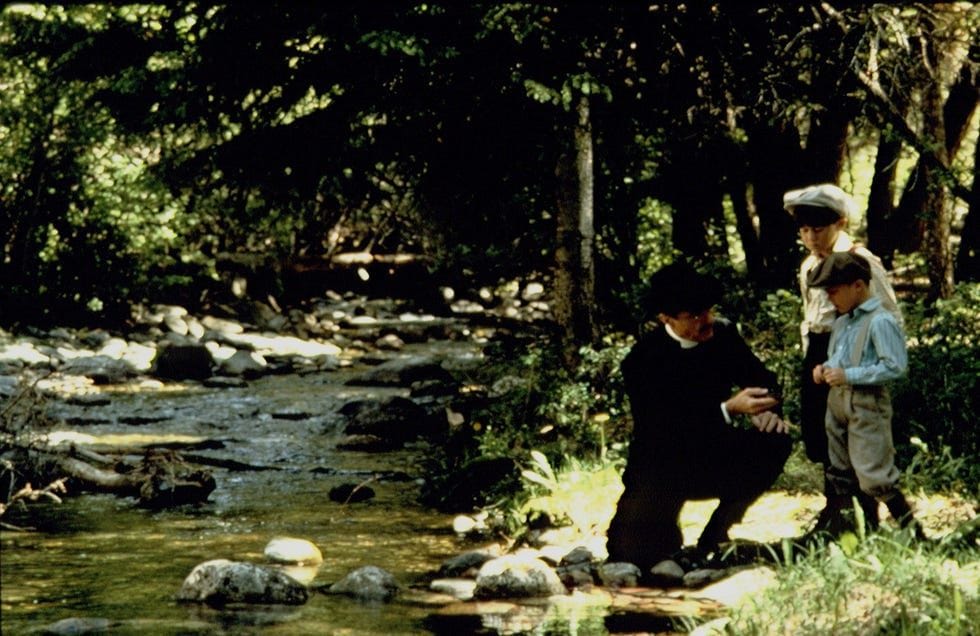
This isn’t metaphor—it’s theology. For the Maclean family, fly fishing is a form of worship. Their father, a Presbyterian minister, teaches his sons to cast with the same seriousness he teaches scripture. The river is their cathedral. The rhythm of casting is their prayer.
The Four-Count Rhythm:
In the film, the father teaches his sons the “four-count rhythm” of fly casting—a precise, almost musical motion that requires patience, practice, and presence. It’s discipline. It’s meditation. It’s art.
As the elderly Norman reflects at the end of the film:
“Eventually, all things merge into one, and a river runs through it. The river was cut by the world’s great flood and runs over rocks from the basement of time.”
Preston’s Fishing Journals: A Modern Prayer Book
The Madison translates this spiritual dimension through Preston’s meticulously kept fishing journals. These aren’t just records of catches and conditions—they’re meditations, observations, reflections. They reveal a contemplative side of Preston that Stacy never fully knew.
What the Journals Represent:
- Devotion: Preston’s commitment to recording every trip shows fishing was sacred to him
- Presence: The detailed observations show he was fully engaged, not just passing time
- Legacy: Like scripture, the journals become a guide for those who come after
- Connection: Stacy reads the journals to understand Preston’s soul
When Stacy attempts to fly fish using only Preston’s journal as her guide (Episode 6), she’s not just learning a sport—she’s learning his religion. She’s trying to pray in his language.
The Parallel:
| A River Runs Through It | The Madison |
|---|---|
| Father teaches sons to fish as spiritual practice | Preston’s journals teach Stacy to fish as spiritual connection |
| “No clear line between religion and fly fishing” | Fishing as Preston’s form of meditation and meaning |
| Four-count rhythm as discipline | Stacy learning casting as discipline |
| River as cathedral | Madison River as Preston’s sacred space |
| Fishing as way of being present | Fishing as way of processing grief |
The Cinematography: Montana as Character
Redford’s Visual Poetry
A River Runs Through It won the Academy Award for Best Cinematography (Philippe Rousselot), and it’s easy to see why. The film treats Montana’s landscape with reverence—wide shots of mountain ranges, golden-hour light on rivers, the hypnotic motion of fly line cutting through air.
Redford’s Approach:
Critics noted that Redford filmed Montana “as if he were a 19th century landscape painter of the ilk of Thomas Moran or Albert Bierstadt.” The landscape isn’t just pretty—it’s sublime, in the classical sense. It inspires awe. It dwarfs human concerns. It offers perspective.
The fishing scenes themselves are almost abstract—close-ups of water, flies, the arc of the line. The camera lingers. There’s no rush. The film trusts that viewers will find beauty and meaning in these moments of stillness.
Sheridan and Voros: Following Redford’s Lead
The Madison is the most visually stunning of all Taylor Sheridan’s series, and that’s intentional. Director of photography Christina Alexandra Voros (who also directed several episodes) has said that Redford’s influence is everywhere in the show’s visual approach.
The Madison’s Cinematography:
- Slow Pacing: Scenes linger on landscape, water, sky
- Golden Hour Lighting: Warm, nostalgic tones dominate
- Wide Shots: Characters dwarfed by mountains and valleys
- Water as Focus: Rivers, streams, and reflections feature prominently
- Fishing as Ballet: Casting scenes filmed with the same reverence as Redford’s
The Difference from Other Sheridan Shows:
Yellowstone and its spinoffs are beautifully shot, but they’re also plot-driven, fast-paced, and often violent. The Madison slows down. It breathes. It trusts that Montana itself is interesting enough to hold our attention.
As one reviewer noted: “Taylor Sheridan has reconnected with the majestic presence that made Montana a character in its own right rather than just a setting in Yellowstone.”

Brotherhood and Loss: The Emotional Core
Paul Maclean: The Brother Who Couldn’t Be Saved
In A River Runs Through It, Paul is the wild one—a brilliant fly fisherman, a charming drunk, a compulsive gambler. Norman loves him desperately but can’t reach him. Their father asks Norman, “Can you help him?” Norman replies honestly: “I don’t know how.”
Paul’s Death:
Paul is found beaten to death, his body broken, his hand shattered—the same hand that cast so beautifully. The tragedy is that Paul’s gifts (his charisma, his fearlessness, his artistry) are inseparable from his self-destruction.
Norman’s Lifelong Grief:
The film ends with elderly Norman reflecting:
“Now nearly all those I loved and did not understand when I was young are dead, but I still reach out to them… I am haunted by waters.”
It’s a statement of unresolved grief. Norman never figured out how to save Paul. He never understood why Paul couldn’t leave Montana, couldn’t moderate his behavior, couldn’t accept help. The river—the place where they connected—becomes the symbol of everything Norman lost.
Preston and Paul Clyburn: The Brothers Who Died Together
The Madison inverts the tragedy. Instead of one brother surviving to grieve the other, both Preston and Paul die together. They die doing exactly what they loved, in the place they loved most.
The Irony:
There’s a dark irony in their deaths. Preston noticed the approaching storm. He was cautious. But Paul dismissed his concerns, saying he was “overreacting.” Preston’s love for his brother—his willingness to trust Paul’s judgment—contributes to their deaths.
Stacy’s Grief:
Unlike Norman, who had a lifetime with Paul and still couldn’t understand him, Stacy discovers she never fully knew Preston at all. His fishing journals reveal an entire inner life she wasn’t part of. Her grief is compounded by the realization that the man she loved had a whole world—Montana, fishing, contemplation—that she never entered.
The Parallel:
Both stories ask: How do we love people we don’t fully understand? How do we grieve those we couldn’t save or couldn’t fully know?

The Outsider’s Journey: Learning to Fish, Learning to Understand
Norman Maclean: The Brother Who Left
In A River Runs Through It, Norman is the brother who leaves Montana. He goes to Dartmouth, then accepts a teaching position at the University of Chicago. He marries a Montana girl (Jessie) and takes her east with him.
Norman’s Relationship to Fishing:
Norman is a good fisherman—his father taught him well. But fishing isn’t his identity the way it is for Paul. Norman can leave Montana. Paul cannot.
The Tension:
The film explores the guilt of the one who leaves. Norman builds a successful academic career in Chicago, but he’s haunted by the brother who stayed, who self-destructed, who died. Norman’s success feels hollow because he couldn’t save Paul.
Stacy Clyburn: The Widow Who Learns
The Madison gives us a different outsider journey. Stacy isn’t from Montana—she’s a Manhattan socialite, a “beach girl” who never understood Preston’s obsession with rivers and fishing.
Stacy’s Relationship to Fishing:
Initially, Stacy has no relationship to fishing at all. It’s Preston’s thing, not hers. But after his death, fishing becomes her way of connecting to him.
The Transformation:
By Episode 6, Stacy stands at the river’s edge with Preston’s journal, attempting her first cast. She’s learning his language. She’s entering his world. And remarkably, she seems to be “getting the hang of it.”
The Difference:
Norman left Montana and was haunted by it. Stacy comes to Montana and is transformed by it. Norman couldn’t save Paul. Stacy can’t bring Preston back. But she can learn to see the world as he saw it—and in doing so, keep him alive.

The River as Metaphor: What Water Means
In A River Runs Through It: Time, Memory, and Eternity
Norman Maclean’s novella uses the river as a multi-layered metaphor:
1. The River as Time
Water flows in one direction, like time. You can’t step in the same river twice. The past is gone. Paul is gone. But the river endures.
2. The River as Memory
The elderly Norman returns to the rivers of his youth, casting alone, remembering. The river connects past and present. When he fishes, he’s with Paul again.
3. The River as Eternity
“The river was cut by the world’s great flood and runs over rocks from the basement of time.” The river is ancient, eternal, indifferent to human drama. It offers perspective—our lives are brief, but the river endures.
4. The River as Connection
“Eventually, all things merge into one, and a river runs through it.” The river connects everything—brothers, fathers and sons, past and present, religion and art, life and death.
In The Madison: Healing, Transformation, and Presence
Sheridan’s series uses the river similarly but with emphasis on healing:
1. The River as Healing
The Madison River valley becomes the place where the Clyburn family processes grief. The landscape offers what New York cannot—space, silence, perspective.
2. The River as Transformation
Stacy arrives in Montana as a Manhattan socialite. By learning to fish, she’s being transformed. The river is changing her.
3. The River as Presence
Fly fishing requires being fully present—watching the water, reading the insects, feeling the line. It’s mindfulness. It’s meditation. For a family shattered by sudden loss, the river teaches them how to be present again.
4. The River as Connection
Just as in Maclean’s work, the river connects Stacy to Preston. When she stands where he stood, casts where he cast, she’s sharing his experience across the boundary of death.
What The Madison Adds to the Conversation
A Female Perspective
A River Runs Through It is a story about fathers and sons, brothers, male bonding. Women appear (Norman’s wife Jessie, his mother), but they’re peripheral.
The Madison centers a woman’s journey. Stacy is the protagonist. Her grief, her transformation, her relationship to Montana and fishing—these are the emotional core of the series.
Michelle Pfeiffer’s Performance:
Pfeiffer brings depth and nuance to Stacy’s journey. She’s not just “the grieving widow”—she’s a complex woman discovering that she didn’t fully know her husband, grappling with what that means, and choosing to enter his world rather than retreat from it.
Modern Grief
A River Runs Through It deals with tragic death (Paul’s murder), but it’s filtered through memory—elderly Norman reflecting on events decades past.
The Madison shows grief in real time. We see the immediate aftermath of the plane crash, the shock, the numbness, the family’s struggle to function. It’s rawer, more immediate, more visceral.
The Outsider’s Perspective
Maclean’s story is told by an insider—Norman grew up in Montana, learned to fish as a child, understands the culture.
Sheridan’s story is told through an outsider—Stacy is a New Yorker who finds Montana alien and intimidating. Her journey to understand fishing and Montana mirrors the viewer’s journey. We learn as she learns.
The Question of Staying
A River Runs Through It asks: Should Norman have stayed in Montana? Could he have saved Paul if he hadn’t left?
The Madison asks: Should the Clyburns stay in Montana? Can they build a life here, or are they just tourists in Preston’s world?
The Fishing Scenes: Technique and Meaning
Redford’s Approach: Fishing as Art
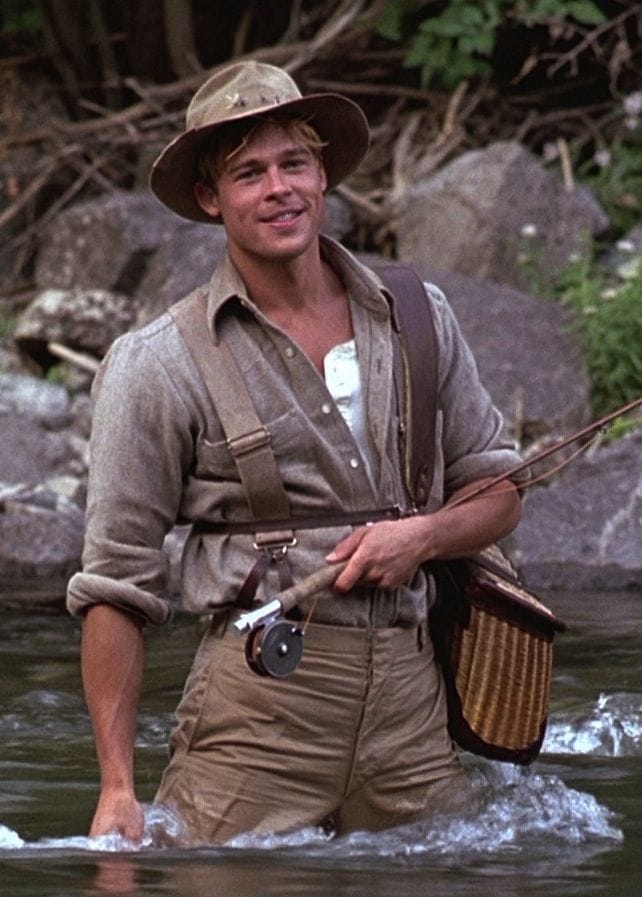
The fishing scenes in A River Runs Through It are famous for their beauty and authenticity. Redford hired expert fly fishers as consultants and stunt doubles. The casting scenes are filmed almost like dance—graceful, rhythmic, hypnotic.
The Most Famous Scene:
Brad Pitt’s Paul performs “shadow casting”—a technique where the angler casts in rhythm, the line forming perfect loops in the air, never touching the water until the final presentation. It’s show-off fishing, but it’s also artistry. Paul is a virtuoso.
What It Means:
Paul’s fishing skill represents his natural gifts—his charisma, his instinct, his grace. But it also represents his refusal to play by conventional rules. He fishes his own way, lives his own way, and ultimately dies his own way.
Sheridan’s Approach: Fishing as Meditation
The Madison’s fishing scenes are less about virtuoso technique and more about contemplation. Preston fishes alone, quietly, observantly. His fishing is about being present, not performing.
Stacy’s First Cast:
When Stacy attempts to fish in Episode 6, she’s clumsy, uncertain, vulnerable. But she’s also focused, determined, open. Her fishing isn’t about catching fish—it’s about connecting to Preston, to Montana, to herself.
What It Means:
Fishing in The Madison represents the healing process—awkward at first, requiring patience and practice, but ultimately transformative.
Montana: Paradise or Prison?
In A River Runs Through It: Both
For Paul, Montana is identity. He tells Norman, “I will never leave Montana.” It’s not just home—it’s who he is. But Montana is also his prison. His gambling debts, his drinking, his self-destructive behavior—all are tied to Montana’s small-town culture.
The Tragedy:
Paul can’t leave the place that’s killing him. Montana is both his paradise (the rivers, the fishing, the freedom) and his prison (the gambling, the violence, the lack of opportunity).
In The Madison: A Question
For Preston, Montana was clearly paradise—the place where he felt most alive, most himself. But for Stacy and her family, Montana is still a question.
Can They Stay?
The series explores whether the Clyburns can actually build a life in Montana, or whether they’re just playing at being Montanans. Are they honoring Preston’s legacy, or are they tourists in his world?
Season 2’s Promise:
With Season 2 confirmed, the series will likely continue exploring this question. Can outsiders become insiders? Can grief transform into belonging?
The Redford Legacy: What Sheridan Learned
Visual Storytelling Over Plot
A River Runs Through It is not a plot-heavy film. Things happen (Norman goes to college, falls in love, Paul gets in trouble), but the film is more interested in mood, atmosphere, and contemplation than in narrative drive.
The Madison follows this model. It’s Sheridan’s slowest, most meditative series. Fans expecting Yellowstone-style drama (murders, schemes, land disputes) will be disappointed. But fans of A River Runs Through It will recognize the pacing.
Nature as Moral Authority
In Redford’s film, the natural world—rivers, mountains, forests—represents a kind of moral clarity that human civilization lacks. The river doesn’t lie. It doesn’t scheme. It simply is.
Sheridan has built his entire television empire on this idea. From Yellowstone to 1883 to The Madison, his shows argue that the land has wisdom, that nature teaches what cities cannot.
The Limits of Understanding
A River Runs Through It ends with Norman admitting he never understood Paul, never figured out how to help him. It’s a story about the limits of love and understanding.
The Madison explores the same theme. Stacy discovers she never fully knew Preston. But unlike Norman, who can only remember, Stacy can still learn. She can enter Preston’s world, even though he’s gone.
The Power of Place
Both works argue that place matters—that Montana isn’t interchangeable with anywhere else, that rivers shape the people who fish them, that landscape forms character.
This is Sheridan’s core belief, the foundation of all his work. And he learned it, at least in part, from Redford.
Critical Reception: Two Classics
A River Runs Through It (1992)
Box Office:14 million budget)
Awards:
- Academy Award for Best Cinematography
- Nominated for Best Adapted Screenplay
- Nominated for Best Original Score
Critical Response:
Critics praised the film’s visual beauty and emotional depth, though some found it slow-paced. Roger Ebert called it “a tone poem” and praised its “visual splendor.” The film has endured as a classic, regularly appearing on lists of the best films about nature, family, and the American West.
Cultural Impact:
The film sparked a fly-fishing boom in the 1990s. Montana fishing guides reported a surge in clients who wanted to fish “like in the movie.” The film also elevated Brad Pitt to stardom and established Robert Redford as a major director.
The Madison (2026)
Streaming Performance: Paramount+ has not released viewership numbers, but the series premiered as a major event.
Critical Response:
Early reviews praise The Madison as Sheridan’s most mature, emotionally resonant work. Critics note it’s a departure from his usual formula—less violent, more contemplative, more focused on internal transformation than external conflict.
One reviewer called it “the best series Taylor Sheridan has created yet,” praising its “gut-wrenching emotional portrait about love and family.” citation
Cultural Impact:
Too early to assess, but the series has sparked renewed interest in A River Runs Through It and in Montana fishing tourism.
The Philosophical Core: What Both Works Believe
1. Nature Heals
Both A River Runs Through It and The Madison argue that time in nature—particularly time on rivers—has healing power. It’s not just recreation; it’s restoration.
2. Presence is Sacred
Fly fishing requires being fully present—watching, listening, feeling. Both works treat this presence as a form of spirituality.
3. We Are Shaped by Place
Montana isn’t just a location; it’s a force that shapes character, values, and identity. Both works argue that place matters deeply.
4. Love Means Trying to Understand
Norman tries to understand Paul. Stacy tries to understand Preston. Both works suggest that love requires the effort to see the world as the beloved sees it—even if we never fully succeed.
5. Art Connects Us Across Time
Norman’s writing keeps Paul alive. Preston’s journals keep him alive. Both works argue that art (writing, fishing, film, television) connects us across the boundary of death.
6. Some Things Cannot Be Explained
Both works embrace mystery. Norman never understands why Paul couldn’t be saved. Stacy never fully understands Preston’s Montana obsession. And that’s okay. Mystery is part of love.
The Future: Where The Madison Goes from Here
With Season 2 confirmed, The Madison has the opportunity to continue exploring themes that A River Runs Through It introduced but couldn’t fully develop in a two-hour film.
Potential Directions:
1. Stacy’s Fishing Journey
Will Stacy become a proficient angler? Will fishing become her passion, not just Preston’s? The series could show her transformation from outsider to insider.
2. The Family’s Integration
Can the Clyburns actually become Montanans, or will they always be outsiders? Will locals accept them? Will they accept Montana’s rhythms and values?
3. Conservation and Change
Montana is changing—development pressure, climate change, tourism. Will the series address these threats to the landscape it venerates?
4. The Next Generation
Will Stacy’s granddaughters learn to fish? Will they carry on Preston’s legacy? The series could explore how traditions pass across generations.
5. The Limits of Healing
A River Runs Through It acknowledges that some wounds don’t heal, some people can’t be saved. Will The Madison offer a more hopeful vision, or will it embrace the same tragic realism?
Why This Connection Matters
Understanding The Madison’s relationship to A River Runs Through It isn’t just trivia—it’s essential to understanding what Sheridan is trying to do.
This is not Yellowstone with fishing.
It’s a different kind of story, working in a different tradition. It’s less interested in plot twists and power struggles than in character transformation and spiritual seeking.
This is Sheridan’s most personal work.
By dedicating the series to Redford and explicitly invoking A River Runs Through It, Sheridan is revealing his influences, his values, his vision of what Montana means.
This is a love letter to a vanishing world.
Both A River Runs Through It (set in the 1910s-1930s) and The Madison (set in 2026) are elegies for a Montana that’s disappearing—a place where rivers run clean, where people know their neighbors, where the land still has power over human lives.
This is about what endures.
Rivers endure. Mountains endure. The rhythms of nature endure. Both works argue that in a world of constant change and loss, these enduring things offer comfort, perspective, and hope.
How to Experience Both Works
Watch A River Runs Through It First
If you’re watching The Madison and haven’t seen Redford’s film, you’re missing crucial context. The film is available on:
- Streaming: Various platforms (check current availability)
- Physical Media: Blu-ray and DVD
- Criterion Collection: A special edition with extensive extras
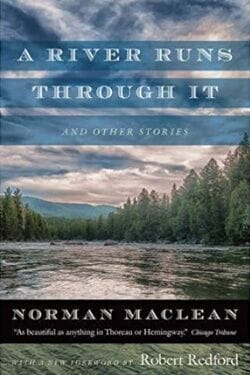
Read Norman Maclean’s Novella
The source material is even more lyrical and philosophical than the film. Maclean’s prose is stunning—poetic, precise, deeply moving.
Visit Montana
Both works are love letters to a real place. If possible, visit:
- Madison River: Fish the “Fifty Mile Riffle” between Quake Lake and Ennis
- Blackfoot River: Where A River Runs Through It is set
- Missoula: Norman Maclean’s hometown
- Ennis: The heart of Madison River fishing culture
Learn to Fly Fish
You don’t need to be an expert to appreciate these works, but learning the basics of fly fishing deepens your understanding. Consider:
- Guided Trip: A Montana guide can teach you the fundamentals
- Fly Fishing School: Multi-day programs offer immersive learning
- Local Lessons: Many areas have fly fishing instructors
The Bottom Line: Two Masterpieces, One Vision
A River Runs Through It and The Madison are separated by 34 years, but they share a vision: that Montana’s rivers are sacred spaces, that fly fishing is a form of prayer, that nature heals what civilization breaks, and that love means trying to understand those we’ve lost.
Robert Redford showed Taylor Sheridan what was possible—that you could make a film (or series) that prioritizes beauty over action, contemplation over plot, and spiritual seeking over easy answers.
Sheridan’s dedication—“For Robert Redford”—is an acknowledgment of that debt.
But it’s also a promise: to continue the work Redford began, to keep telling stories about Montana and rivers and the search for meaning in wild places.
For viewers, understanding this connection enriches both works.
When you watch The Madison, you’re not just watching a new Taylor Sheridan series. You’re watching a conversation across time—Sheridan responding to Redford, The Madison echoing A River Runs Through It, 2026 reaching back to 1992 and finding the same truths.
As Norman Maclean wrote, and as both works demonstrate:
“Eventually, all things merge into one, and a river runs through it.”
For Redford and Sheridan, for Preston and Paul, for all of us—the river endures.
Related Articles
- Fly Fishing in The Madison: Rivers, Rods, and Healing
- The Real Madison River Valley: Montana Setting Behind the Series
- Michelle Pfeiffer’s Performance in The Madison: A Masterclass in Grief
- The Madison Streaming Guide: Where to Watch & Is It Worth Your Time?
Last Updated: April 3, 2026
Article Type: Film & Television Analysis
Related Works: The Madison (2026), A River Runs Through It (1992)
This article explores the artistic connection between Taylor Sheridan’s The Madison and Robert Redford’s A River Runs Through It. We are not affiliated with Paramount+, Taylor Sheridan Productions, or the estates of Robert Redford or Norman Maclean.