
An in-depth analysis of the most controversial decision in the Yellowstone universe—and why it may be the only way forward for Kayce Dutton’s story
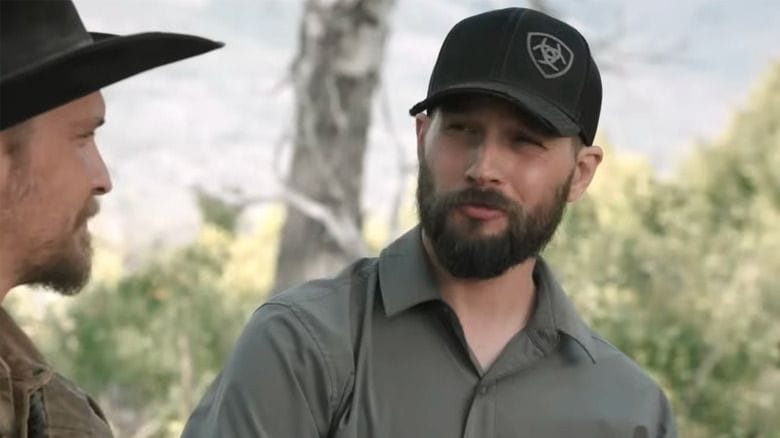
Kelsey Asbille and Luke Grimes as Monica and Kayce Dutton—the relationship that defined Yellowstone’s emotional core
The Shock That Launched a Thousand Tweets
When the opening moments of Marshals revealed what fans had feared but hoped wasn’t true, social media erupted in a collective gasp. Monica Dutton—wife of Kayce, mother of Tate, bridge between the Dutton dynasty and the Broken Rock Reservation—was dead. Not just absent. Not just departed. Dead from cancer, a victim of the very environmental exploitation that her people had endured for generations.
For a franchise built on shocking character deaths, this one felt different. John Dutton’s off-screen demise in Yellowstone’s final season had already tested fan patience. But Monica’s fate struck at something more fundamental: the destruction of the one genuinely healthy romantic relationship the series had managed to sustain across five seasons.
Yet as showrunner Spencer Hudnut explains in his exclusive interview with The Hollywood Reporter, this devastating narrative choice wasn’t born from cruelty or cheap shock value. It was, paradoxically, an act of creative necessity—a solution to a storytelling problem that had no good answers, only less bad ones.
The Perfect Ending Problem
To understand why Monica had to die, we must first acknowledge what an extraordinary narrative challenge Marshals faced from its inception. When Yellowstone concluded in late 2024, Kayce Dutton achieved something no other member of his family had managed: a genuinely happy ending.
Separated from the toxic influence of his father, reunited with his wife and son, establishing his own ranch on peaceful terms with the Broken Rock tribe—Kayce’s final scenes represented the fulfillment of everything his character had been seeking since the pilot episode. As Hudnut notes in his interview, “They did achieve that. They did get what they finally wanted.”
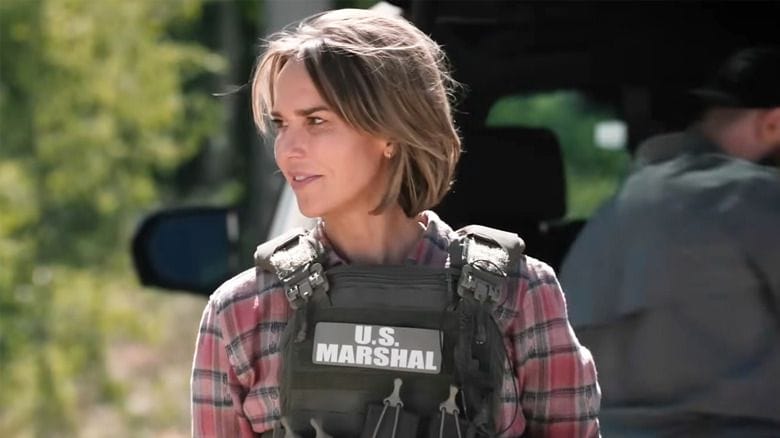
The Yellowstone finale gave Kayce and Monica the happy ending fans had waited five seasons to see—only for Marshals to reveal it was fleeting
This presented the Marshals creative team with a fundamental dilemma that strikes at the heart of serialized storytelling: How do you create drama for a character who has achieved everything he wanted?
“Obviously we can’t just watch this guy have his dream life,” Luke Grimes explained to Entertainment Weekly. “There’s no drama. Something’s gonna have to happen that gets in the way of him having that. Otherwise, why is he gonna take a badge? The last time we saw him, he was throwing a badge in a field.”
The creators explored alternatives. Perhaps Kayce was bored by domestic tranquility? Perhaps the quiet life chafed against his warrior nature? But these explanations felt hollow—betrayals of the character growth Kayce had achieved through five seasons of struggle. The only motivation powerful enough to justify his return to law enforcement had to be something truly catastrophic.
When Art Imitates Life: The Casting Reality
The decision to kill Monica wasn’t made in a vacuum of narrative theorizing. It was shaped by the practical realities of television production—and, specifically, by Kelsey Asbille’s unavailability for the spinoff series.
As Hudnut candidly admits: “It wasn’t like Luke and I were sitting there saying, ‘We should kill Monica.’ It was more like, ‘If she’s not available for this, then what’s the best way to move on from that character in the least exploitive way?’”
This revelation reframes our understanding of the choice. Monica’s death wasn’t the product of sadistic writers cackling over their keyboards; it was a pragmatic response to casting constraints that nonetheless demanded narrative integrity.
The creative team faced three unappealing options:
- Recast Monica: Introduce a new actress to play a character fans had watched for five seasons—a choice that almost certainly would have been rejected by the audience.
- Write Monica out ambiguously: Have her leave Kayce off-screen, perhaps through divorce or departure. But this would undermine the carefully constructed relationship that had been the emotional anchor of Kayce’s Yellowstone journey.
- Kill Monica: The nuclear option—permanent, tragic, and narratively definitive.
They chose option three, but with a crucial caveat: they would use her death to serve the story’s themes rather than merely eliminate a casting problem.
The Cancer Narrative: Turning Tragedy Into Meaning
If Monica had to die, the creators were determined that her death would matter—not just for Kayce’s character development, but for the larger themes of the Yellowstone universe.
The decision to have Monica succumb to cancer caused by environmental toxins on the reservation transforms her death from a random tragedy into a political statement. As Hudnut explains: “Our reservations have really high cancer rates, and it’s because of all the terrible things that have been done to them. So that felt like a way to honor that character.”
This choice accomplishes several narrative objectives simultaneously:
It connects to real-world issues: The link between reservation land exploitation and elevated cancer rates is well-documented in Native American communities. By incorporating this reality into Monica’s fate, Marshals maintains the franchise’s commitment to social commentary while expanding its scope beyond land rights into environmental justice.
It preserves her agency in death: Monica doesn’t die as a victim of random violence or plot convenience. She dies as a casualty of the systemic exploitation that her people have endured—a continuation of the same struggles she fought against while alive.
It gives Kayce a different kind of motivation: Rather than pursuing vengeance (the default mode for Yellowstone characters), Kayce is motivated by protection—specifically, protecting his son and preventing similar tragedies from befalling other families. This represents a maturation of his character arc from reactive violence to proactive service.
Grief as Character Engine
The creative team’s handling of Monica’s death reveals sophisticated understanding of how grief functions in long-form storytelling. Rather than using her death as a simple inciting incident that launches Kayce into action, Marshals treats his mourning as an ongoing process that will shape the entire first season.
“I think Kayce is a little bit behind his son in terms of accepting the loss of Monica, and really embracing his grief,” Hudnut notes. “We will revisit that period a little bit and also really explore in the first half of the season Kayce’s journey of trying to let go and really accept that she’s gone.”
This approach distinguishes Marshals from countless other procedurals that use personal tragedy as mere backstory. Kayce isn’t a widower who happens to be a law enforcement officer; he’s a grieving father whose grief fundamentally shapes how he approaches his work.
The premiere’s most emotionally resonant moments stem from this tension. When Kayce apologizes to Tate for his failures as a father in the wake of Monica’s death, we see not a hero coping stoically with loss, but a man struggling to maintain his connection to his remaining family while drowning in sorrow.
The Ghost in the Machine: Monica’s Continued Presence
Perhaps the most elegant solution to the “Monica problem” is the way Marshals keeps her present even in absence. This isn’t mere sentimentality—it’s sophisticated narrative architecture that acknowledges how the dead continue to shape the lives of the living.
“Her spirit is with Kayce throughout the show,” Hudnut assures fans. “She’s such a huge part of who Kayce Dutton is that she will be with him along the way.”
This manifests in concrete plot terms: Tate attends a rally because of his mother’s memory; Kayce protects his son because it’s what Monica would have wanted; the environmental case that drives the premiere’s action connects directly to the reservation exploitation that killed her.
Monica becomes, in effect, the moral compass that guides Kayce through his new life as a Marshal. Unlike the vengeful ghosts that haunted Yellowstone’s more violent characters, Monica’s presence pushes Kayce toward protection rather than retribution, toward community service rather than personal vendetta.
Luke Grimes’ Journey: From Resistance to Acceptance
Understanding the necessity of Monica’s death requires examining how Luke Grimes himself processed this narrative choice. As the actor who embodied Kayce for seven years, his buy-in was essential—and initially, he struggled with the premise.
“I was incredibly bummed because Kelsey’s one of my really good friends and the coolest actor I’ve ever worked with,” Grimes admitted to Entertainment Weekly. “We’re really close, and for a while I couldn’t imagine doing it without her. I was like, ‘That doesn’t even make sense. Kayce and Monica are the same thing.’”
This resistance speaks to the authenticity of the on-screen relationship. Grimes and Asbille had built genuine chemistry over five seasons, and the idea of continuing without his scene partner felt fundamentally wrong.
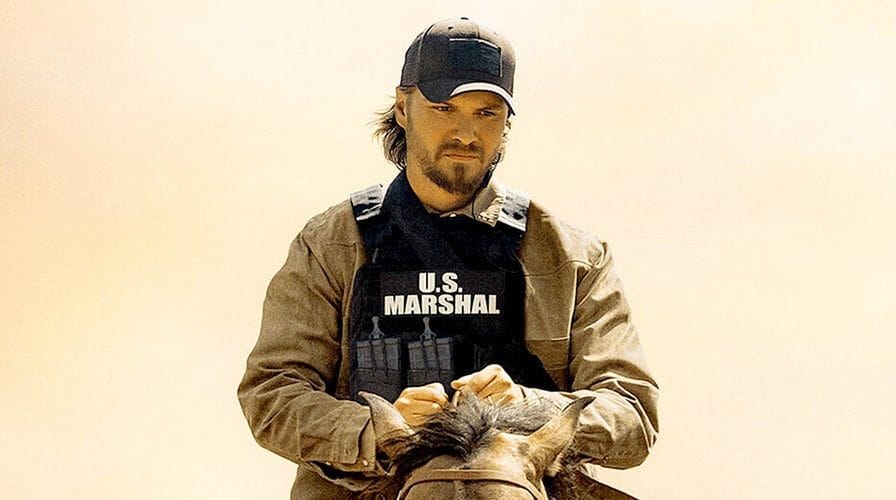
Grimes and Asbille’s on-screen chemistry made Kayce and Monica one of television’s most compelling couples
Yet Grimes eventually came to understand the creative logic. “When that happened, it cleared up what that thing was for Kayce,” he explained, referring to the narrative hook that would justify the spinoff’s existence. The catastrophic loss provided an emotional through-line powerful enough to sustain 13 episodes—and potentially multiple seasons.
This behind-the-scenes journey mirrors Kayce’s own arc: initial resistance to an unbearable reality, followed by gradual acceptance and determination to find meaning in the aftermath.
The Controversy: Did Monica Deserve Better?
Despite the creative team’s careful reasoning, Monica’s death has sparked legitimate criticism from fans and commentators who feel the character deserved a more substantial farewell.
The criticism centers on several points:
The off-screen nature of her death: Unlike major character deaths in Yellowstone that occurred on-screen with appropriate drama, Monica’s fate is revealed through exposition and implication. We never see her final days, never witness Kayce’s goodbye, never experience the family’s mourning process in real-time.
The “fridging” concern: Critics have noted that Monica’s death serves primarily to motivate Kayce’s actions—a classic example of the “women in refrigerators” trope where female characters are killed to provide male characters with emotional motivation.
The rushed transition: Moving from Monica’s death to Kayce’s new career as a Marshal within a single episode leaves little room to process the magnitude of the loss.
These criticisms are not without merit. Yet Hudnut’s explanation—that they wanted to avoid “exploiting” her death with gratuitous vengeance plots—suggests the creators were aware of these pitfalls and attempted to navigate them with care.
The use of Kelsey Asbille’s image in the premiere’s flashback/dream sequences represents a compromise: acknowledging the actress’s contribution to the franchise while accepting her absence from its future.
What This Means for the Future
Monica’s death doesn’t just reshape Kayce’s present—it redefines his future possibilities. As Hudnut teases: “I think if he’s able to [let go of Monica], it will open him up to some possibilities.”
The implication is clear: eventually, Kayce may be ready for new romantic connections. This prospect will likely prove controversial among fans who feel Monica’s memory should remain sacrosanct. But the showrunner’s careful wording—“if he’s able to achieve that”—suggests this journey will be neither quick nor easy.
More importantly, Monica’s death fundamentally restructures the show’s DNA. Without the stabilizing influence of their relationship, Kayce and Tate must forge a new dynamic as a father-son duo navigating grief together. The teenage Tate we meet in Marshals—played with remarkable depth by Brecken Merrill—is fundamentally different from the child we knew in Yellowstone, shaped by loss in ways that will drive his own coming-of-age narrative.
Conclusion: The Price of Peace
In the calculus of television storytelling, Monica’s death represents a ruthless but perhaps necessary equation. The creators needed to destabilize Kayce’s world enough to justify his return to television; they needed to honor a beloved character while accepting her actress’s absence; they needed to launch a new series while maintaining continuity with its predecessor.
Whether they succeeded depends on how Marshals develops over its first season. If Kayce’s grief feels authentic and transformative rather than merely functional, if Monica’s memory continues to inform the narrative in meaningful ways, if the environmental themes introduced by her death are explored with depth and sensitivity—then this controversial choice may prove justified.
But if Monica becomes merely a plot device, a memory mentioned only when convenient for Kayce’s current case-of-the-week, then the criticism will have been deserved. The character who fought so hard for her family, who bridged two worlds with grace and determination, who represented the possibility of love in a universe defined by toxic masculinity—she deserves more than to be a footnote in someone else’s story.
The premiere of Marshals suggests the creators understand this responsibility. Whether they can sustain it over thirteen episodes and beyond remains the central question facing the series.
As Kayce stands at Monica’s grave in the premiere’s closing moments, the weight of his loss palpable in every line of Luke Grimes’ face, we are reminded that in the Yellowstone universe, happiness is always temporary, love is always threatened, and the only certainty is change.
Monica’s death is the price of Marshals’ existence. Whether that price was worth paying will determine not just the success of this spinoff, but the legacy of the franchise itself.
Sources and Further Reading
- The Hollywood Reporter: Spencer Hudnut Interview on Monica’s Death
- Entertainment Weekly: Luke Grimes on Monica’s Fate
- Parade: Creator Spencer Hudnut Exclusive Interview
- TVLine: Monica Death Explanation
- People: What Happened to Monica in Marshals
For more analysis of the Yellowstone universe and character studies, visit DuttonLegacy.com